Pennsylvania’s Floor Coating Experts. Durable. Slip-Resistant. Installed in One Day [Get Free Quote]

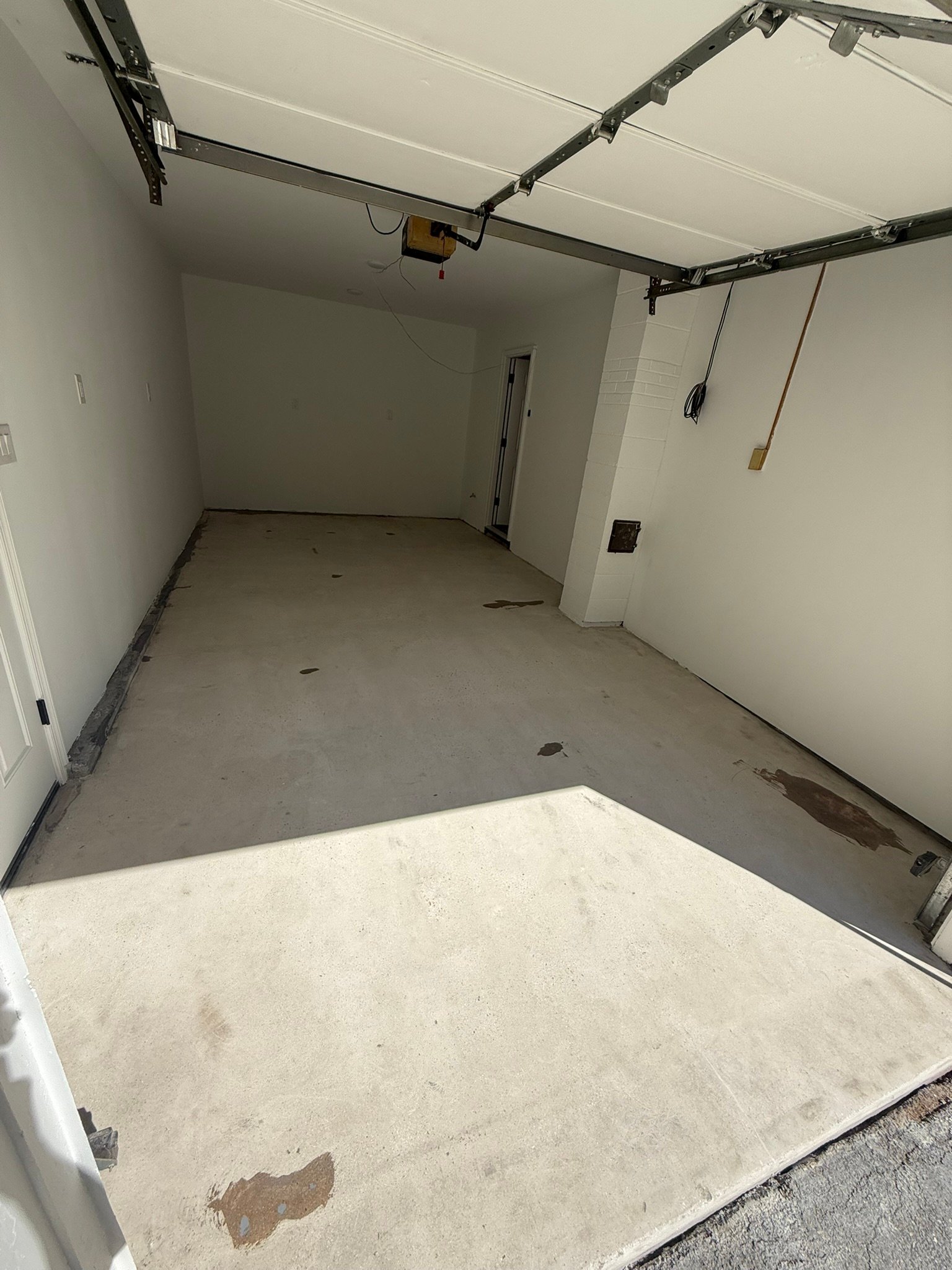
Not every ugly garage floor needs to be coated, and not every cracked garage floor needs to be replaced either. Mixing those two up is the single most expensive mistake a homeowner can make when fixing up a garage slab. This guide walks through exactly when it makes sense to replace garage floor concrete outright, versus when coating over the existing slab is the smarter, cheaper, and faster option.
When people talk about garage floor concrete replacement, they usually mean full demolition of the existing slab, hauling the old concrete away, forming new edges if needed, pouring a brand new slab, and waiting out the standard curing period before anything else can happen on top of it. This is a construction project, not a coating project, and it is priced and scheduled completely differently. A typical concrete garage floor construction timeline runs into weeks between the pour and a full cure, not the single day a coating project usually takes.
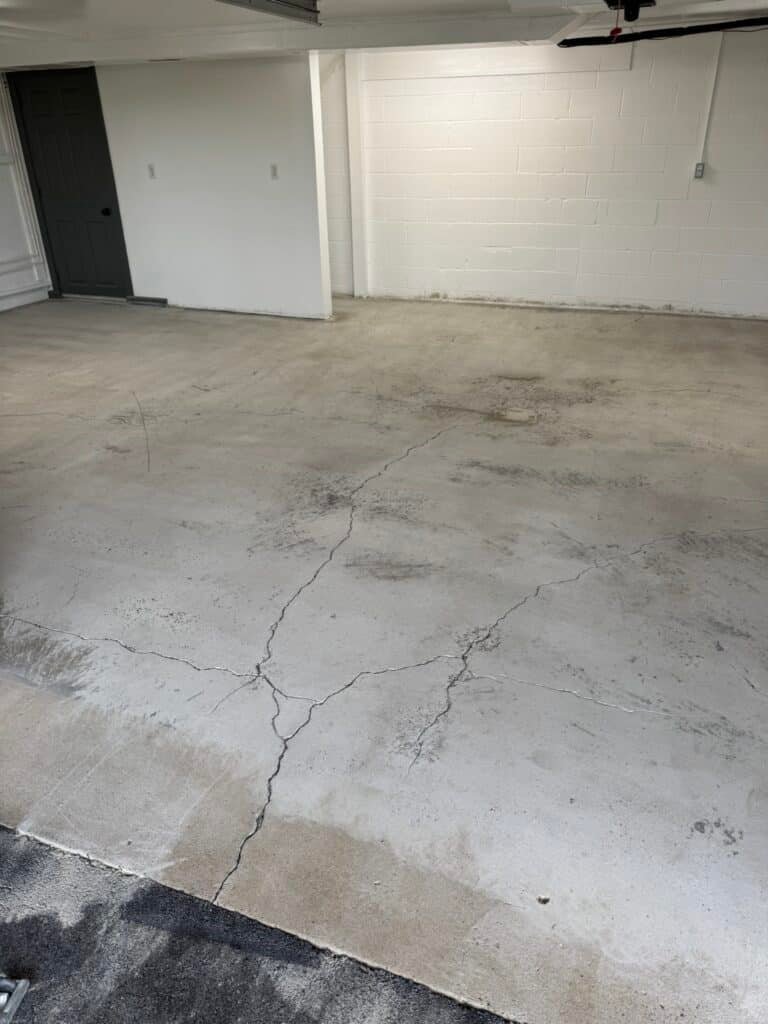
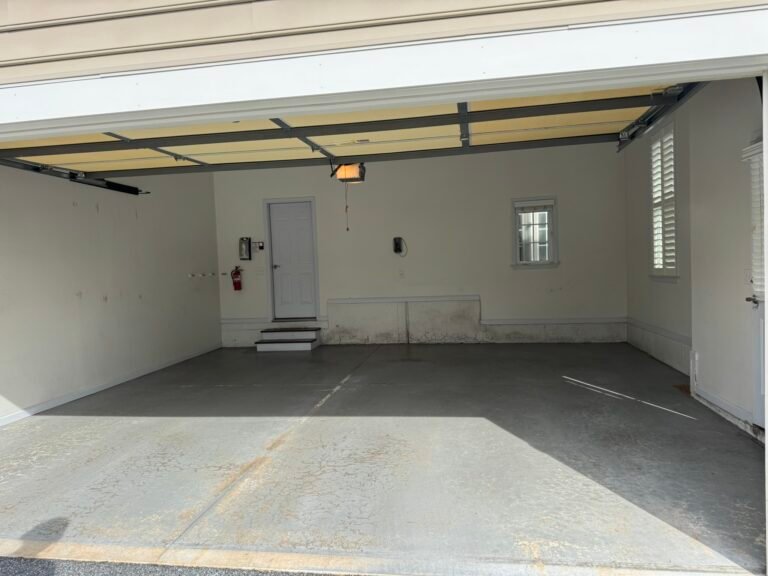
Most garage slabs that look like replacement candidates are actually grind-and-coat candidates once someone who knows concrete actually looks at them. Here is what usually turns out to be fixable rather than a reason to tear everything out:
Diamond grinding removes far more of the surface than most homeowners expect, which is exactly why stains and old coatings that look permanent usually grind away to clean, solid concrete underneath. A floor that looks genuinely hopeless on a Tuesday afternoon, covered in decades of oil drips and flaking paint, often looks completely different once a few passes of diamond tooling have removed the top layer of weak, stained concrete and exposed the sound material underneath it.
This is worth knowing before you ever call a concrete replacement contractor, because the visual condition of a slab is a poor predictor of whether it actually needs to be replaced. Staining and surface damage look dramatic. Structural movement, by contrast, is often subtle until you know exactly what to check for, which is covered in the next section.
Replacement is the right call in a smaller number of situations, and they tend to be obvious once you know what to look for:
If any of these apply, a coating, no matter how good, is only covering up a problem that will keep getting worse underneath it.
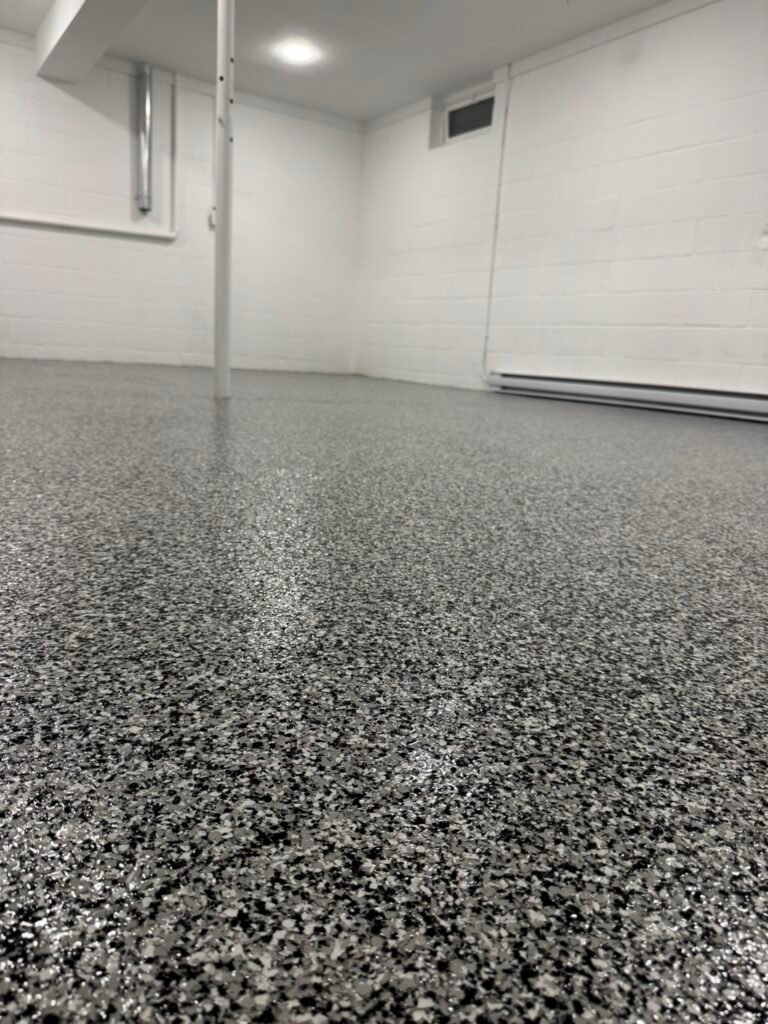
A coating project, including diamond grinding, crack repair where needed, and a full polyaspartic flake system, is typically a one-day job for an average two-car garage. We cover the real pricing factors for that kind of project in our garage floor coating cost breakdown.
A replacement project is a different category of work entirely. It usually involves a concrete contractor rather than a floor coating specialist, runs several times the cost of a coating job, and takes weeks rather than a day once you account for demolition, hauling, forming, pouring, and the required cure time before the new slab can be coated or driven on.
If replacement genuinely is the right call, it is worth knowing what you are signing up for before the first jackhammer starts. A concrete contractor breaks up and removes the existing slab, checks and repairs the base material underneath (the compacted gravel or soil the slab sits on, which is often the real source of the problem if the old slab was heaving or settling), forms the edges, pours new concrete, and then has to wait for it to cure properly before anything heavy drives on it or a coating goes down on top.
That base material step matters more than most homeowners expect. If the original slab failed because the ground underneath it was never compacted correctly, pouring new concrete on top of the same bad base just sets up the same failure again a few years later. A contractor doing replacement correctly checks and fixes that base, not just the visible concrete.
Because of the cure time involved, replacement almost always means your garage is out of commission for several weeks, not a weekend. That is a real factor to weigh against the much faster coating timeline, especially if daily access to your garage matters to your household.
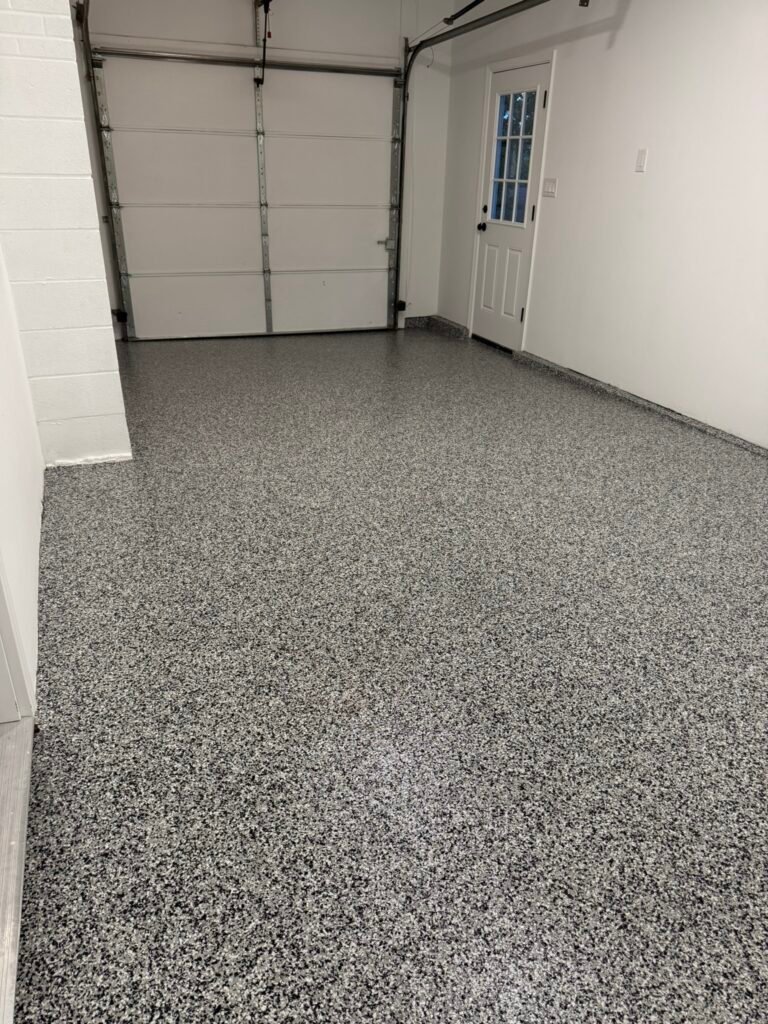
One of our own projects in Mount Joy, Pennsylvania is a good example of this decision in practice. The garage slab had visible cracking that, on first glance, looked like a candidate for replacement. Instead, we routed out each crack, filled it with a flexible polyurea crack filler that moves with the concrete instead of fighting against it, ground the surface, and installed a full polyaspartic flake coating on top. You can see the finished result in our Mount Joy crack repair project writeup, including what the repaired cracks look like once the flake coating is installed over them.
The key detail: a flexible crack filler moves with normal concrete expansion and contraction, while a rigid patch just cracks again in the same spot. That is the difference between a repair that holds and one that fails within a year.
An honest contractor should tell you upfront whether your slab is a grind-and-coat candidate or a genuine replacement situation, rather than automatically upselling whichever service happens to be their specialty. If a company only does coating, be a little skeptical when they tell you replacement is unnecessary. If a company only does concrete replacement, be equally skeptical when they tell you your slab cannot be saved.
It is also worth checking a company’s standing on an independent business directory before you commit, the same way you would check reviews for any other contractor. Our own listing is verified on Brownbook, which is one of several places homeowners can confirm our name, address, and phone number match what we tell you on the phone.
If you are not sure which category your garage falls into, the fastest way to find out is an in-person walkthrough. You can request a free estimate and we will tell you honestly whether coating or replacement is the right move, even if that means telling you coating is all you need.
Either way, the decision is worth getting right the first time. Coating a slab that genuinely needed replacement just delays an expensive problem by a year or two. Replacing a slab that only needed grinding and crack repair means spending several times more money and losing weeks of garage access for no real benefit over the faster, cheaper option.
Not always, but far more often than most homeowners assume. Hairline and moderate cracks are routinely repaired with flexible crack filler and then coated over. Active structural movement or a slab broken into separate sections is a different situation that usually does need replacement.
The clearest signs are uneven settling or heaving, water pooling the wrong direction, the slab broken into independently moving sections, or spalling that has eaten away most of the surface rather than a small patch. Anything less severe than that is usually a coating candidate.
A proper coating does not fix an underlying structural problem, it only fixes the surface. That is exactly why an honest contractor checks for active movement and foundation issues before recommending a coating, rather than coating over a problem that is going to resurface anyway.
Replacement typically runs several times the cost of a coating project, since it involves demolition, hauling, new concrete, and weeks of cure time instead of a single day of grinding and coating.
No. New concrete needs a proper cure period before a coating can be applied over it, so replacement and coating always happen as two separate projects spaced weeks apart, even when the same homeowner is doing both.