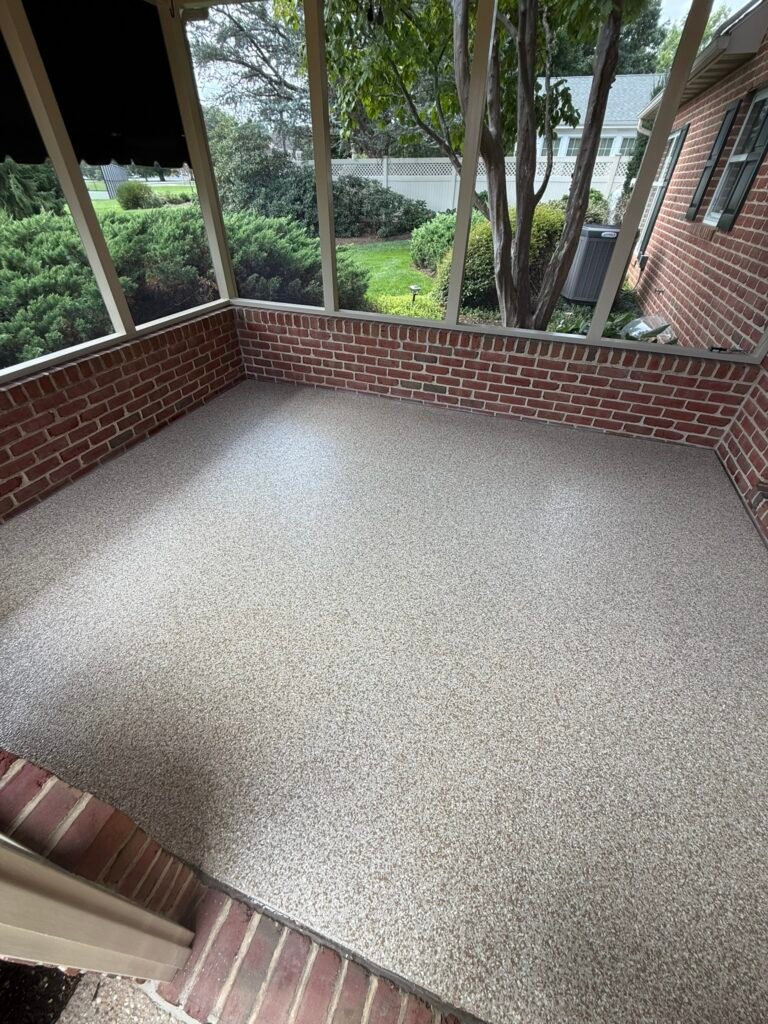
Pennsylvania’s Floor Coating Experts. Durable. Slip-Resistant. Installed in One Day [Get Free Quote]

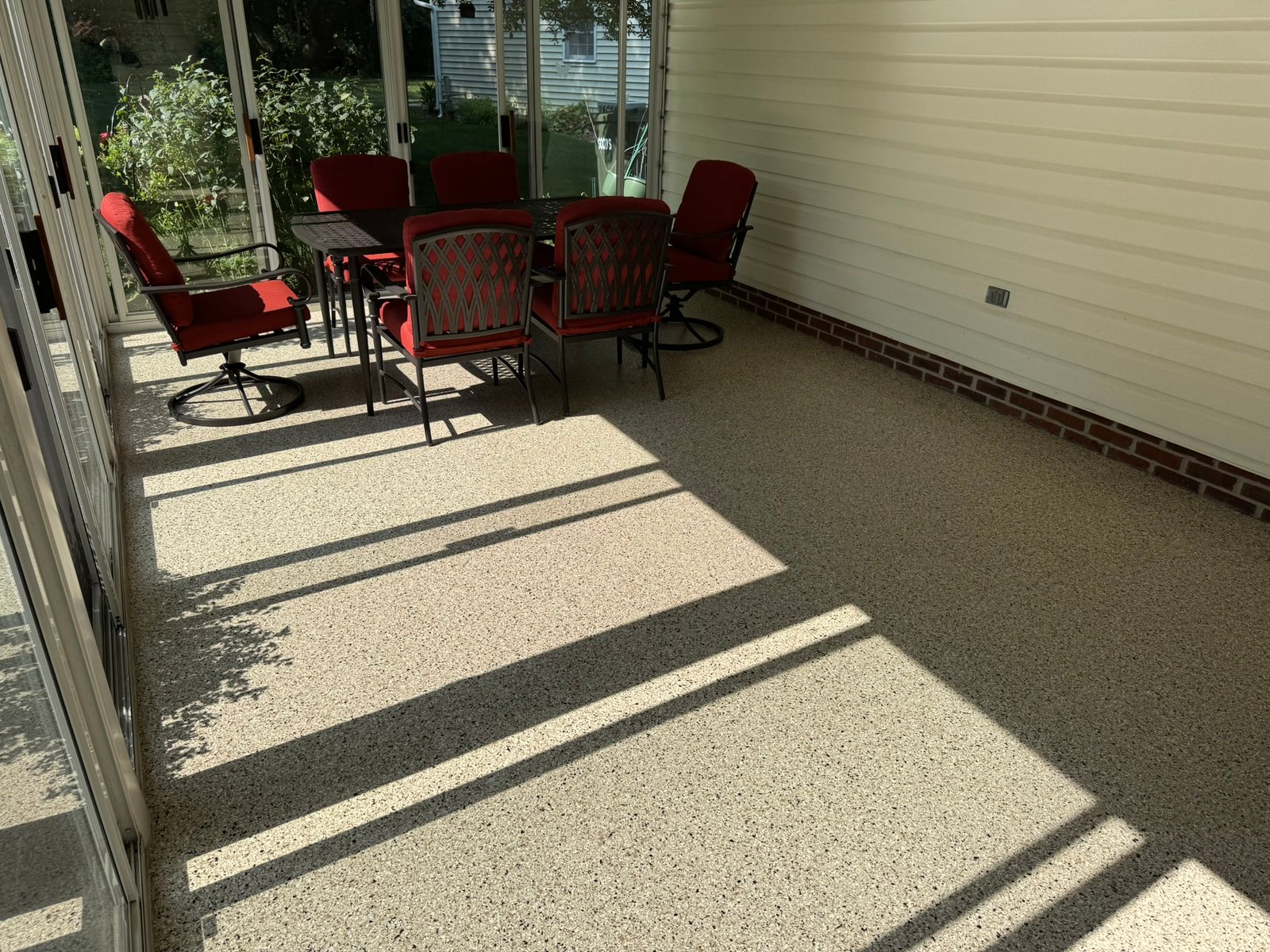
A bare concrete slab inside a glass walled sunroom in Denver, PA becomes a furnished, flake coated living space with a tan and beige finish.
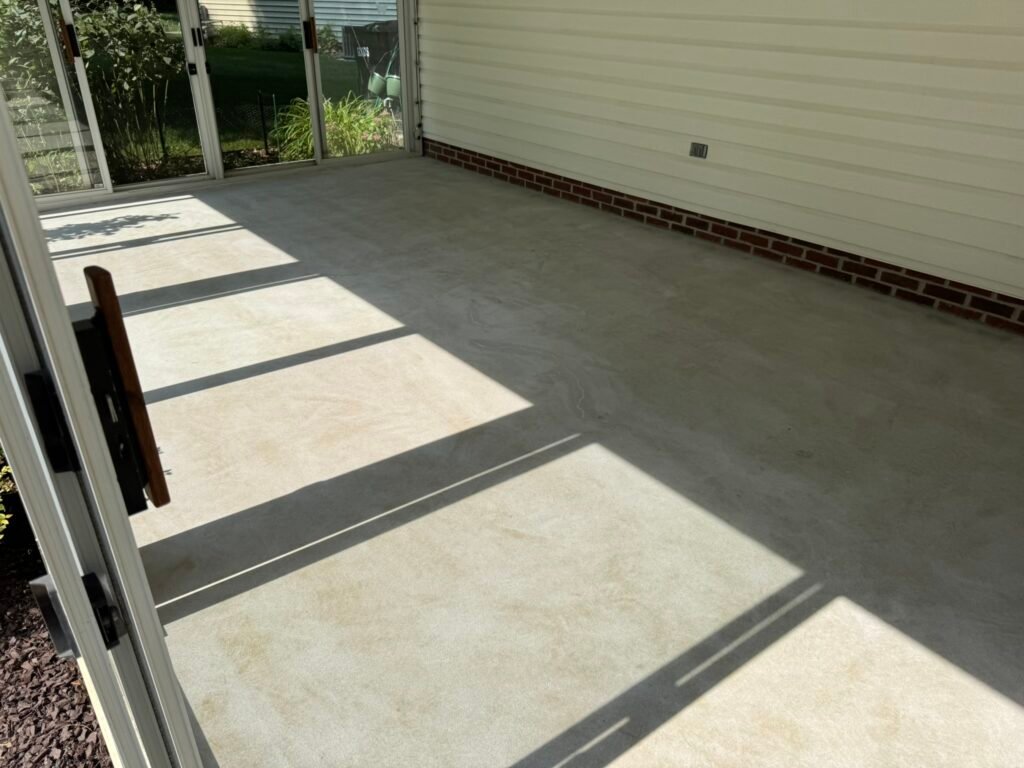
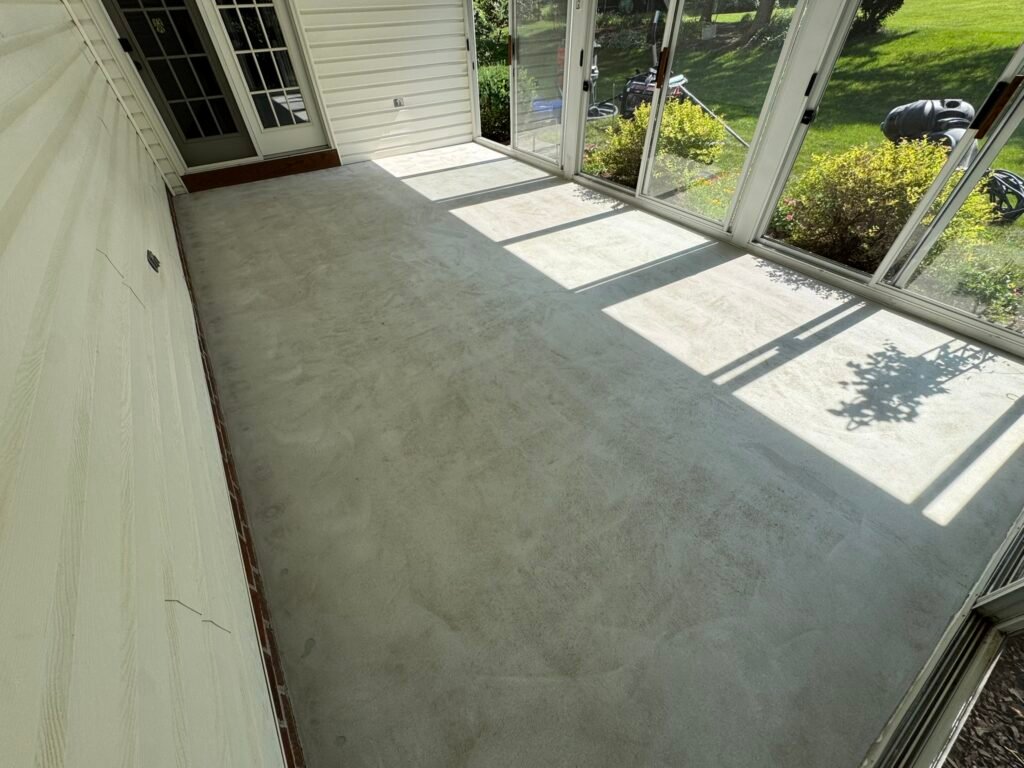
This sunroom in Denver had everything going for it except the floor. Big glass walls, plenty of natural light, a view of the backyard, and underneath all of it, a bare concrete slab that was never meant to be the finished surface. It was poured as a base during construction and simply left that way, which is more common than most homeowners realize.
The family wanted to actually use the room, with furniture, as a place to sit and enjoy the view, rather than a space they walked past on the way to somewhere else.
This is a more common situation than people think. A lot of sunrooms and three season rooms get added onto a house with a plain concrete pad as the floor, on the assumption that carpet, tile, or some other finished flooring will go down eventually. Then life gets busy and the room sits half finished for years, used for storage or as a spot to keep muddy boots rather than the bright, comfortable room it was supposed to be.
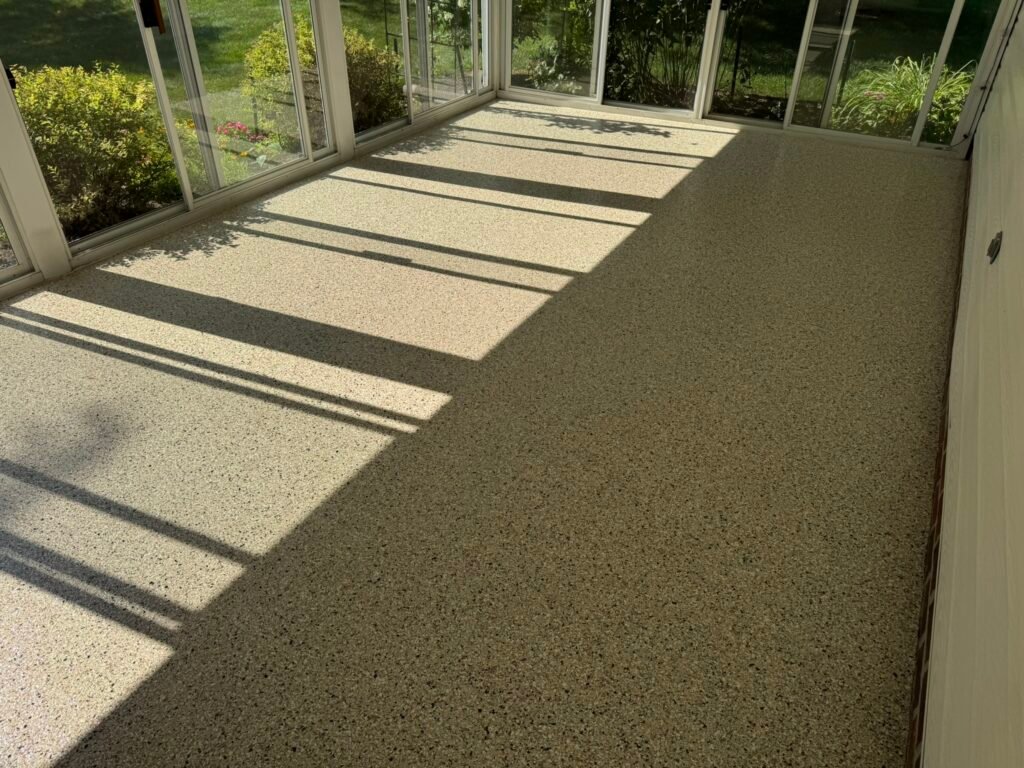
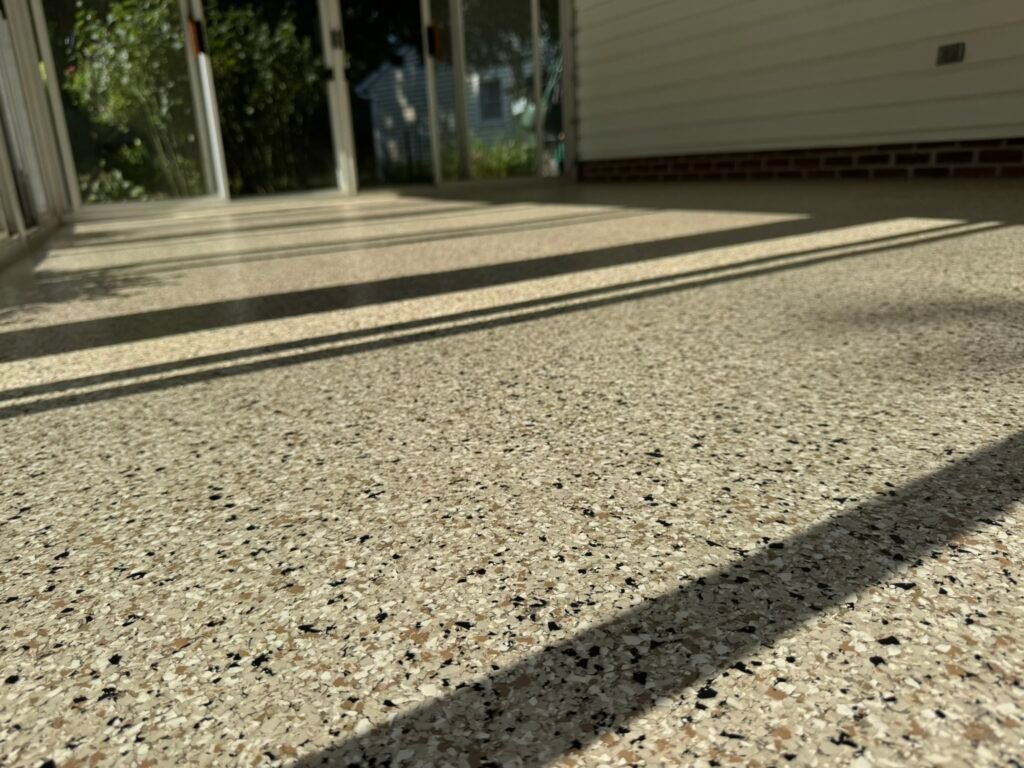
Want to see more examples like this one? Browse our full projects gallery or request a free quote for your own sunroom, patio, or garage.
Patios, sunrooms, and screened porches get ground and coated the same way a garage does, but the materials have to deal with something a garage floor never sees: direct sun and real weather. We grind the slab with diamond tooling to remove any residue and open the surface, then check it for cracks and moisture before coating.
The base coat and flake broadcast go down the same way as any other flake floor, full coverage, not just a light dusting of color. What changes is the topcoat. For an outdoor or semi-outdoor space, we use a UV stable polyaspartic topcoat specifically because it does not break down or yellow the way a standard epoxy topcoat can after a summer or two of direct sunlight. That matters a lot more on a screened porch with south facing windows than it does in a garage that only sees indirect light through a door.
We used a tan and beige flake blend for this floor, chosen specifically because it works with natural light coming through glass walls in a way that a cooler gray tone does not. Warmer tones tend to make a bright, sunlit room feel more finished rather than sterile.
A sunroom like this one is technically indoors, but it behaves more like an outdoor space because of how much direct sunlight comes through the glass all day. Standard epoxy topcoats are known to yellow or chalk over time under that kind of UV exposure, which is why we always use a UV stable polyaspartic topcoat in a room like this instead of treating it like a normal interior floor.
For a patio, sunroom, or porch, install day starts with clearing out any furniture, planters, or rugs so the crew has a completely open slab to work with. Grinding creates dust, so we set up around any nearby doors or windows to keep it from tracking into the house. Once the topcoat goes down, the floor needs to stay clear of foot traffic for the rest of that day, and furniture should stay off it for a few days after that while the coating finishes curing.
The price of a patio, sunroom, or porch coating comes down to a few things: total square footage, whether the concrete has cracks or damage that need repair first, how complicated the space is to work around (furniture, columns, tight corners), and which flake blend is picked, since some custom color combinations cost more than our standard blends. A simple rectangular slab in good shape is the least expensive version of this job. Add cracks, an odd shape, or a lot of edges to cut in around brick or stone, and the price goes up because the labor does.
Sunrooms in this part of Lancaster County go through bigger temperature swings than the rest of the house, hot and bright in the summer, cold near the glass in the winter. A polyaspartic system stays flexible across that range instead of going brittle in the cold or soft in the heat, which is exactly the kind of stress a garage floor never has to deal with.
Sweeping and an occasional rinse with a garden hose is really all this floor needs. Avoid harsh chemical cleaners and steel wool pads, which can scratch the topcoat. If you use outdoor furniture with metal feet, felt pads underneath will keep it from scuffing the surface over years of use. The coating is not going to peel or fade from normal weather, so there is no yearly resealing to keep up with.
For an outdoor or semi outdoor floor, the realistic options are usually bare sealed concrete, outdoor tile, or a flake coating like the one used here. Bare concrete with a sealer is the least expensive route but still looks and feels like unfinished concrete, and the sealer needs to be reapplied every year or two. Tile looks good but grout lines eventually crack or stain in a space that goes through freeze and thaw cycles, and tile can be genuinely slippery when wet. A flake coating gives you a textured, slip resistant surface with no grout lines to maintain, and no yearly resealing, which is a big part of why it has become such a common choice for sunrooms and porches around here.
No, that is specifically why we use a UV stable topcoat in a room like this instead of a standard interior product. Regular epoxy can yellow under years of direct sun, but the polyaspartic topcoat we use is formulated to resist that.
We recommend waiting a few days after installation before moving furniture back in, mainly to let the topcoat fully cure so it is not marked by furniture legs sitting in one spot too soon.
No, the flake broadcast gives the surface a texture that stays grippy even when damp, which is part of why we do not recommend a smooth, glass like topcoat for a room like this.
It is very similar, though a fully open patio with no roof needs to handle direct rain as well as sun, so we adjust the system slightly depending on how exposed the space actually is.
Yes, with some adjustments. A patio with no roof at all needs to handle direct rain and standing water more than a screened or glass walled room does, so we may adjust the topcoat slightly for that level of exposure.
The coating itself is not damaged by snow or ice sitting on it. Just use a plastic shovel rather than a metal one to avoid scratching the surface, the same way you would with any finished floor.
Yes, that is typically how we handle it. Furniture gets moved out to the yard or garage for the day, the floor gets ground, coated, and sealed, and then furniture goes back in once the topcoat has cured enough to handle the weight without marking.
No, the coating itself is not affected by humidity the way bare concrete or untreated wood can be. It is actually one of the reasons a sealed floor makes more sense in a room like this than an unsealed surface would.
A flake coating does not have to be reserved for garages. Any concrete slab that gets treated like an afterthought, a sunroom, a screened porch, a covered patio, can become real living space once the floor actually looks and feels finished. The trick is picking the right topcoat for how much sun and weather that specific room actually sees, which is not the same decision for every space.
FlakePro Coatings installs the same polyaspartic flake system in garages, basements, patios, sunrooms, and commercial buildings all over Lancaster County and the towns around it. If you want to see more of our work or get a quote for your own floor, here are some good places to look next.
Outdoor Patio Transformation with Polyaspartic Coating
Screened Porch Floor Coating in Elizabethtown, PA
See our full project gallery.
Read more about our floor coating services.
Request a free estimate and we will get back to you with a real number, not a guess.