Pennsylvania’s Floor Coating Experts. Durable. Slip-Resistant. Installed in One Day [Get Free Quote]

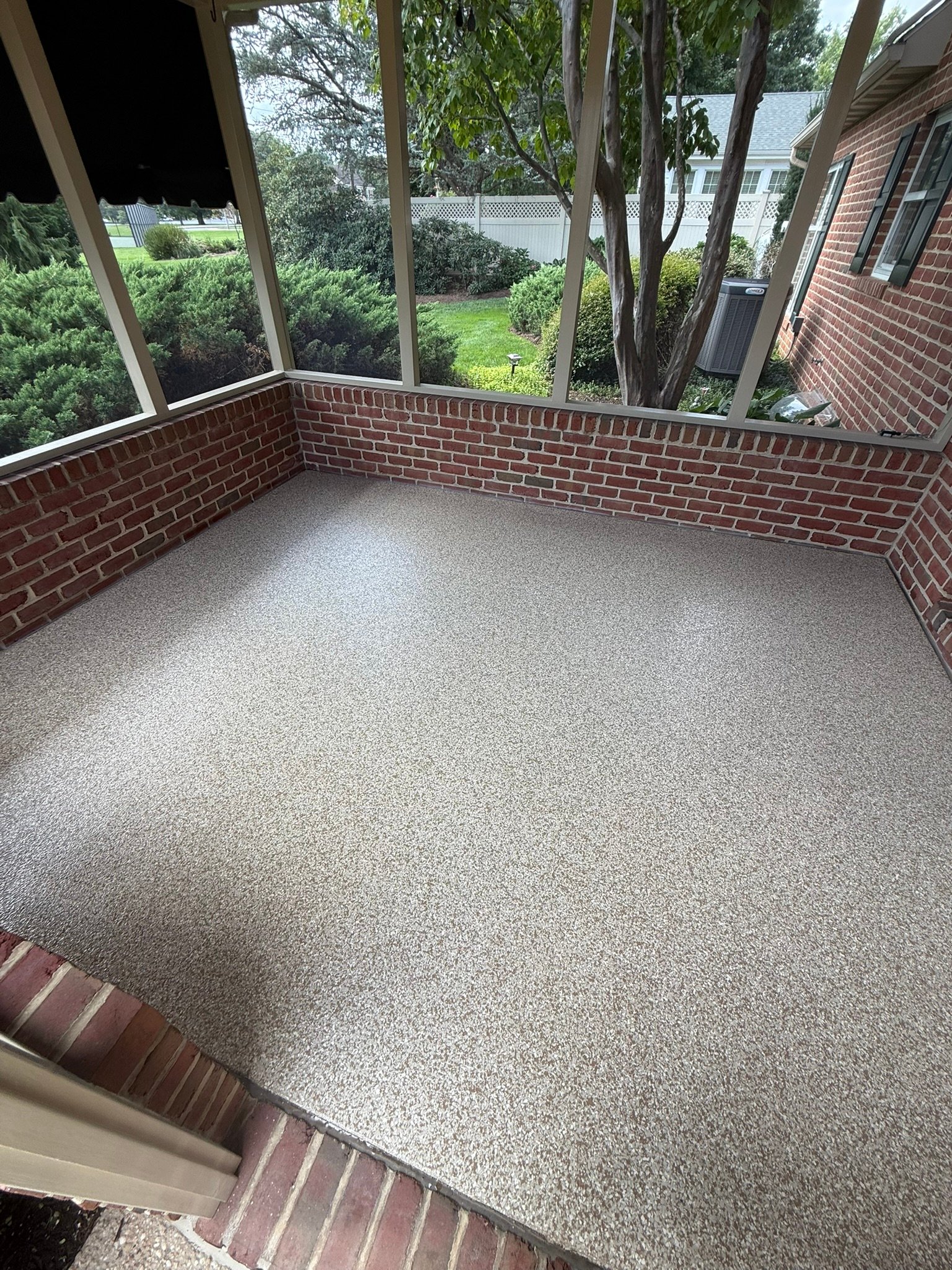
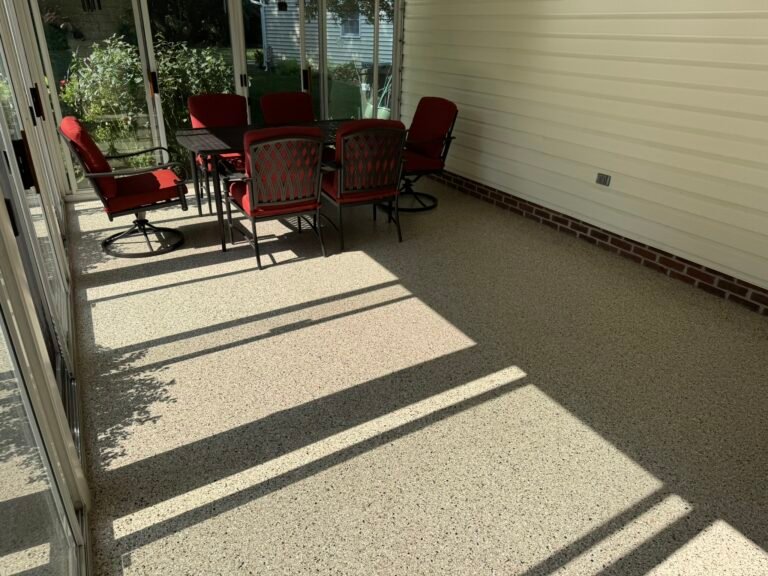
A brick walled screened porch in Elizabethtown, PA gets a tan, beige, black and white flake floor that fits the classic look of the home.
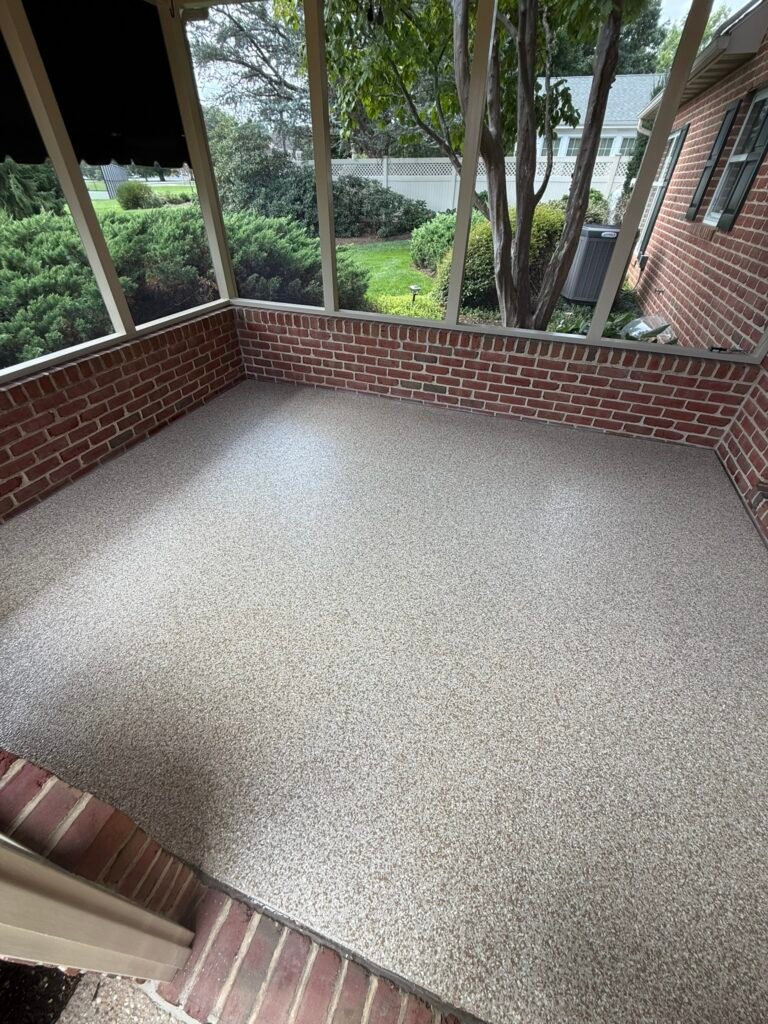
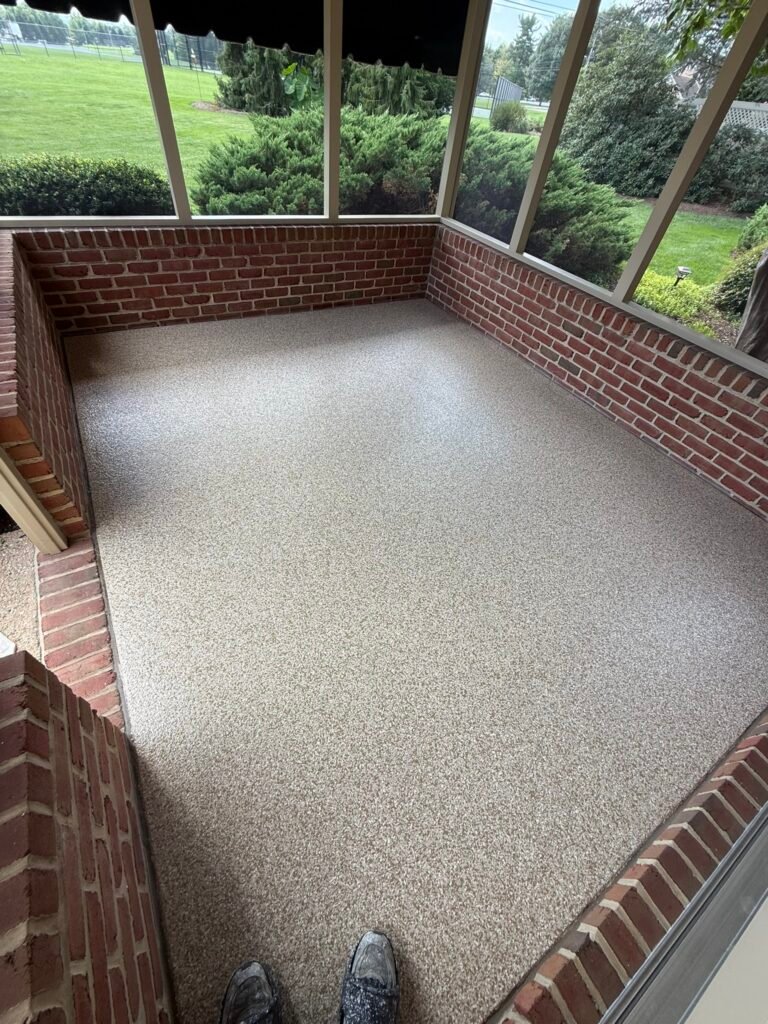
This screened porch in Elizabethtown sits behind a traditional brick home, with brick knee walls running the full perimeter of the room and a view out over the backyard through the screens. The concrete floor underneath had never been finished, which stood out next to the brick and the landscaping around it.
The homeowner wanted a floor that could handle a screened, semi outdoor space through all four seasons, without looking out of place next to a house with this much traditional character.
Screened porches like this one are one of the most underused rooms in a lot of older homes. They get built with a plain concrete slab, used for a few years, and then slowly turned into an overflow storage spot once the floor starts looking rough. Fixing the floor is usually the one thing standing between a porch that gets ignored most of the year and one that actually gets used through spring, summer, and fall.
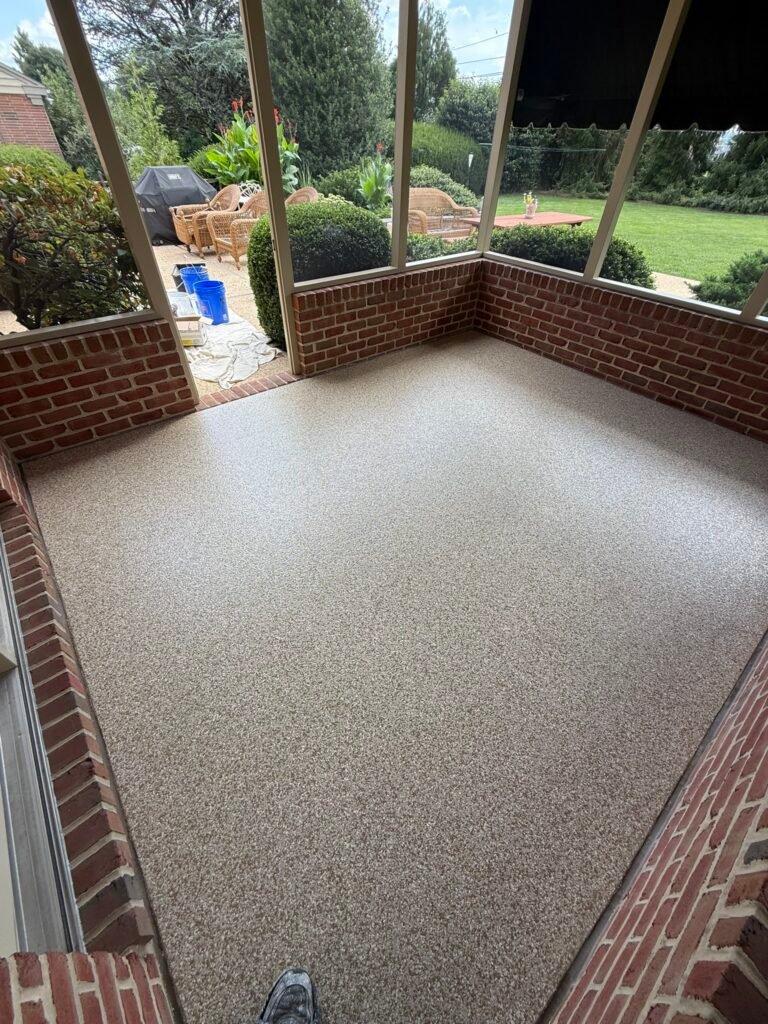
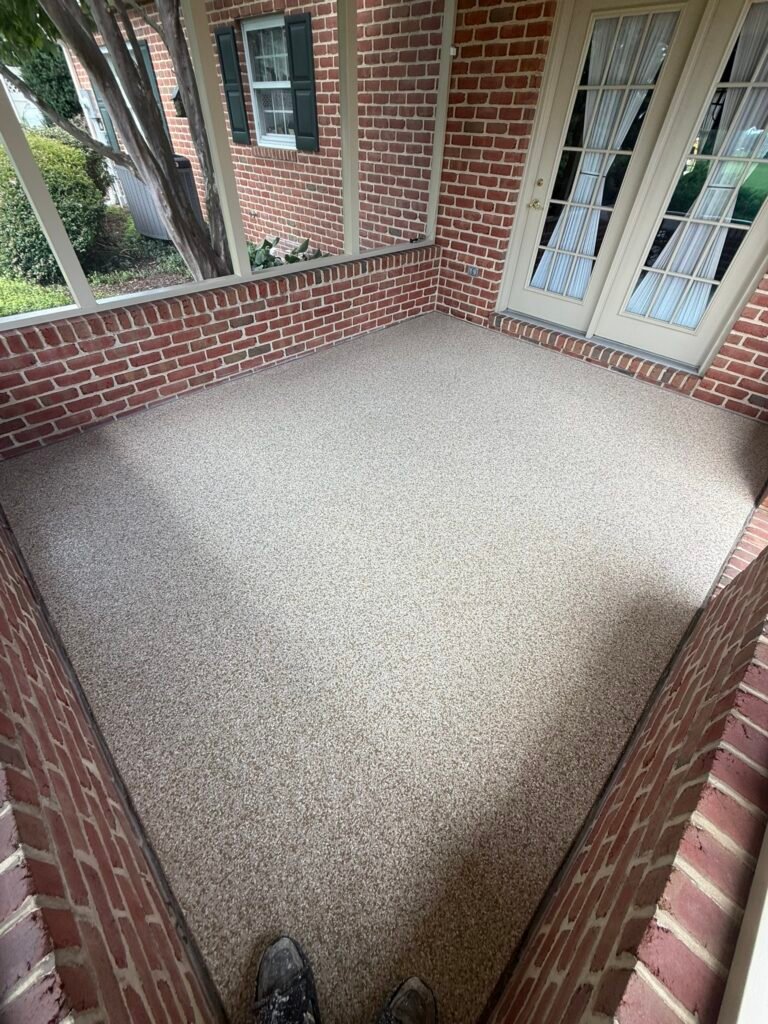
Patios, sunrooms, and screened porches get ground and coated the same way a garage does, but the materials have to deal with something a garage floor never sees: direct sun and real weather. We grind the slab with diamond tooling to remove any residue and open the surface, then check it for cracks and moisture before coating.
The base coat and flake broadcast go down the same way as any other flake floor, full coverage, not just a light dusting of color. What changes is the topcoat. For an outdoor or semi-outdoor space, we use a UV stable polyaspartic topcoat specifically because it does not break down or yellow the way a standard epoxy topcoat can after a summer or two of direct sunlight. That matters a lot more on a screened porch with south facing windows than it does in a garage that only sees indirect light through a door.
We chose a tan, beige, black and white flake blend for this porch specifically to complement the brick rather than contrast with it. A cooler gray tone would have looked more like a garage floor than a finished porch, which was not the goal here.
A lot of flake floor projects default to gray because it is the most common color people picture when they think of this kind of coating. On a home with this much brick and warm exterior tone, a warmer flake blend does a much better job of looking intentional rather than bolted onto an older house as an afterthought.
For a patio, sunroom, or porch, install day starts with clearing out any furniture, planters, or rugs so the crew has a completely open slab to work with. Grinding creates dust, so we set up around any nearby doors or windows to keep it from tracking into the house. Once the topcoat goes down, the floor needs to stay clear of foot traffic for the rest of that day, and furniture should stay off it for a few days after that while the coating finishes curing.
The price of a patio, sunroom, or porch coating comes down to a few things: total square footage, whether the concrete has cracks or damage that need repair first, how complicated the space is to work around (furniture, columns, tight corners), and which flake blend is picked, since some custom color combinations cost more than our standard blends. A simple rectangular slab in good shape is the least expensive version of this job. Add cracks, an odd shape, or a lot of edges to cut in around brick or stone, and the price goes up because the labor does.
A screened porch like this one is exposed to rain blowing in through the screens, humidity, and direct sun depending on the time of day, more than a fully enclosed room ever would be. That combination is exactly why we use a UV stable, weather resistant topcoat here rather than treating it like an interior floor.
Sweeping and an occasional rinse with a garden hose is really all this floor needs. Avoid harsh chemical cleaners and steel wool pads, which can scratch the topcoat. If you use outdoor furniture with metal feet, felt pads underneath will keep it from scuffing the surface over years of use. The coating is not going to peel or fade from normal weather, so there is no yearly resealing to keep up with.
For an outdoor or semi outdoor floor, the realistic options are usually bare sealed concrete, outdoor tile, or a flake coating like the one used here. Bare concrete with a sealer is the least expensive route but still looks and feels like unfinished concrete, and the sealer needs to be reapplied every year or two. Tile looks good but grout lines eventually crack or stain in a space that goes through freeze and thaw cycles, and tile can be genuinely slippery when wet. A flake coating gives you a textured, slip resistant surface with no grout lines to maintain, and no yearly resealing, which is a big part of why it has become such a common choice for sunrooms and porches around here.
No, the coating is fully sealed and does not absorb water the way bare concrete does. Standing water should still be swept or squeegeed out after a heavy storm, mainly so it does not sit against furniture legs for days at a time.
No, the flake itself is a stable material and the UV rated topcoat over it is specifically chosen to prevent the yellowing or fading that a standard indoor product would eventually show in a space like this.
We cannot get an exact match since it is a different material, but we can get close with the right blend, and warmer tones like the one used here generally read well next to brick and natural stone.
No, the broadcast flake texture gives the surface grip even when damp, which is one of the reasons we do not recommend a smooth, glossy finish for a space that is going to get wet.
Yes, as long as felt pads are used under anything with hard metal feet, the same common sense precaution you would take on any finished floor, indoors or out.
Yes, we work right up to the edge of the brick without coating over it, so the brick keeps its original look while the concrete floor gets the finished treatment.
Yes, we tape off and protect the base of the brick before grinding starts, so dust and equipment do not mark the mortar or brick face while we are working on the concrete floor.
A stain sits on top of bare concrete and typically needs to be resealed every year or two to keep its color, especially in a space that gets direct weather. A flake coating does not fade the same way and does not need that yearly upkeep.
A flake floor does not have to look like it belongs in a garage. Choosing a warmer blend, tan and beige tones instead of gray, is usually the difference between a floor that looks bolted onto an older home and one that looks like it was actually designed to go with the brick and the landscaping around it. It is a small decision on paper, picking a color, but it is the one that decides whether the finished porch feels like it belongs to the house or looks like a garage floor that got moved outside.
FlakePro Coatings installs the same polyaspartic flake system in garages, basements, patios, sunrooms, and commercial buildings all over Lancaster County and the towns around it. If you want to see more of our work or get a quote for your own floor, here are some good places to look next.
Screened Sunroom Floor Coating in Denver, PA
Outdoor Patio Transformation with Polyaspartic Coating
See our full project gallery.
Read more about our floor coating services.
Request a free estimate and we will get back to you with a real number, not a guess.