


Pennsylvania’s Floor Coating Experts. Durable. Slip-Resistant. Installed in One Day [Get Free Quote]

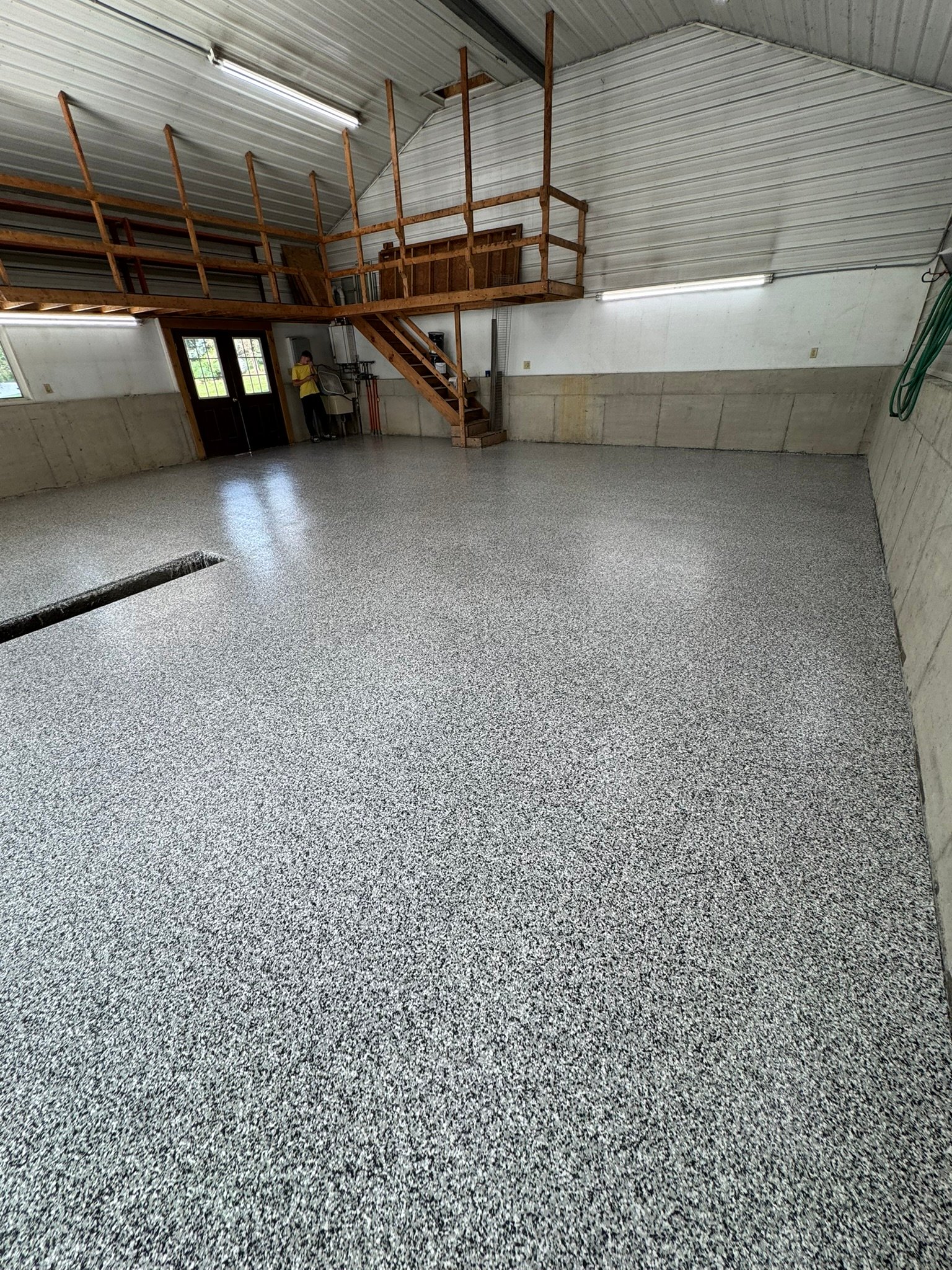
A large pole barn building near Reading, PA gets a full coverage gray, black and white polyaspartic flake floor sized for commercial equipment and vehicle traffic.
Most of our work is residential garages and patios, but this project near Reading was a full commercial pole barn building, complete with a mezzanine storage loft, a floor drain channel running through the middle of the space, and enough square footage that it needed a full crew working in sections rather than one installer working alone.
The existing slab had years of cracking and staining from vehicle and equipment traffic, and the owner needed a floor that could take heavy daily use without shutting the building down for an extended stretch to get it done.
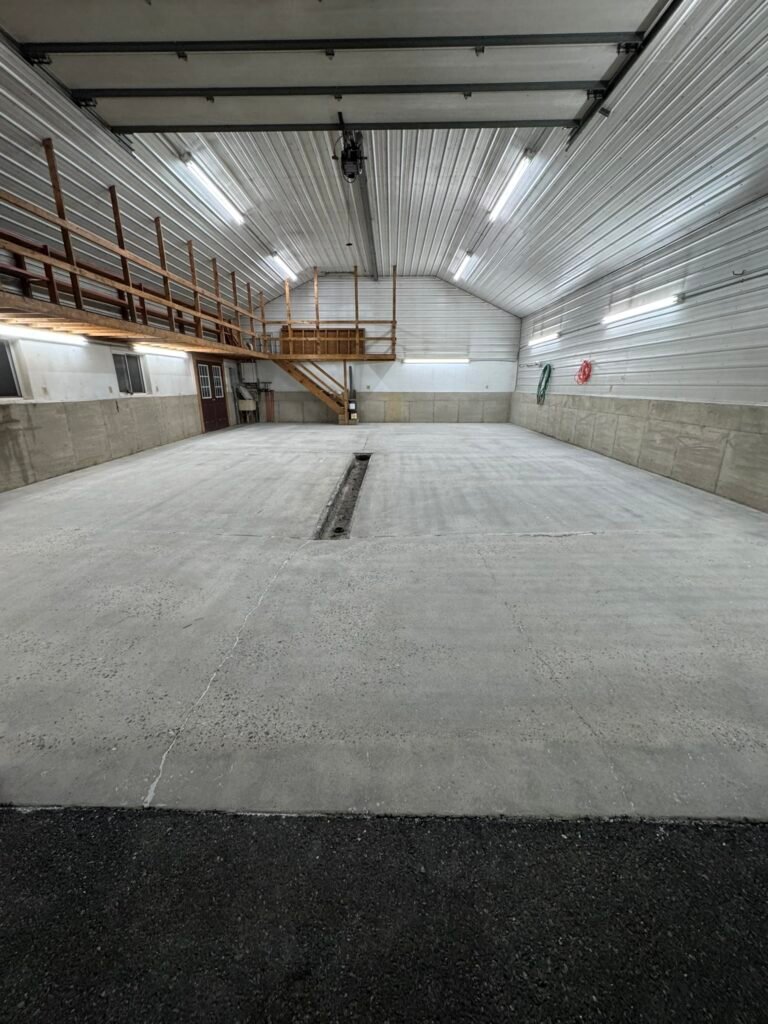
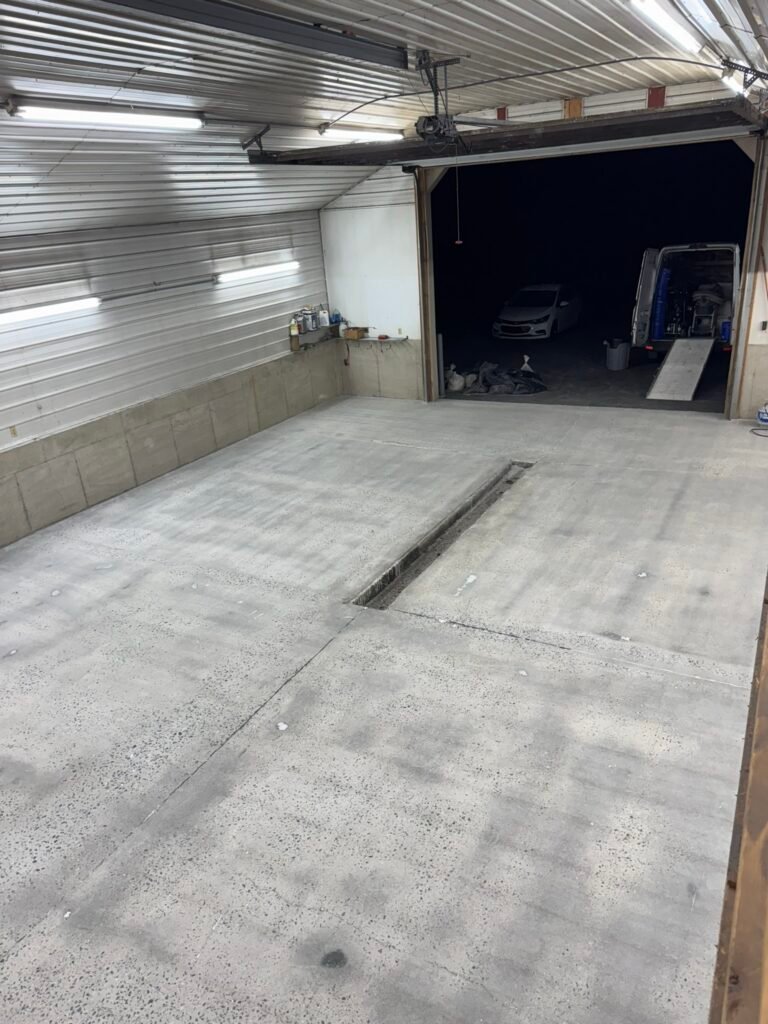
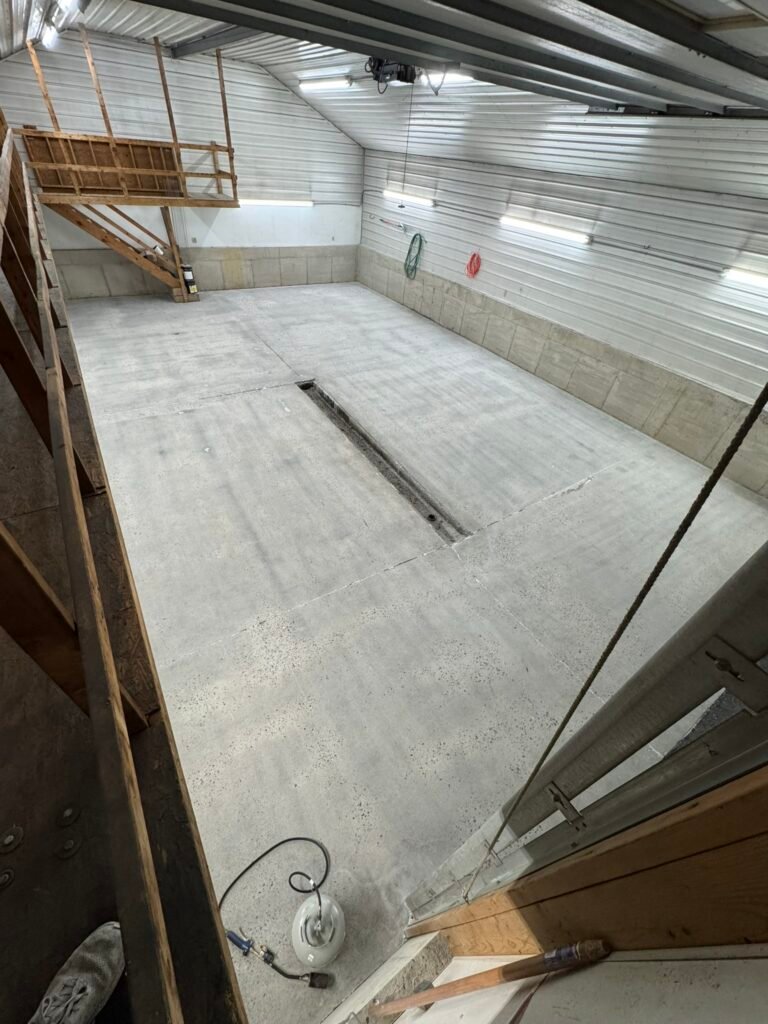
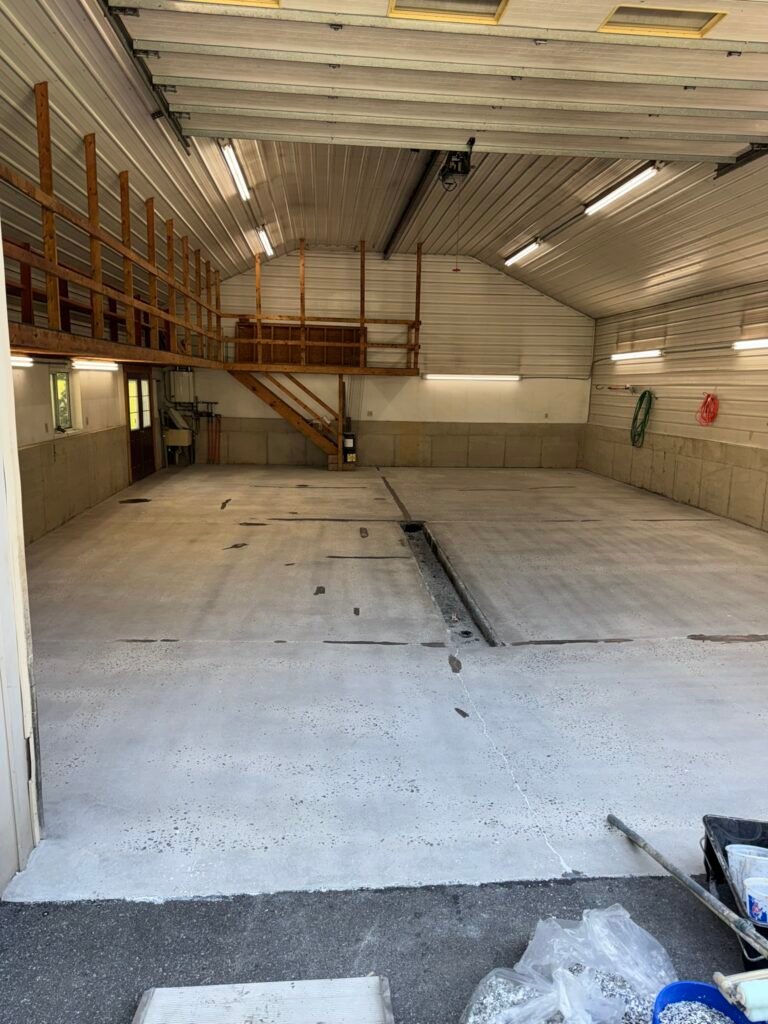
A commercial or shop floor gets the same core process as a residential garage, just at a scale that takes real planning to pull off. We start by grinding the entire slab with diamond tooling, section by section, working around support posts, floor drains, and anything permanently mounted to the floor. On a big open building, that alone can take a full crew most of a day.
Once the concrete is ground and cleaned, we go over the whole floor for cracks, control joints, and any low spots that need to be addressed before coating goes down. A commercial floor sees forklifts, vehicles, and heavy point loads that a residential garage never will, so skipping repairs here is a much more expensive mistake than it would be in a house.
We follow ICRI surface prep standards on every job, but it matters even more at commercial scale, because matching the concrete surface profile to the coating system is what keeps a large floor from failing in high traffic areas first. From there we apply a commercial grade polyaspartic base coat, broadcast the flake to full coverage across the entire footprint, and finish with a topcoat built to handle tires, forklift traffic, and daily equipment use without wearing through in the first year.
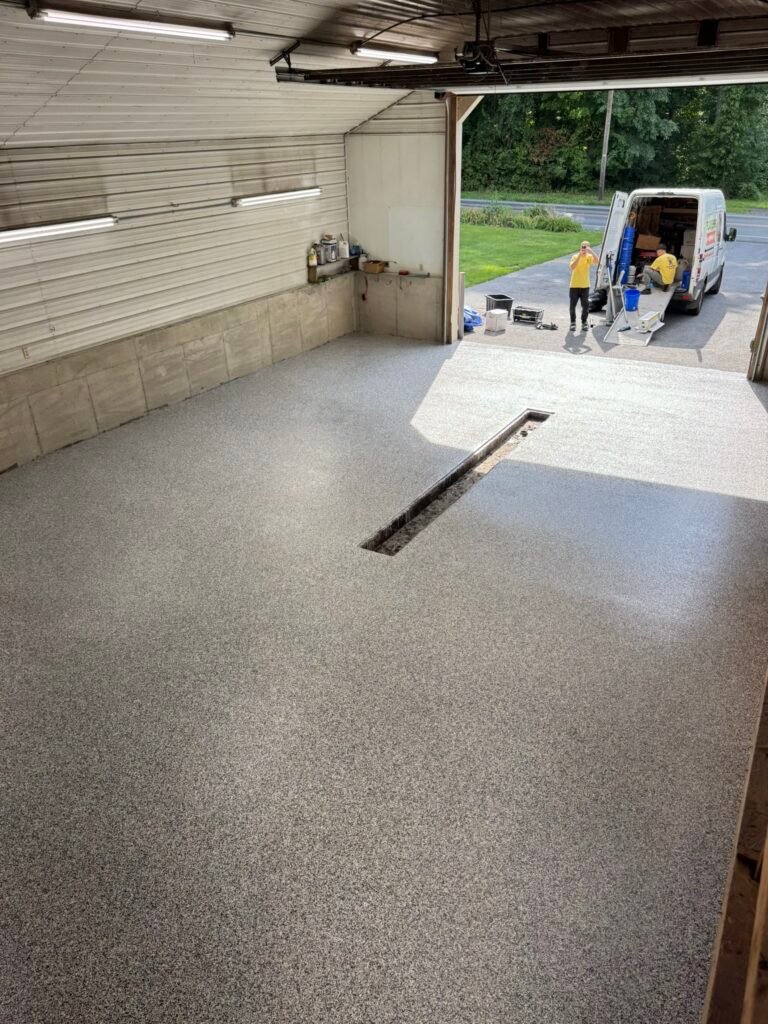
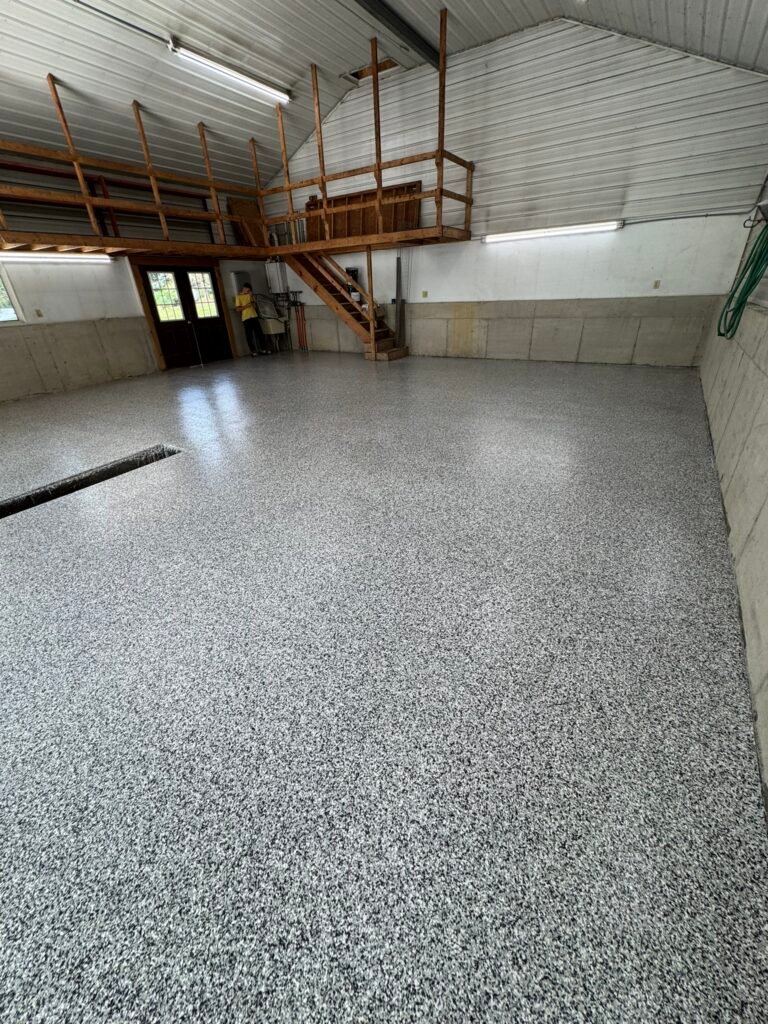
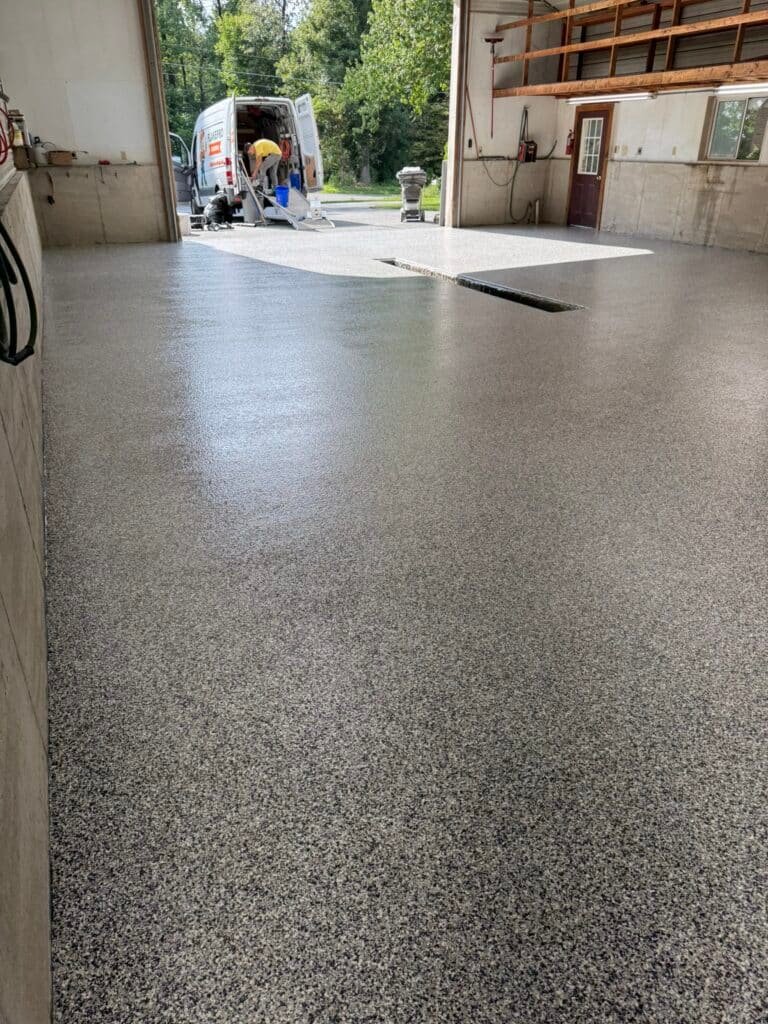
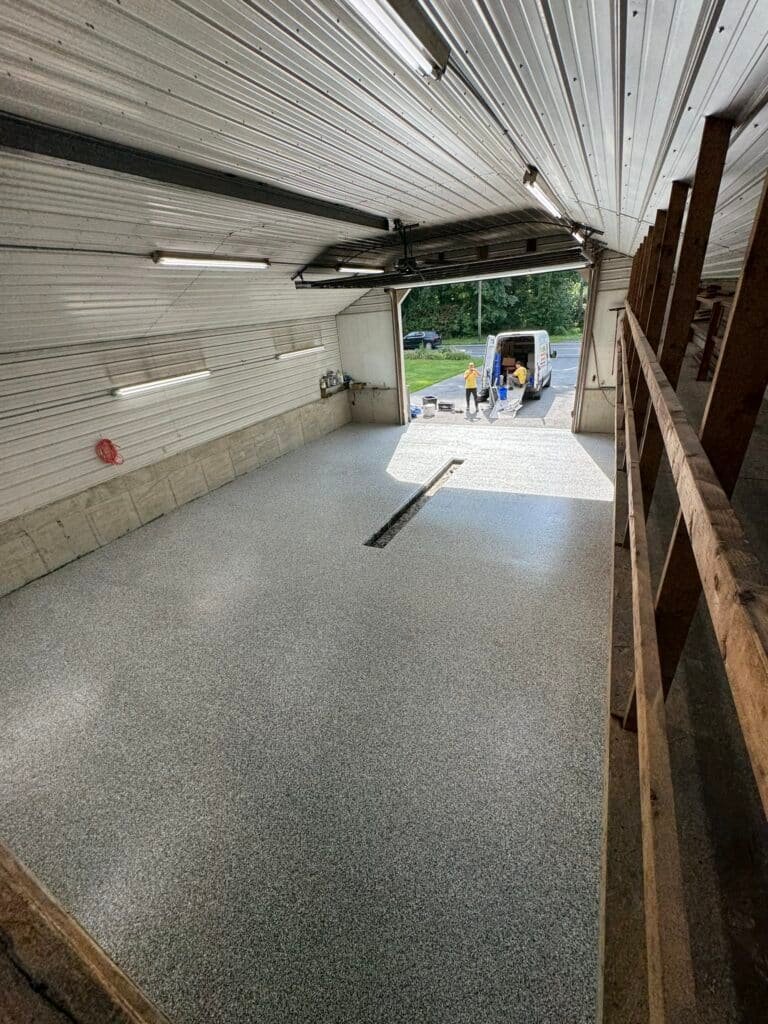
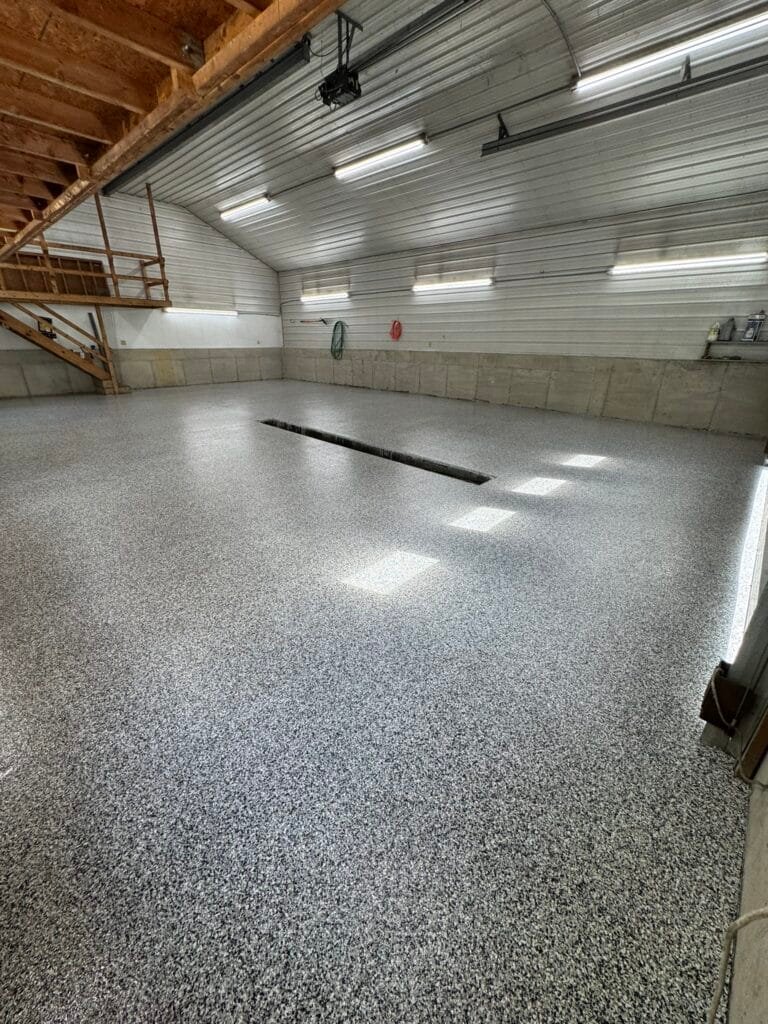
The floor drain channel running through the middle of the building meant we had to grind and coat right up to the edge of it without letting material run into the drain itself, which takes more care than a straightforward open floor would. We also coordinated the schedule so the building could get back to limited use as quickly as possible once the floor had cured enough for foot traffic, then full vehicle and equipment use once it reached full cure.
On a commercial job, install day usually means coordinating with the business owner on which sections of the building can be closed off first, moving vehicles and equipment out of the work area, and setting up ventilation and containment so the rest of the building can stay in limited operation if needed. The crew works section by section rather than all at once, which lets part of the floor start curing while another section is still being ground or coated. Once a section is walkable, light foot traffic can usually resume there while the rest of the building finishes up.
People ask us about pricing on almost every commercial job, so here is the honest answer: it depends mainly on square footage, how much crack repair or leveling the existing slab needs, how many obstacles the crew has to work around (support posts, drains, mounted equipment), and how quickly the building needs to get back into use. A large open floor in good condition costs less per square foot than a smaller space full of cracks, corners, and things to work around, simply because the labor per square foot goes up when the job is not a clean, open floor. We walk every commercial floor in person before quoting, because guessing at square footage over the phone almost always misses something that affects the price.
Commercial buildings around Reading and the surrounding area see far more daily wear than a residential garage ever will, constant vehicle traffic, heavier point loads from equipment, and in a lot of cases, exposure to fuel or chemicals that a home garage floor never has to deal with. That is exactly the environment a full flake, commercial grade polyaspartic system is built for.
Day to day cleanup is simple: a broom or a shop vac handles dust and debris, and a mop with warm water and a mild degreaser takes care of oil or grease spots. Avoid pressure washing directly on the seams around drains at full pressure, and avoid harsh acid based cleaners, which can dull the topcoat over time. Beyond that, this floor is built to take daily commercial use without special treatment.
Business owners looking at commercial flooring usually have three real options: leave the concrete bare and seal it with a penetrating sealer, paint it with an epoxy coating, or go with a full flake polyaspartic system like the one used here. A penetrating sealer is the cheapest option but does nothing for appearance and very little for durability under heavy traffic. Epoxy paint looks better and holds up reasonably well in light use areas, but under forklift traffic and daily vehicle movement it tends to wear through at high traffic points within a couple of years. A full flake system spreads the wear across a textured, thicker surface instead of a thin painted film, which is why it holds up longer under exactly this kind of use.
It depends heavily on square footage and how much crack repair or leveling the existing slab needs, but a building this size typically takes a few days of active work once the crew is on site, broken into grinding, repair, coating, and cure time.
Usually yes, in sections. We can often coat part of a building while another section is still in light use, then move the crew and equipment once that section has cured enough to walk on.
Yes, that is specifically what a commercial grade polyaspartic system with a full flake broadcast is built for. The topcoat thickness and flake coverage are chosen based on the kind of traffic the floor will actually see.
Yes, drains, expansion joints, and any embedded hardware in a commercial floor all need to be worked around carefully during grinding and coating, which is part of why commercial jobs generally need more planning time than a straightforward residential garage.
We can add striping for walkways, equipment lanes, or safety zones as part of the project if the building needs it. It is usually easiest to plan that out before the flake broadcast goes down rather than adding it afterward.
A commercial grade system installed correctly typically holds up for many years under daily vehicle and foot traffic before it needs recoating, though heavy forklift lanes may show wear sooner than the rest of the floor and can be recoated in just that section.
That depends on the scope of the project and local requirements, and it is something we discuss directly with the building owner before work starts, since every municipality handles this a little differently.
In some cases yes, we can work around equipment that cannot be relocated, though it usually means that specific section gets finished in a later pass once the equipment can be shifted. We walk the building ahead of time to plan around exactly this kind of situation.
Commercial floors do not get the luxury of a slow cure or a fragile finish. They need to handle vehicle traffic, chemical exposure, and heavy point loads from the first day they are back in use. That starts with surface preparation. We follow the ICRI surface prep standards on every commercial job, which means matching the concrete surface profile to the coating system rather than guessing. Skip that step on a floor this size and even a good coating will fail early, usually right where traffic is heaviest.
FlakePro Coatings installs the same polyaspartic flake system in garages, basements, patios, sunrooms, and commercial buildings all over Lancaster County and the towns around it. If you want to see more of our work or get a quote for your own floor, here are some good places to look next.
Garage Floor Coating in Mount Joy, PA
Basement Floor Coating in Manheim, PA
See our full project gallery.
Read more about our floor coating services.
Request a free estimate and we will get back to you with a real number, not a guess.