Pennsylvania’s Floor Coating Experts. Durable. Slip-Resistant. Installed in One Day [Get Free Quote]

Type who does epoxy floors near me into Google and you will get a wall of ads, directory listings, and a dozen companies that all claim to be the local experts. Some of them grind concrete and install real multi-layer coatings. Others are a painter with a roller and a five-gallon bucket of hardware store epoxy who added flooring to their service list last year. This guide is a practical checklist for telling the two apart before you hand anyone a deposit check.
Pay attention to how a company describes its own work. Epoxy floor paint contractors and garage floor paint contractors are usually painting companies that treat floor coating as one more service they offer alongside interior and exterior painting. Epoxy installers, garage epoxy installers, and epoxy floor specialists tend to be companies whose entire business is floor coatings specifically, with the equipment and crew experience that comes from doing nothing else all day.
Neither label alone guarantees quality, and there are painting companies that do solid floor work. But it is a useful first filter: a company whose entire identity is built around floor coatings has more reason to own real grinding equipment and keep up with the latest polyaspartic products than a painter who picked up floor coating as a side offering. It is a similar logic to hiring an electrician who only does electrical work instead of a general handyman who also does electrical on the side: both can be competent, but one has built an entire business around getting that specific trade right.
A real epoxy specialist should be able to explain, without hesitation, whether they install traditional epoxy or polyaspartic, and why. Epoxy has been the default for decades, but it yellows under UV exposure, cures slowly, and tends to become brittle over time. Polyaspartic cures in hours instead of days, stays UV-stable outdoors and in garages with natural light, and flexes with the concrete instead of cracking against it. We cover the actual chemistry behind this in more detail in how polyaspartic coating works, if you want the full technical explanation.
Just as important: ask whether they grind the concrete or acid etch it. Diamond grinding removes the weak surface layer and opens the concrete for real adhesion. Acid etching is a chemical shortcut that leaves that weak layer mostly intact, which is why acid-etched floors are far more likely to peel within a year or two.
A specialist worth hiring will usually bring up grinding before you even ask, because it is the step they are proudest of and the one that actually determines whether the floor lasts. If a company glosses over prep and jumps straight into talking about color options and flake blends, that is a sign the conversation is steering away from the part of the job that matters most.
In practice, most homeowners calling around Stevens, Ephrata, Lititz, and the rest of Lancaster County end up with a mix of responses: a couple of companies that answer every question above without hesitation, a couple that get vague on warranty terms, and at least one that tries to quote a price over the phone before ever seeing the garage. That last response alone is usually enough to cross a company off the list, since a real quote requires looking at the actual slab.
It is also worth noticing how a company talks about your specific garage versus how they talk in generalities. A specialist asks about your slab’s age, whether you have noticed cracking or staining, and what you actually use the garage for day to day, since all of that affects what system makes sense. A company reciting a generic sales script without asking any of that is telling you something about how much attention your actual floor is going to get.
Ask these five questions before you book anyone, and pay close attention to how directly they answer:
A company that installs real floors every day answers all five without hesitation, because the answers are simply how they operate. A side-hustle outfit tends to get vague, change the subject, or push you toward booking before answering directly.
Before you pick up the phone, it is worth spending a few minutes checking whether a company’s name, address, and phone number are consistent across independent sources, the same basic check you would run on any contractor coming into your home. Business directories like Manta and Cybo are useful for exactly this: they show a company’s listed address and contact details independently of whatever the company’s own website or ads say.
If a company’s listed address does not match what they tell you on the phone, or they cannot be found on any independent directory at all despite claiming to have been in business for years, that is worth asking about directly before you schedule anything.
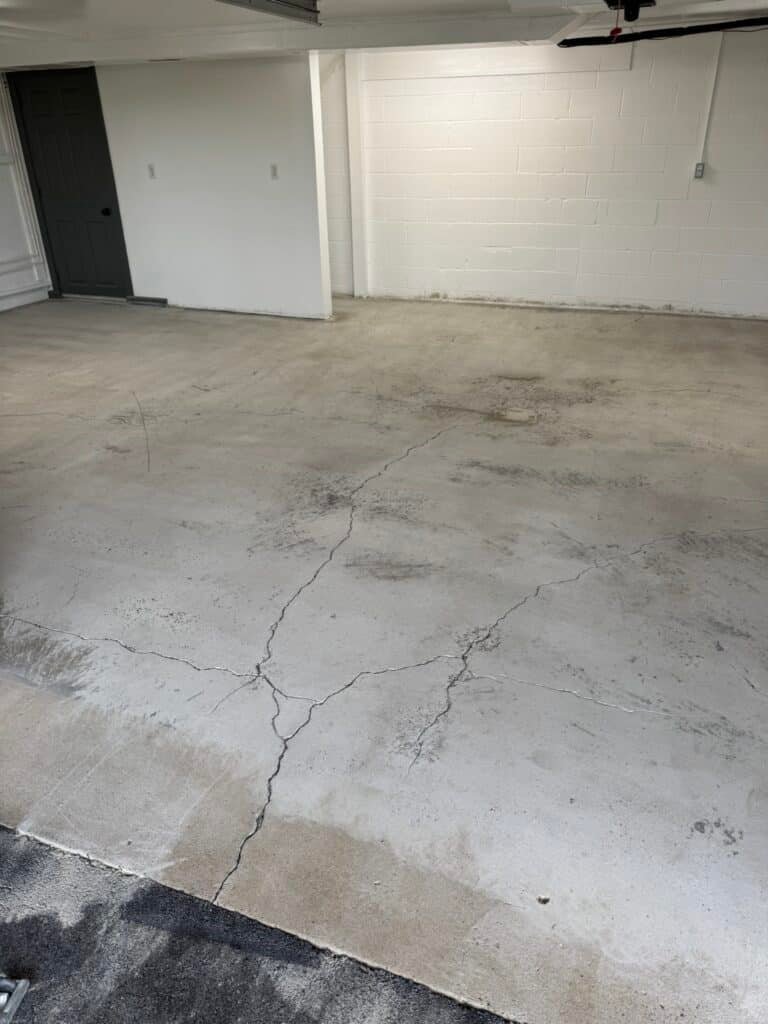
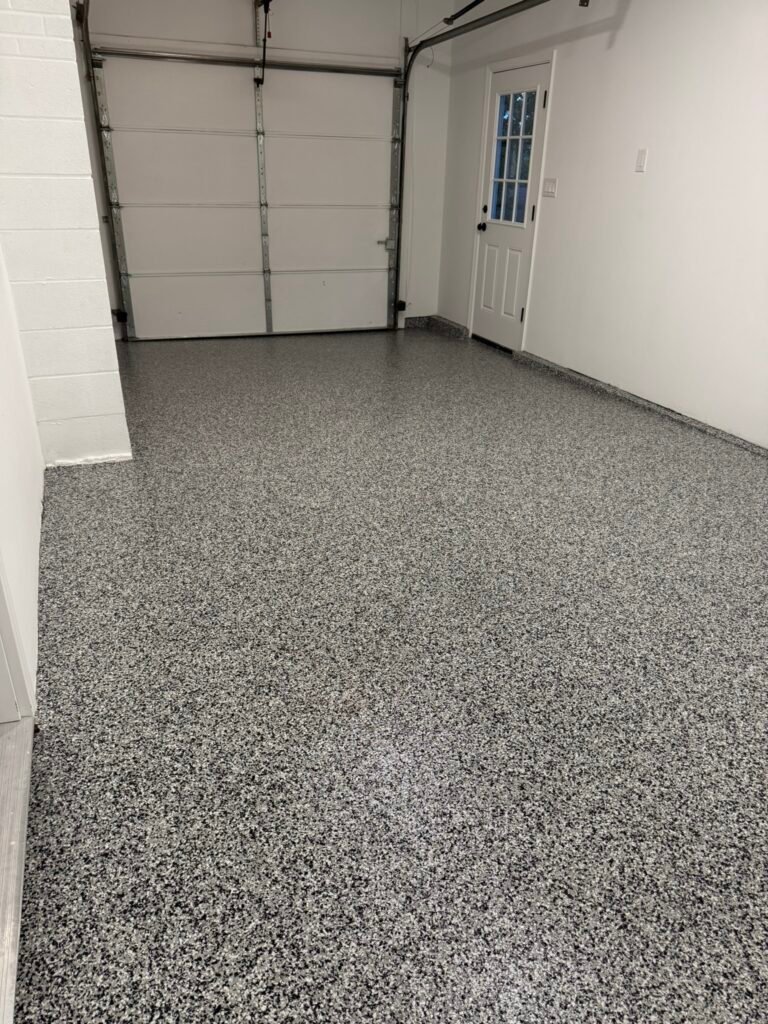
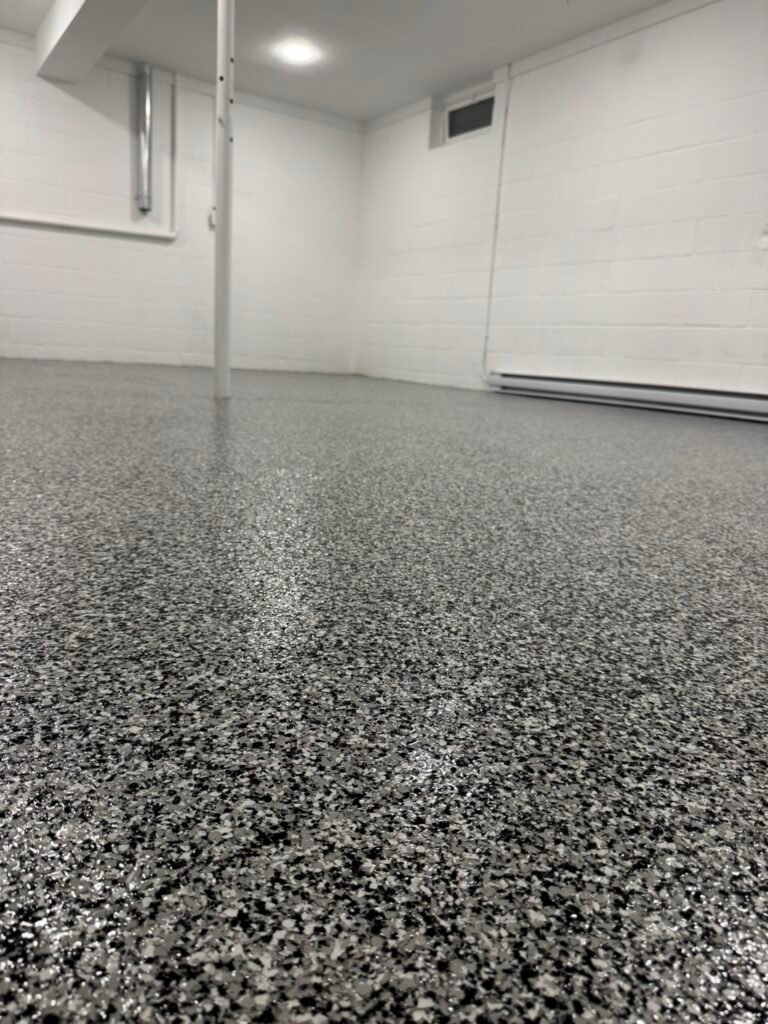
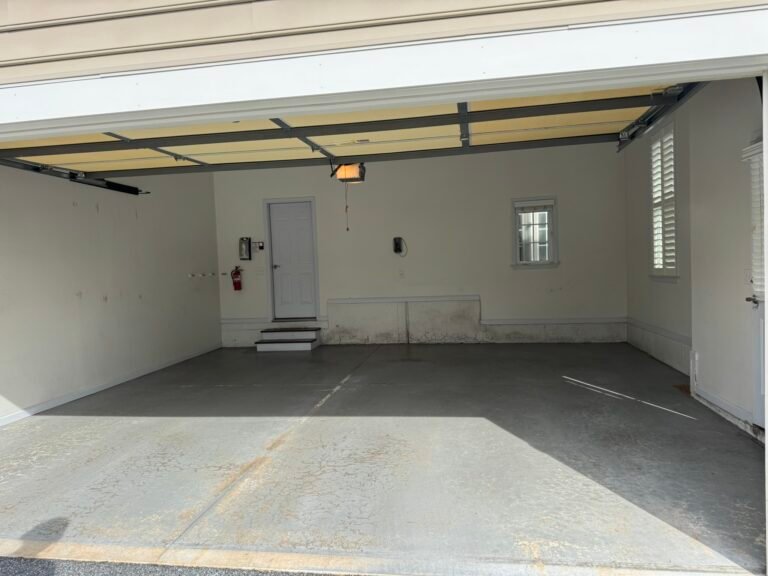
Real local project photos matter too. Stock photography of a generic garage is a red flag. A company that has actually worked in Lancaster, Lebanon, or Berks counties should be able to show you specific local jobs, not just marketing images pulled from a coating manufacturer’s catalog. Our own completed projects gallery shows exactly this kind of real, local, dated work.
When a genuine specialist shows up to quote your garage, the visit looks different from a quick drive-by estimate. They walk the slab, look for cracks and staining, check for signs of moisture coming up through the concrete, and measure the actual square footage instead of estimating it from the driveway. On install day, the same attention to detail continues: real diamond grinding equipment, a moisture test if the slab warrants it, and a crew that treats prep as the most important part of the job rather than something to rush through to get to the finish coat. You can read more about how we approach every job on our about page, or see the finished results on the garage floor coating page.
None of this checklist is about assuming the worst of every company that comes up in a search. Plenty of legitimate specialists work throughout Lancaster, Lebanon, and Berks counties. The point is simply to know what separates them from the side-hustles before you are the one finding out the hard way, three winters from now, when a cheap coating starts lifting at the seams.
Not really. Both terms describe companies whose core business is floor coatings rather than a side service. What matters more than the label is whether they actually grind concrete, install a real multi-layer system, and back the work with a written warranty.
Ask directly, and ask them to explain the difference in their own words. A company that genuinely installs polyaspartic can explain cure time, UV stability, and flexibility without hesitation, since those are the exact reasons they use it.
Not necessarily. Most floor coating companies work out of a shop or garage rather than a retail storefront, since the work happens at your home, not theirs. What matters more is whether their address and contact information are consistent and verifiable across independent directories.
Some can, if they invest in real grinding equipment and take prep as seriously as a dedicated floor coating company does. The questions above work the same way regardless of what the company calls itself.
Cross-check their name, address, and phone number across two or three independent business directories, and look for a real local project gallery instead of stock photography. Both take just a few minutes and rule out most of the companies you should not be calling in the first place, before you ever spend time scheduling an in-person estimate.