Pennsylvania’s Floor Coating Experts. Durable. Slip-Resistant. Installed in One Day [Get Free Quote]

A lot of what gets written about floor coatings is general advice that applies to no specific floor in particular. This article is the opposite: a walk through several of our own completed projects across Lancaster County, what made each one different, and what we actually took away from doing the work, not just the finished photos.
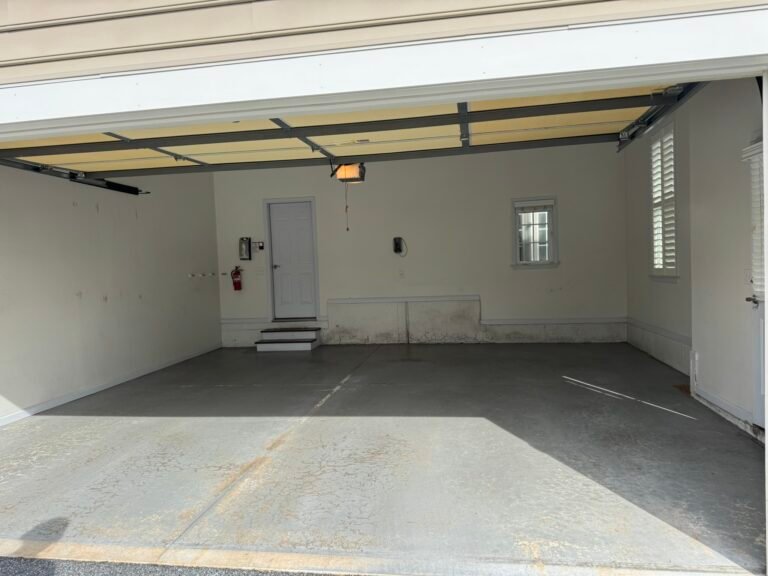
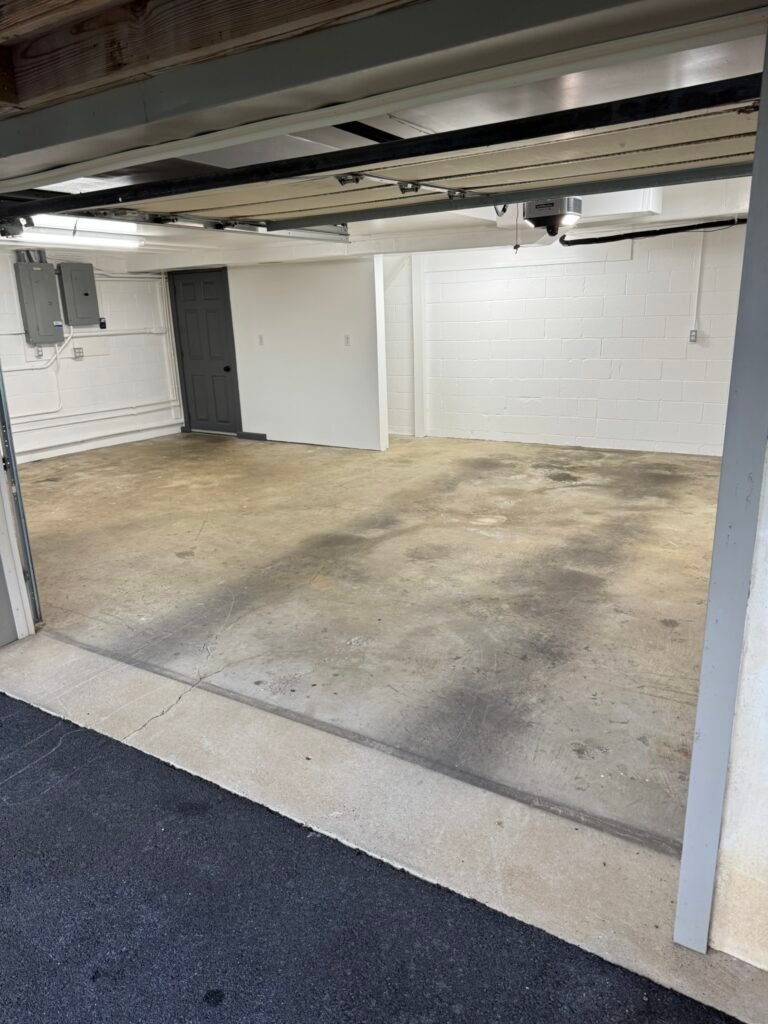
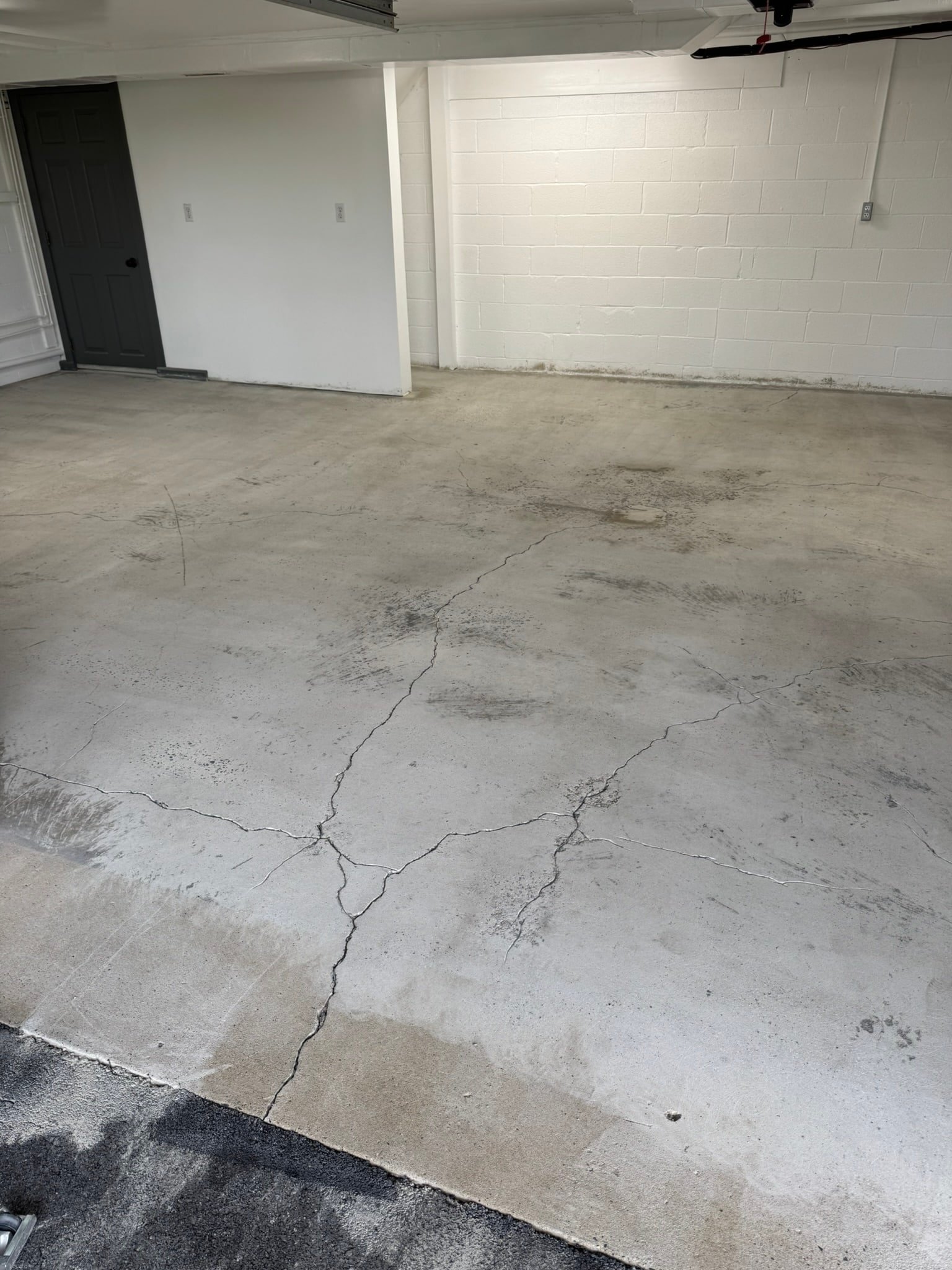
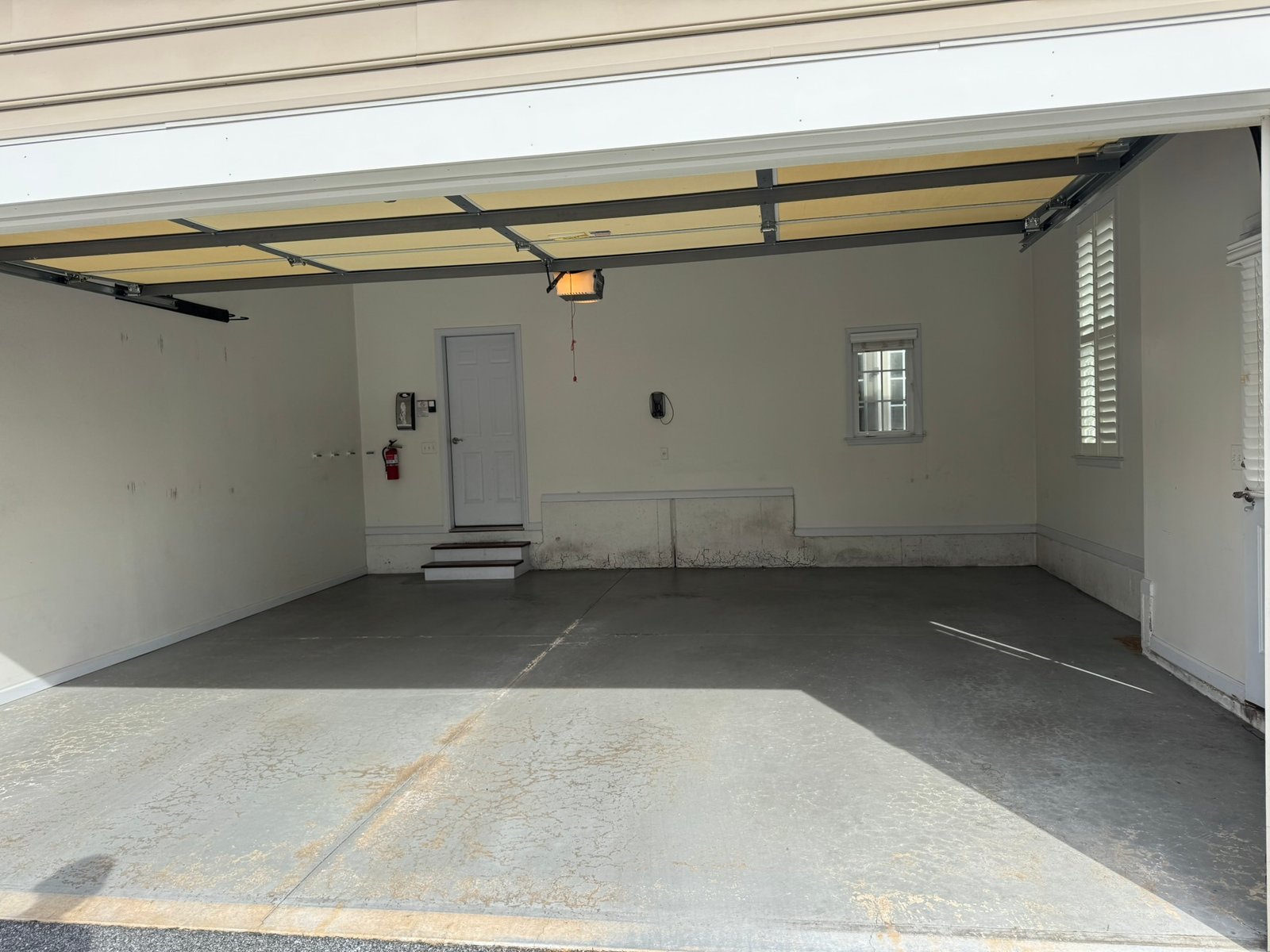
This garage slab had a network of visible cracking that, on first look, seemed like a candidate for full replacement rather than a coating project. Instead, we routed out each crack, filled it with a flexible polyurea crack filler designed to move with normal concrete expansion and contraction rather than fighting against it, ground the entire slab to a consistent profile including the repaired sections, and installed a full polyaspartic flake system on top.
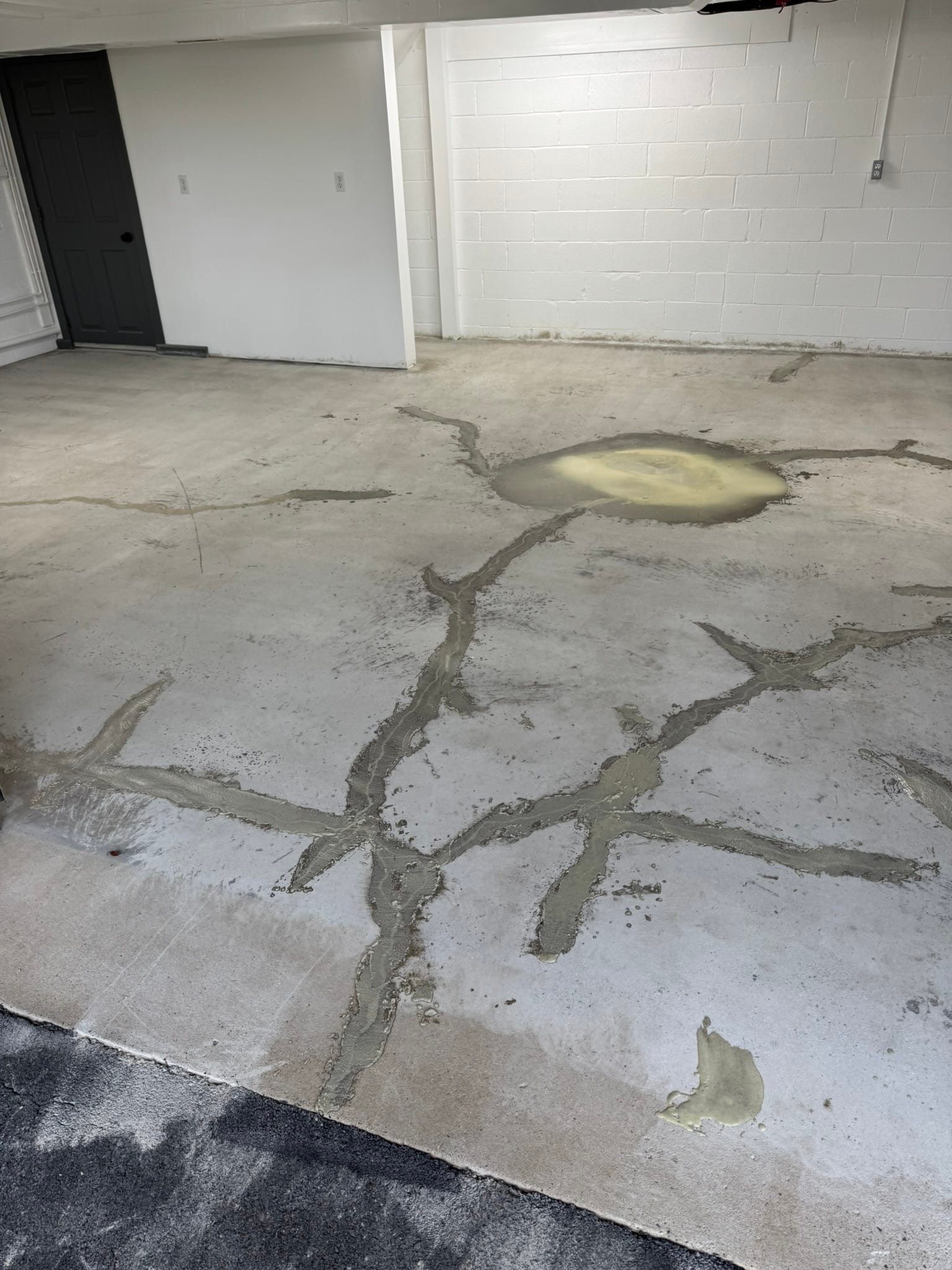
What we took from this one: a slab’s visual condition is a poor predictor of whether it needs replacing. Staining and cracking look dramatic, but most of it grinds away or repairs cleanly. The part that stuck with the crew on this job specifically was how much the finished floor hid the repair once the flake broadcast went down over it, to the point that it is genuinely difficult to find the repaired seams in the finished photos unless you already know exactly where to look. You can see the full finished result in our Mount Joy project writeup.
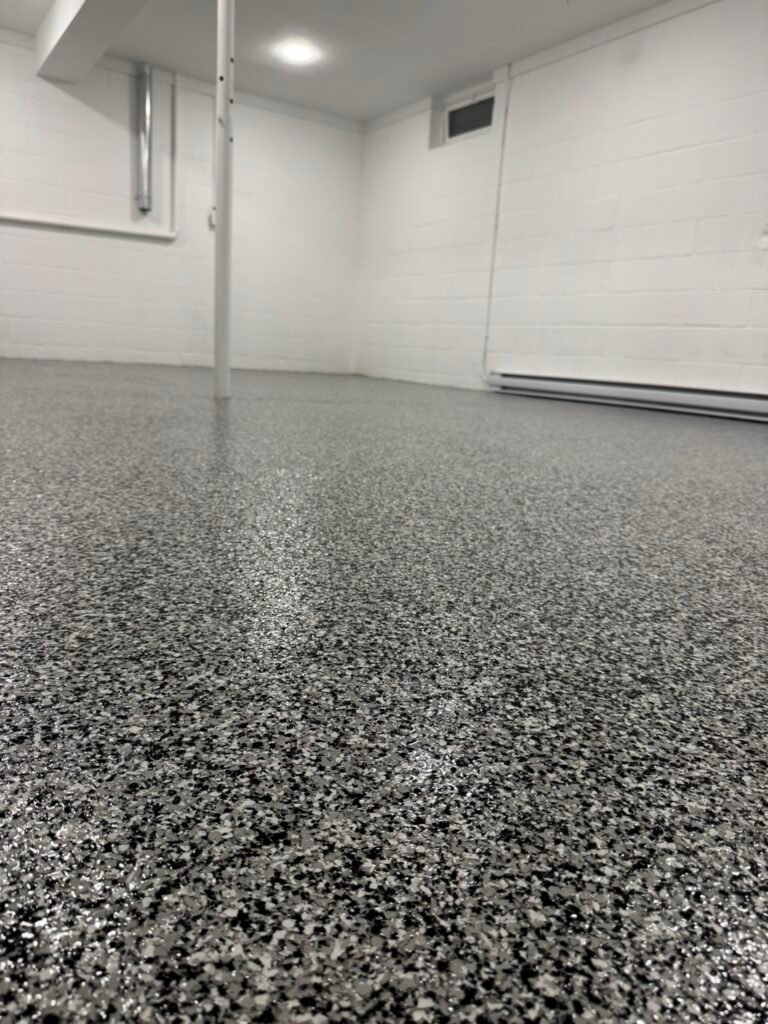
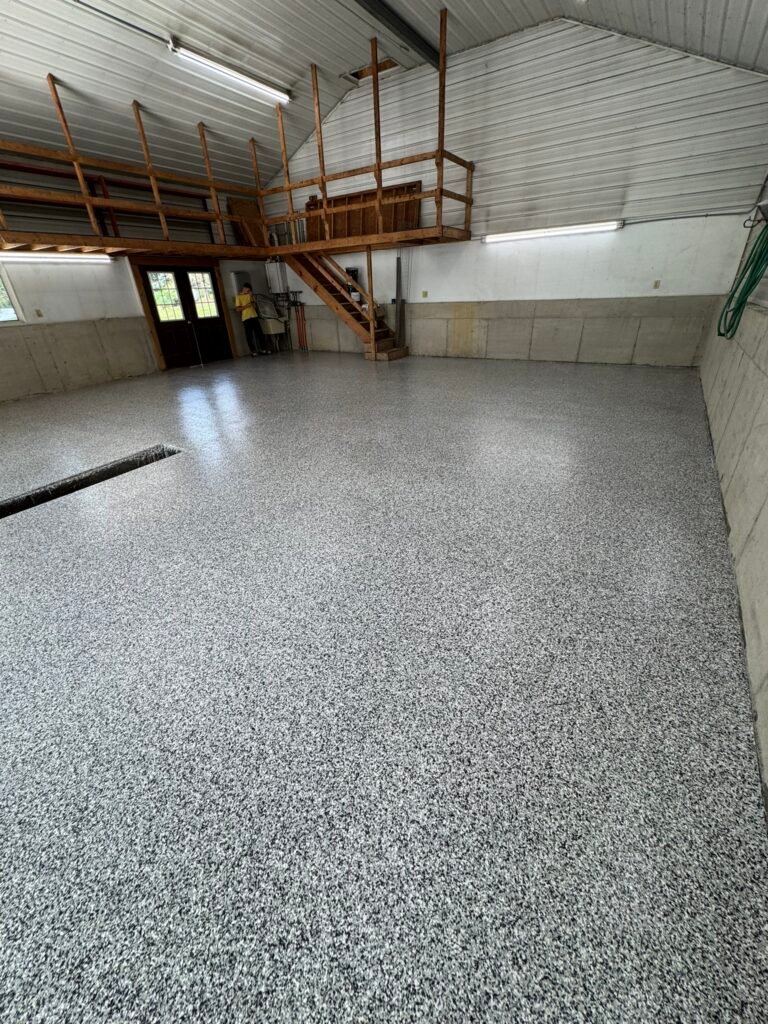
Our commercial project in Reading involved a pole barn with a mezzanine storage loft, built-in drain channels, and the kind of real wear you would expect from a working building rather than a staged photo shoot. The scale alone changed the job: larger grinding equipment, a crew working in sections rather than one open pass, and planning the work around drain channels so they stayed functional once the floor was finished.
What we took from this one: commercial jobs are a different category of planning than residential work, not just a bigger version of the same thing. Scheduling, equipment, and site-specific features like drain channels all need to be accounted for before grinding ever starts, and a crew used to single-day residential turnarounds has to shift its whole approach to timing and sequencing once the space gets this much larger. We also came away from this one with a clearer sense of how much a mezzanine storage loft changes the actual grinding logistics, since equipment and materials have to move around support columns and a staircase rather than across one open rectangle of floor. The full project is covered in our Reading commercial writeup, and the general approach we bring to spaces like this is on our commercial polyaspartic floor coating page.
Not every project is a two-car garage or a commercial warehouse. Our one-day garage project in Ephrata and a screened sunroom conversion in Denver are both good examples of smaller, less typical spaces that still benefit from the same underlying process: proper grinding, the right coating system for how the space actually gets used, and a flake blend chosen to match the room rather than whatever is easiest to apply. The sunroom project in particular meant treating a space that functions more like an outdoor living area than a garage, which changed some of the practical considerations around furniture weight and foot traffic patterns compared to a typical vehicle-heavy garage floor. Both projects are covered in our Ephrata writeup and our Denver sunroom writeup.
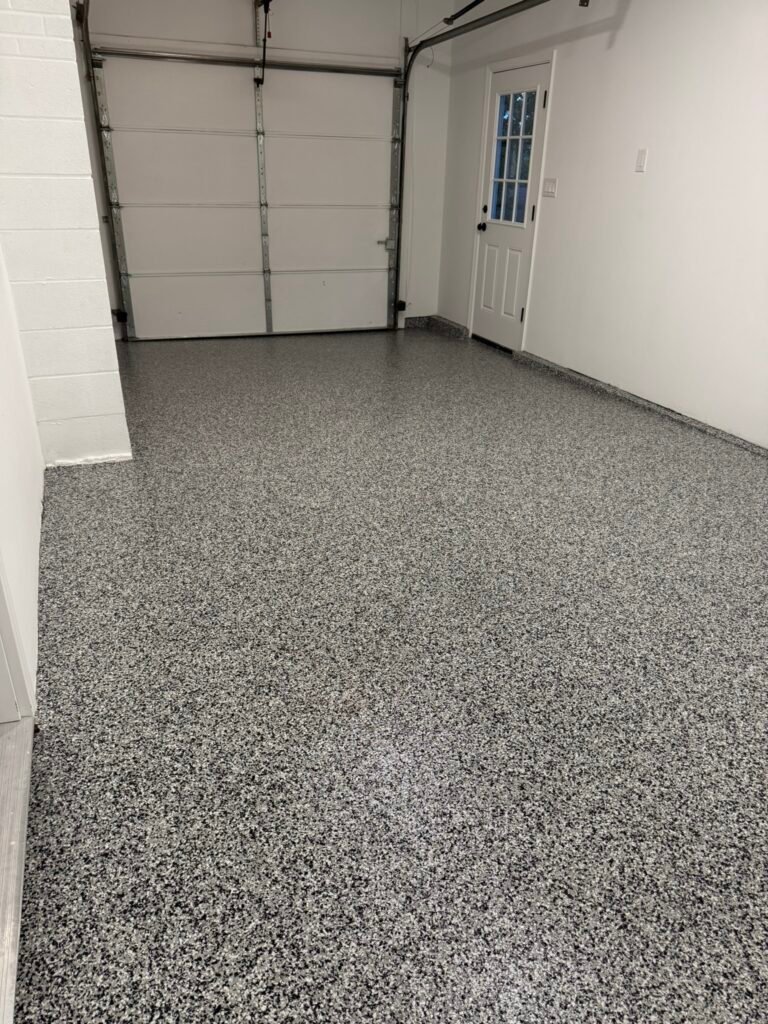
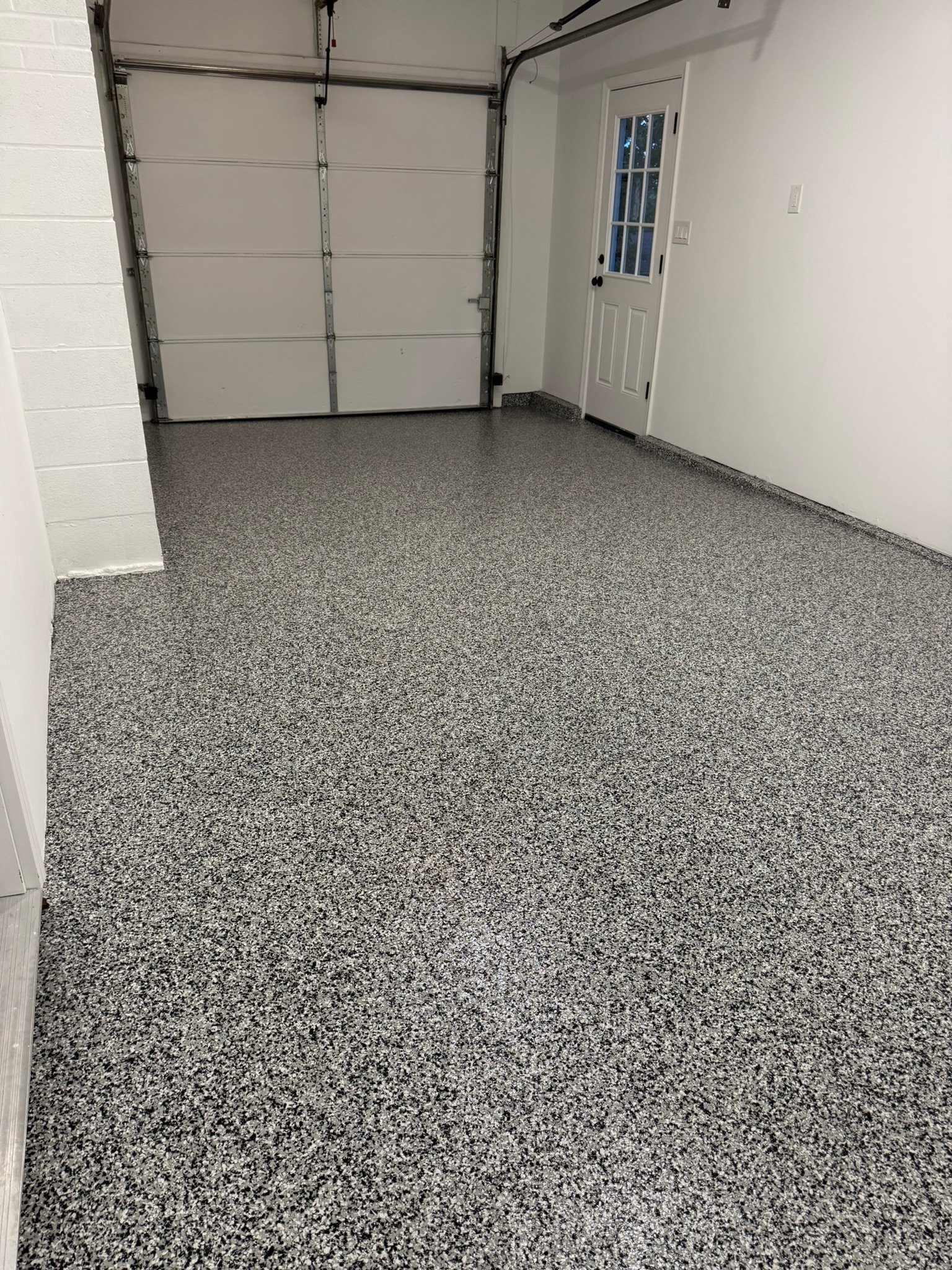
Our New Holland garage project was, on paper, a straightforward job: a clean slab, a black, gray, and white flake blend, and a single-day installation. What makes it worth mentioning is exactly that it was straightforward, and we still ran the same grinding sequence, the same attention to prep, as we would on a harder job. It is easy to cut corners on the jobs that look easy, since nobody is watching as closely as they would on a visibly damaged slab. Our view is that consistency on the simple jobs is exactly what builds the track record that makes the harder jobs go smoothly too. You can see the finished floor in our New Holland project writeup, and the surrounding area’s full coverage on our New Holland service page.
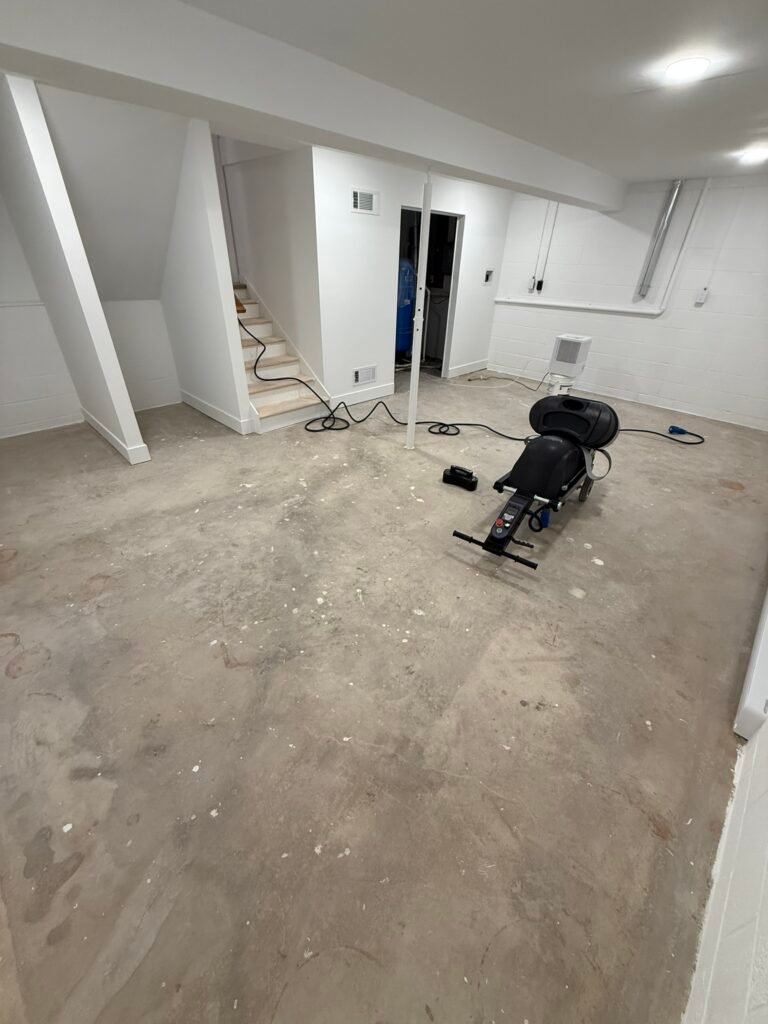
Several of our projects in Lititz, Manheim, Columbia, and Elizabethtown involved older homes with slabs that behaved slightly differently from newer construction: subtler moisture patterns, more variation in slab thickness from one end of a garage to the other, and in a couple of cases a very faint historic stain pattern that only became visible once grinding started. None of these were deal-breakers, but they reinforced something we tell every homeowner with an older property: expect the walkthrough and grinding process to reveal a few things a quick visual inspection would not catch, and that is normal, not a red flag. You can see this range of work in Lititz, Manheim, Columbia, and Elizabethtown.
If there is one honest conclusion across all of these jobs, residential and commercial, straightforward and complicated, it is that the prep work decides the outcome far more than the finish color or flake blend ever does. Homeowners understandably spend a lot of time picking a color blend, and we enjoy that part of the process too, but the floor’s actual lifespan was decided earlier, during grinding and moisture testing, long before the first flake hit the floor. We have written in more detail about why we take surface profile seriously in our CSP and diamond grinding article and why moisture testing matters in our ASTM F2170 article, and both of those technical details trace directly back to lessons learned on jobs like the ones above, not abstract theory.
The other thing these jobs taught us, less technical but just as real: every slab is a little different, even within the same small geographic area, and a company that treats every job as identical is more likely to miss the specific thing that particular floor needed. That is the main reason we still walk every slab in person before quoting a number, regardless of how routine the job sounds over the phone.
We also think there is real value in simply showing this kind of work rather than only describing it. Marketing photos from a coating manufacturer look polished, but they do not show a real pole barn’s drain channels, a real garage’s hairline crack pattern, or what a crew actually does differently when a job like Mount Joy’s turns out more involved than it looked from the driveway. That is the main reason we keep adding real, dated project photos to our own site rather than relying on generic stock imagery, and it is also why we are comfortable being specific about which towns and which jobs these lessons actually came from, rather than speaking in vague generalities about floors we have supposedly coated somewhere without ever naming the town or showing the actual result.
Yes, our full gallery of completed work across Lancaster, Lebanon, and Berks counties is available on our completed projects page.
Not always more complicated, but often more variable, which is why an in-person walkthrough matters more on an older property than a newer one with a more predictable, consistently poured slab.
Yes. Even a job that sounds routine over the phone can reveal something during the walkthrough, whether that is a moisture concern, a slab thickness variation, or a crack that was not mentioned.
That prep work, grinding and moisture testing specifically, determines the outcome far more than color choice or flake blend. Every one of these projects reinforced that same point from a different angle.
In many cases yes. If you have a specific concern, cracking, an older slab, a commercial space, mention it when you request your estimate and we can point you toward a comparable past project.
Yes, directly. Every one of these projects fed back into how thoroughly we walk a new slab before quoting it, specifically because each job showed us a different thing a quick glance from the driveway would have missed entirely.