Pennsylvania’s Floor Coating Experts. Durable. Slip-Resistant. Installed in One Day [Get Free Quote]

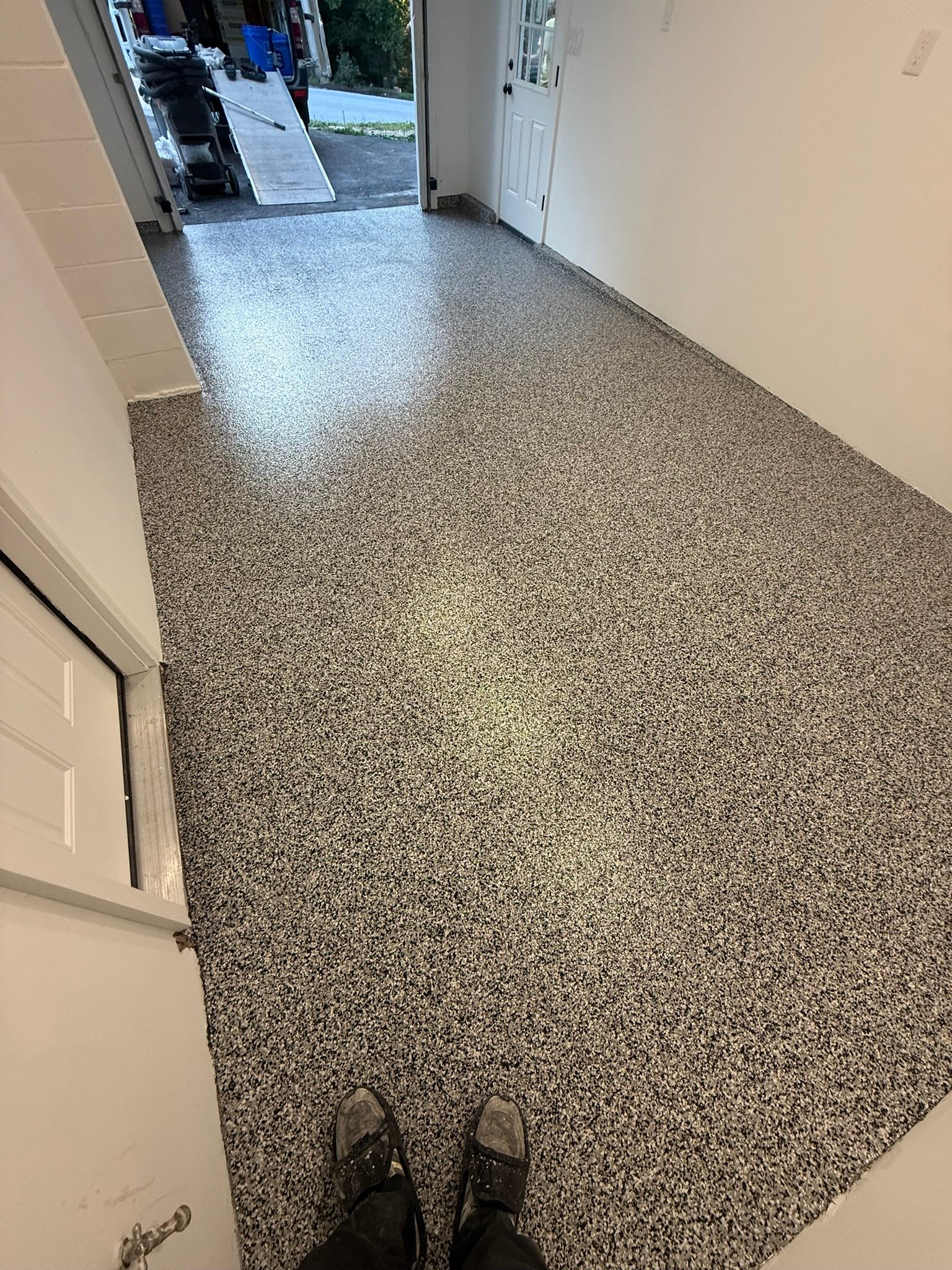
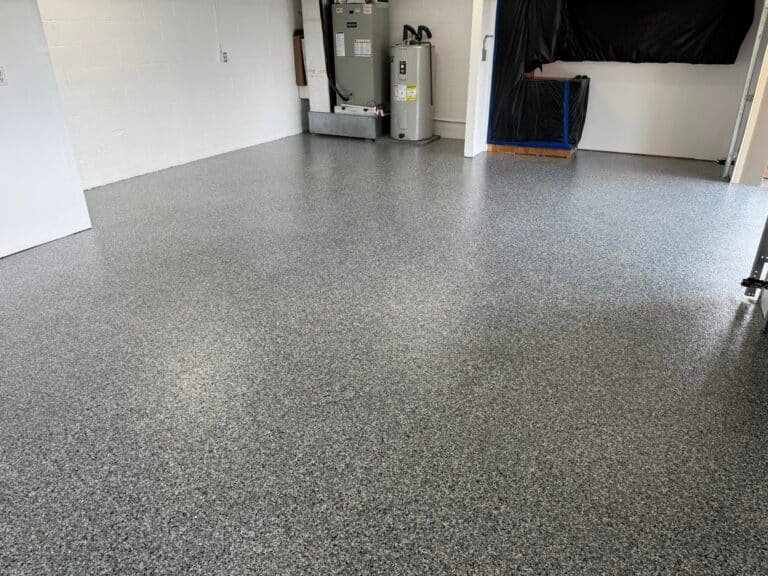
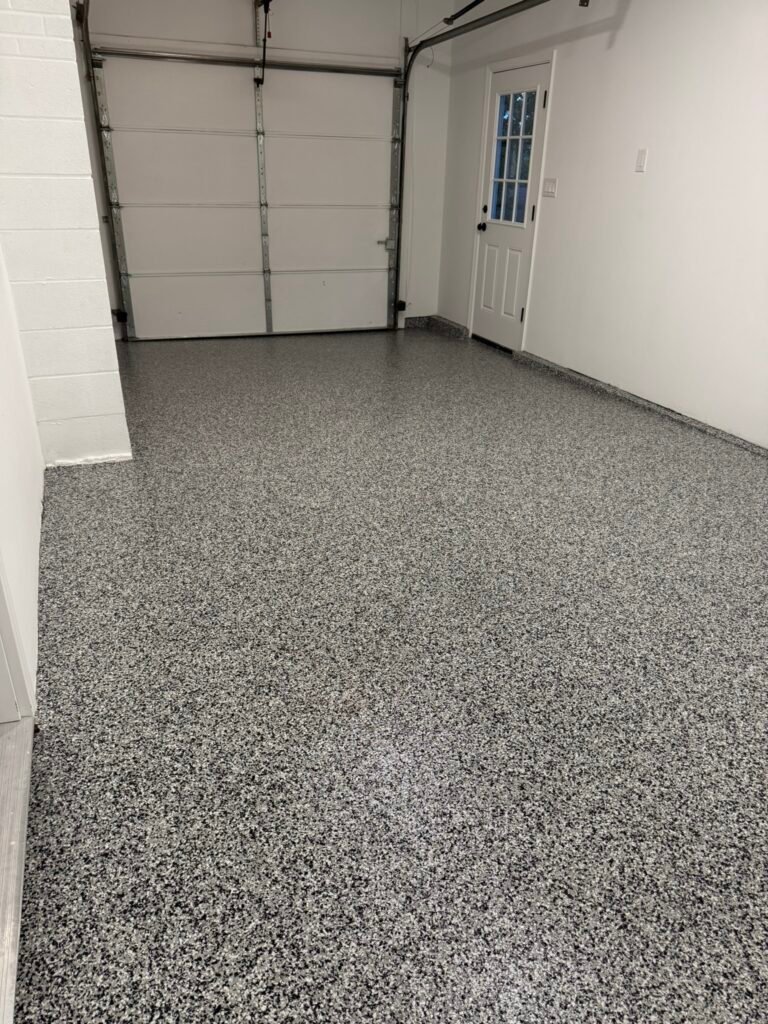
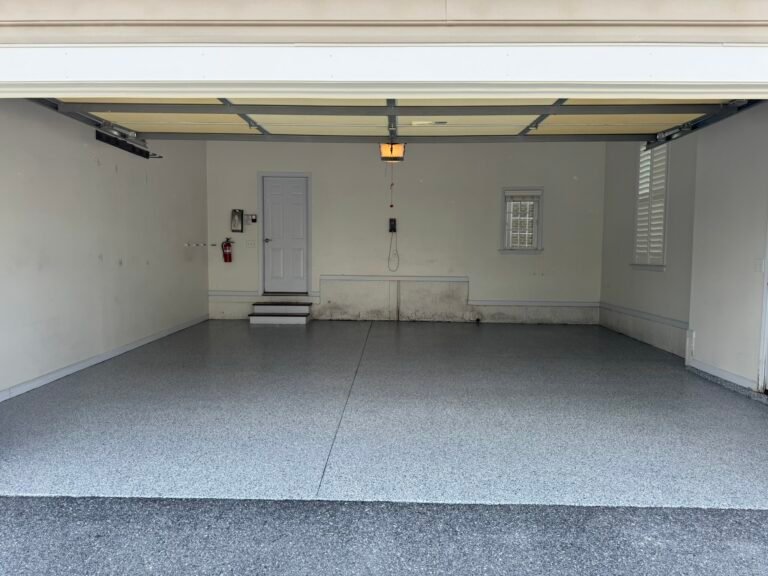
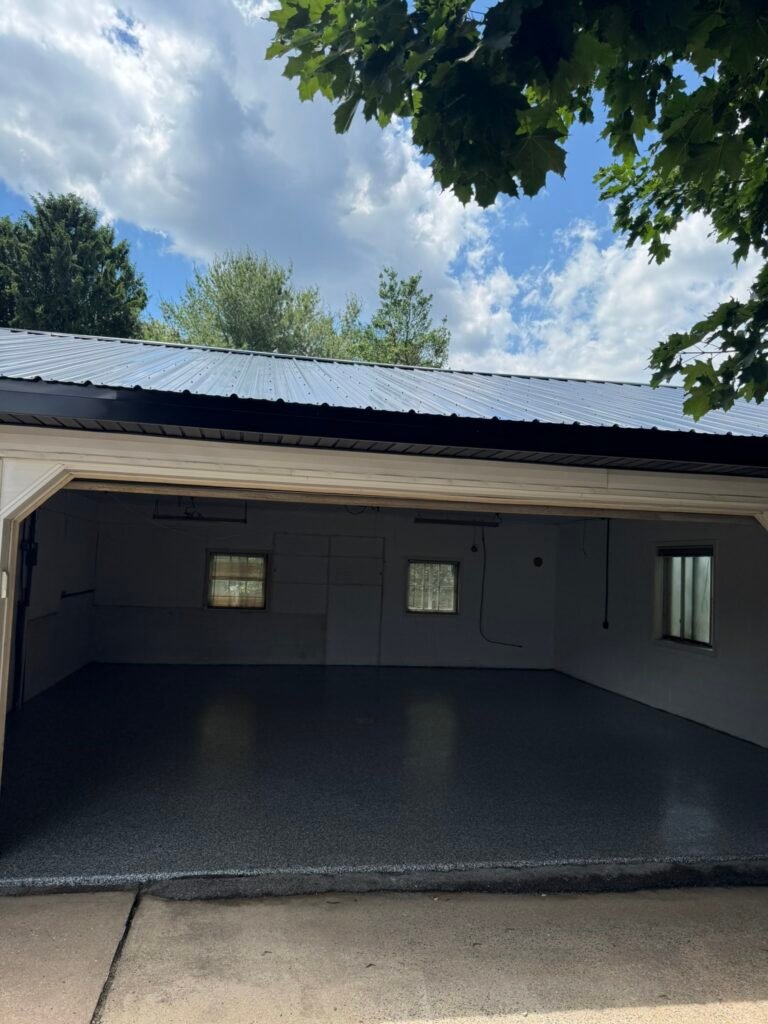
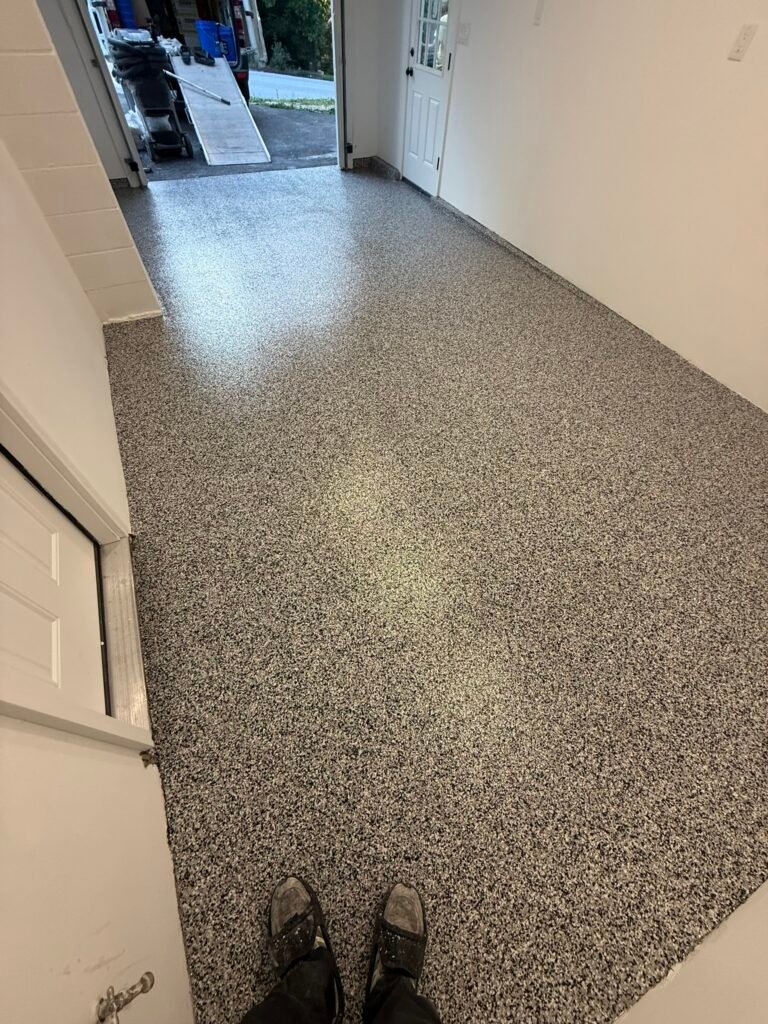
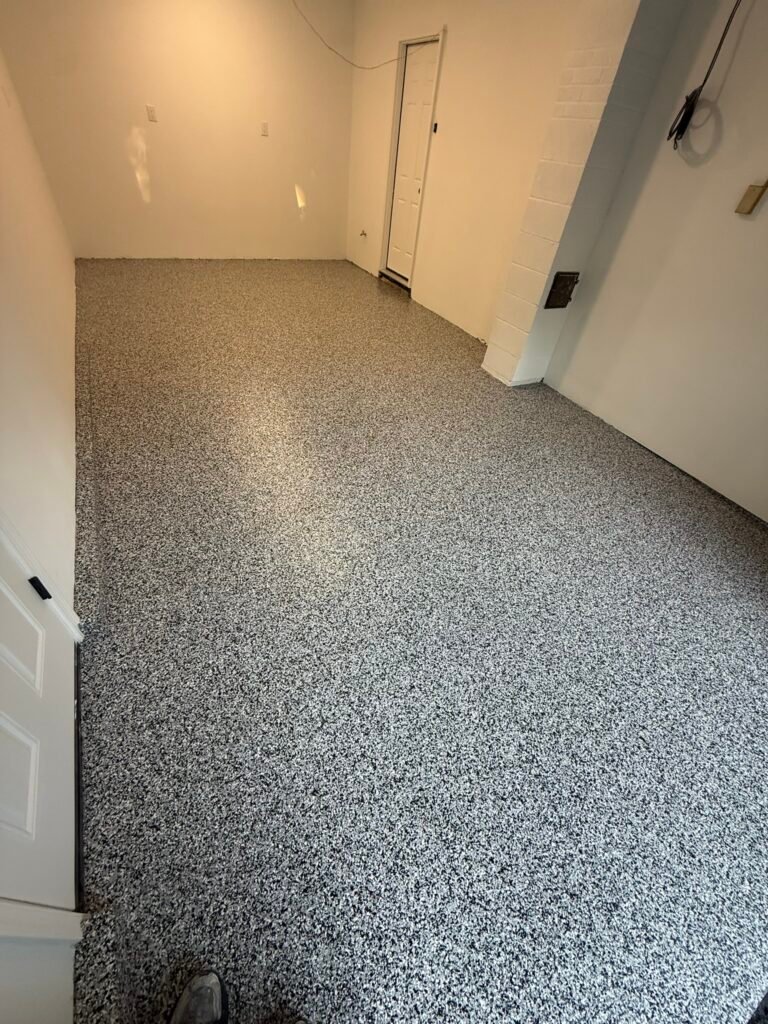
A dated bare concrete garage in Columbia, PA gets refinished with a gray, black and white polyaspartic flake floor for a cleaner, more modern look.
This home in Columbia had been updated room by room over the years, new kitchen, refinished floors inside, fresh paint throughout. The garage was the one space that never got any attention. The concrete had never been sealed or coated since the house was built, and years of parking, salt, and foot traffic had left it stained, dusty, and noticeably dated compared to the rest of the house.
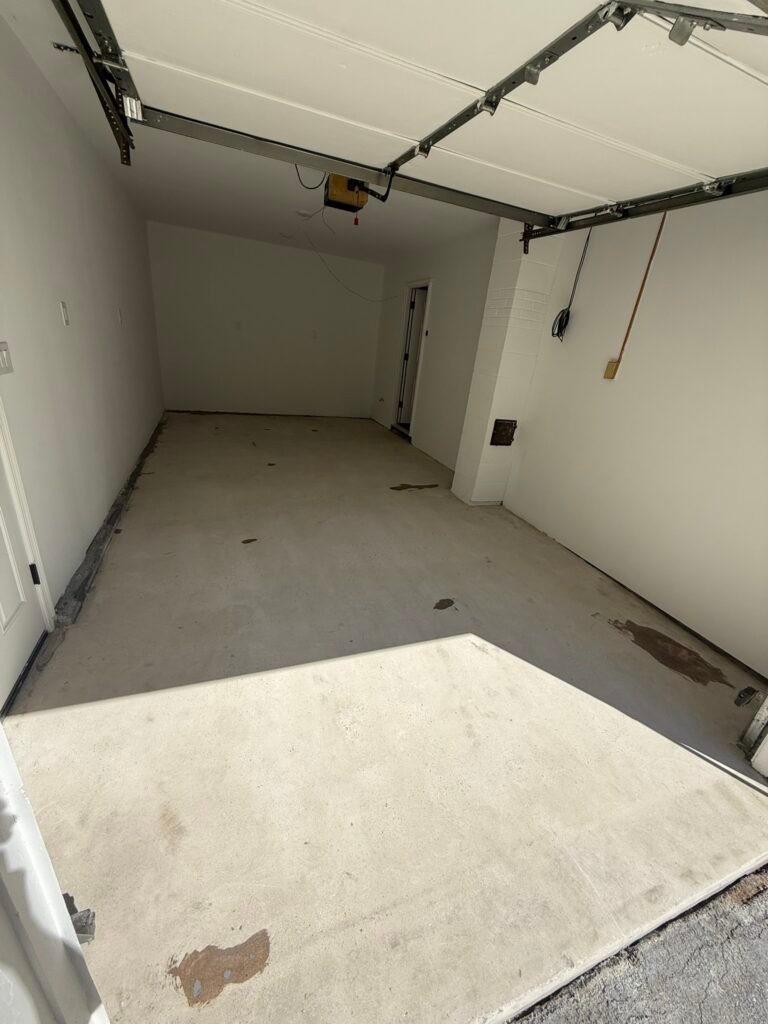
Every garage floor coating job starts the same way, no matter what color flake the homeowner picks. We grind the concrete with diamond tooling before anything else touches the slab. This is not the same as sanding a deck or scuffing up a floor with a mop and some vinegar. Diamond grinding actually opens up the pores of the concrete so the primer has something to grip onto. Skip this step, or do it halfway, and the coating will look fine for a few months and then start lifting at the edges, usually right where a tire rolls over it every day.
Once the slab is ground and vacuumed clean, we check it for moisture and go over it for any cracks or low spots that need attention before coating. Concrete that looks dry can still be holding moisture underneath, and coating over that moisture is one of the most common reasons a DIY epoxy kit fails within the first year.
After that we roll on a polyaspartic base coat. This is a different chemistry than the epoxy kits sold at home improvement stores. Epoxy takes a long time to cure and can go soft in heat or yellow in sunlight over the years. Polyaspartic cures much faster and holds its color, which is part of why it has become the standard for garage floors rather than a novelty.
While the base coat is still tacky, we broadcast the flake by hand across the entire floor, all the way to full coverage, not just scattered here and there. Full broadcast does two things: it gives the floor a slightly textured, non-slip surface, and it hides small imperfections in the concrete and future scuffs a lot better than a flat, solid color would. Once the flake has set, we scrape off any high spots and vacuum the loose material, then apply a clear polyaspartic topcoat over the whole thing. That topcoat is what actually takes the abuse: hot tires, road salt, oil, gasoline, and whatever gets dragged across the floor on a bad day.
A gray, black and white flake blend was the right call here, clean and modern enough to feel consistent with the rest of the updated home, while still being practical for a garage that sees regular vehicle traffic and Pennsylvania winters.
On install day, the garage needs to be completely empty, vehicles, tools, shelving, storage bins, all of it, so the crew can grind and coat every square foot without stopping to work around anything left behind. Grinding does create dust, so we run vacuums attached to the grinding equipment to keep it contained rather than letting it spread through the garage and into the house. Once the topcoat is down, the floor needs to stay clear for the rest of that day. Most homeowners park in the driveway for a day or two while everything fully cures.
The biggest factors that affect price on a garage floor are square footage, the condition of the existing concrete, and the flake blend chosen. A one car garage with a clean, crack free slab is the least expensive version of this job. Cracks that need to be routed and filled, stains that take extra grinding to remove, or a larger multi car garage all add time and material, which is reflected in the price. We do not quote sight unseen over the phone for exactly this reason: two garages that look similar in photos can need very different amounts of prep work once we actually grind the surface and see what is underneath the stains.
Older bare concrete floors around Columbia tend to show their age the same way this one did, discolored in patches, dusty, and a little rough underfoot after years without any kind of sealer. That wear is cosmetic more than structural in most cases, which means a coating like this one can completely change how a room looks without needing to replace the concrete itself.
Cleaning this floor day to day is about as simple as it gets: a broom or shop vac for dust, and a mop with warm water and a mild degreaser or dish soap for anything oily. Avoid harsh acid based cleaners and steel wool, which can dull the topcoat over years of use. There is no yearly resealing or waxing required the way there would be with a painted or bare concrete floor.
Homeowners looking at garage floor options usually end up comparing three things: leaving the concrete bare, painting it with a roll on epoxy kit, or going with a professionally installed flake system like this one. Bare concrete is free but keeps staining, dusting, and looking unfinished no matter how often it gets swept. A do it yourself epoxy kit looks decent for the first few months, but most kits skip real diamond grinding, which is the step that actually determines whether a coating bonds for years or peels within one winter. A professionally ground and coated flake floor costs more up front than a kit from a hardware store, but it is built to actually last, which is the whole point of doing this kind of project in the first place.
In almost every case, no. Staining and discoloration are surface level issues that grinding removes completely. The concrete underneath is usually perfectly sound, it just needed to be properly finished, which is most of what this job was.
It is usually a bigger visual change than homeowners expect going in. Going from stained, dusty concrete to a smooth, uniform flake floor is one of the more noticeable upgrades you can make to a garage without touching the walls or lighting.
It is a relatively small investment that buyers and appraisers both tend to notice. An unfinished, stained concrete floor reads as an unfinished detail in an otherwise updated home, and a finished garage floor removes that impression.
We can get close with the right blend, though driveway concrete and a coated floor are different materials, so it is more about a complementary look than an exact match.
With normal residential use, a properly installed flake floor typically holds up for well over a decade before it would need any real attention, which is a big part of why it is worth the cost compared to a coating that needs to be redone every few years.
We are not appraisers, so we cannot give you an exact number, but a finished, sealed garage floor is generally viewed as a completed detail rather than something still needing to be done, which tends to work in a homeowner’s favor.
There is no rule about timing. Some homeowners do it right after moving in as part of a bigger update, others wait years and do it on its own once the bare concrete finally bothers them enough. Either way the process is the same.
Usually just more grinding time to remove years of built up staining and any old sealer that was applied at some point. The coating process itself does not change based on the age of the house, just how much work the concrete needs before it is ready.
An unsealed, stained concrete garage floor is one of the more obvious signs of a home that has not been fully updated, even when everything else has been. A flake coating is a relatively low cost upgrade for the impact it has, and it is the kind of detail that both buyers and appraisers notice, even if they cannot always say exactly why the space feels more finished.
FlakePro Coatings installs the same polyaspartic flake system in garages, basements, patios, sunrooms, and commercial buildings all over Lancaster County and the towns around it. If you want to see more of our work or get a quote for your own floor, here are some good places to look next.
Garage Floor Coating in New Holland, PA
One-Day Garage Floor Coating in Ephrata, PA
See our full project gallery.
Read more about our floor coating services.
Request a free estimate and we will get back to you with a real number, not a guess.