Pennsylvania’s Floor Coating Experts. Durable. Slip-Resistant. Installed in One Day [Get Free Quote]

If you have spent any time searching for an epoxy garage floor quote, you already know the first problem: almost nobody publishes real numbers. Every company wants you to call for a free estimate, which is fair, since no two garages are identical, but it leaves homeowners guessing whether they are about to get a fair price or get taken for a ride. This article breaks down what actually drives the cost of a professionally installed garage floor coating in Pennsylvania, so you walk into that first phone call already knowing what questions to ask.
A concrete floor installation cost for a coating project is not just the price of the resin that ends up on your floor. Four things combine to create the final number on your quote: labor for surface preparation, the materials themselves, the square footage being covered, and the condition of the slab you are starting with.
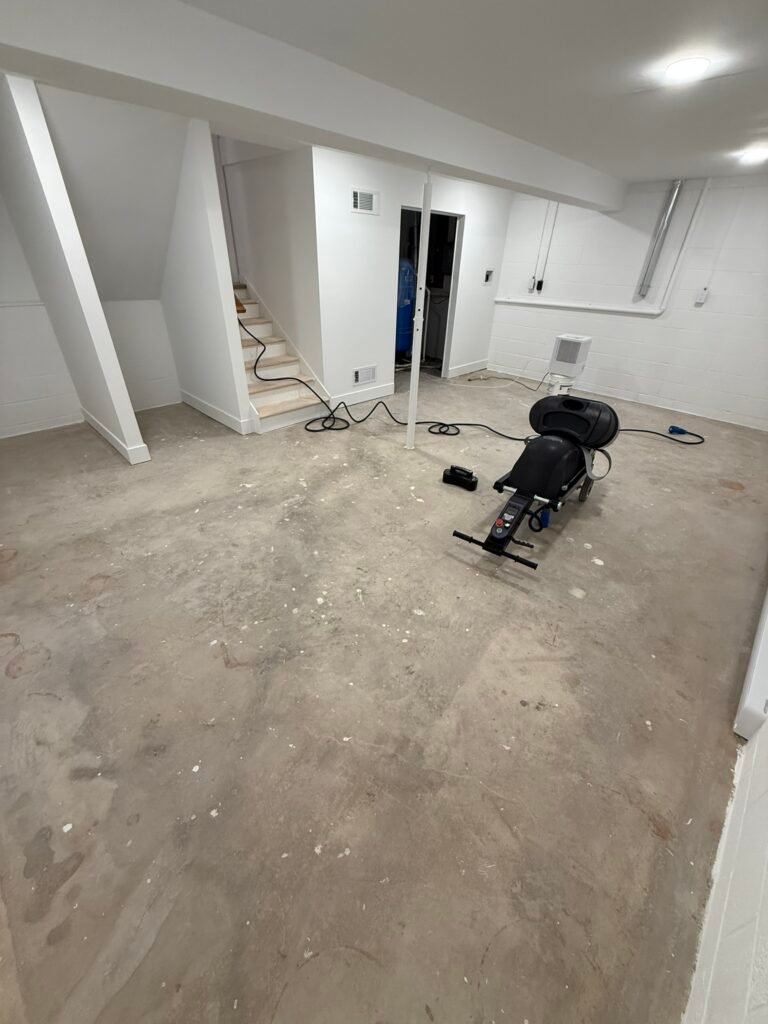
Surface preparation is where the real labor hours go. A professional crew runs diamond grinding equipment across the entire floor to remove the weak top layer of the concrete, called laitance, and open up the surface so the coating can actually bond to it instead of just sitting on top. This step alone can take several hours for an average garage, and it is also the step that separates a floor that lasts fifteen to twenty years from one that peels within a season.
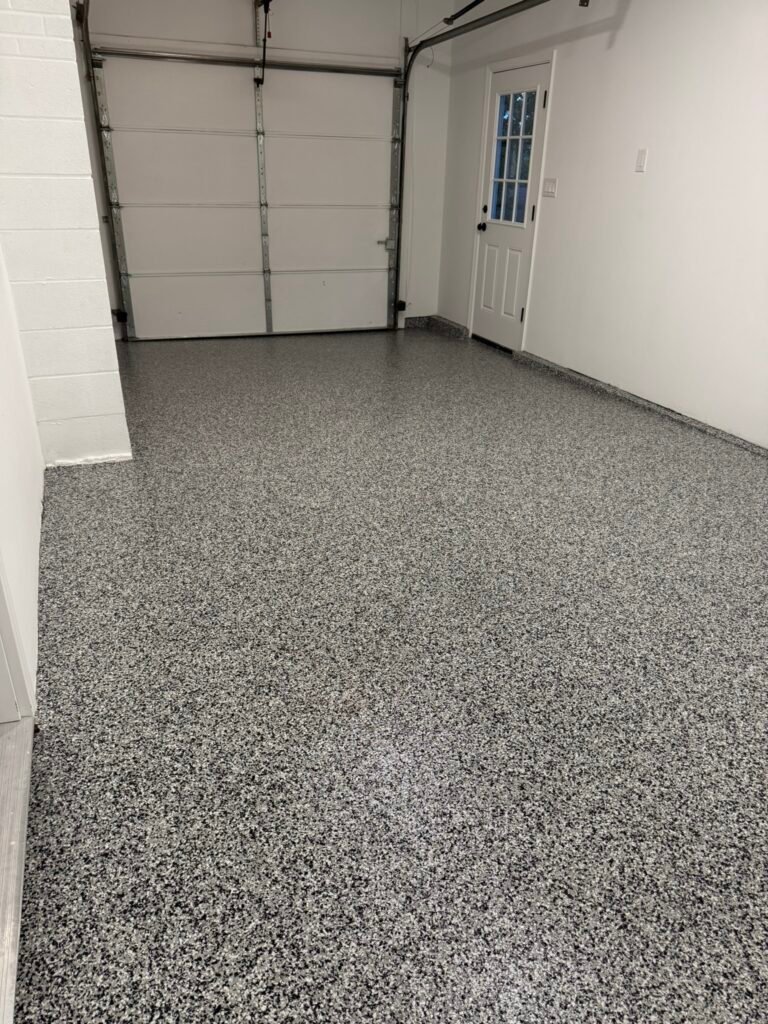
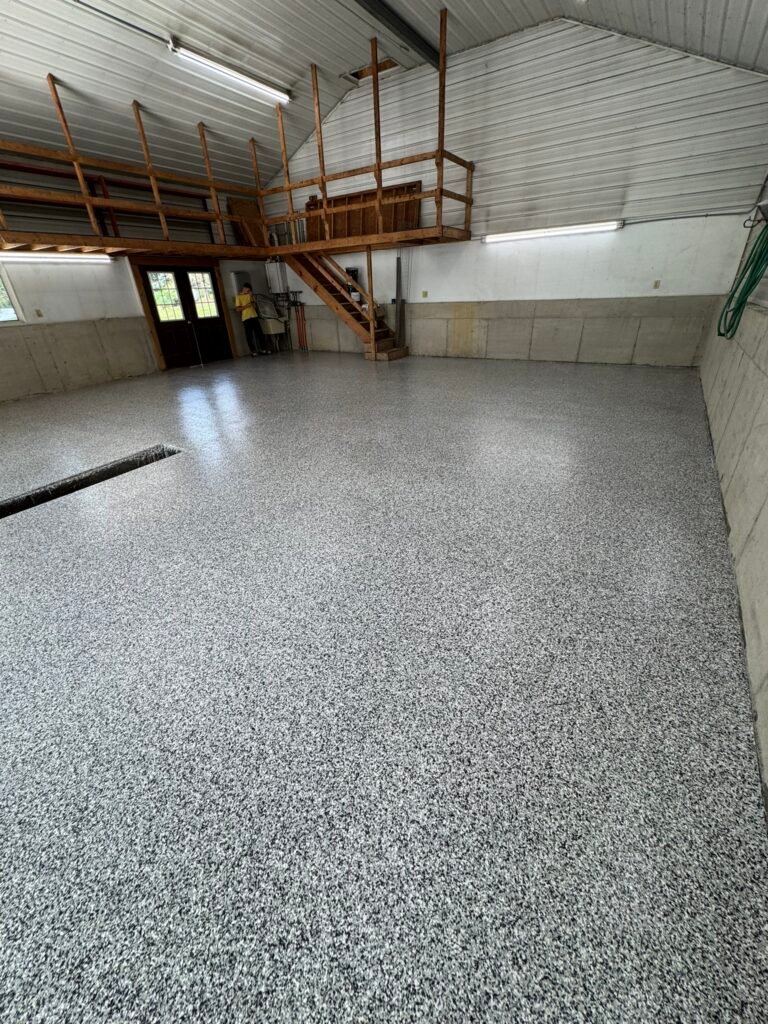
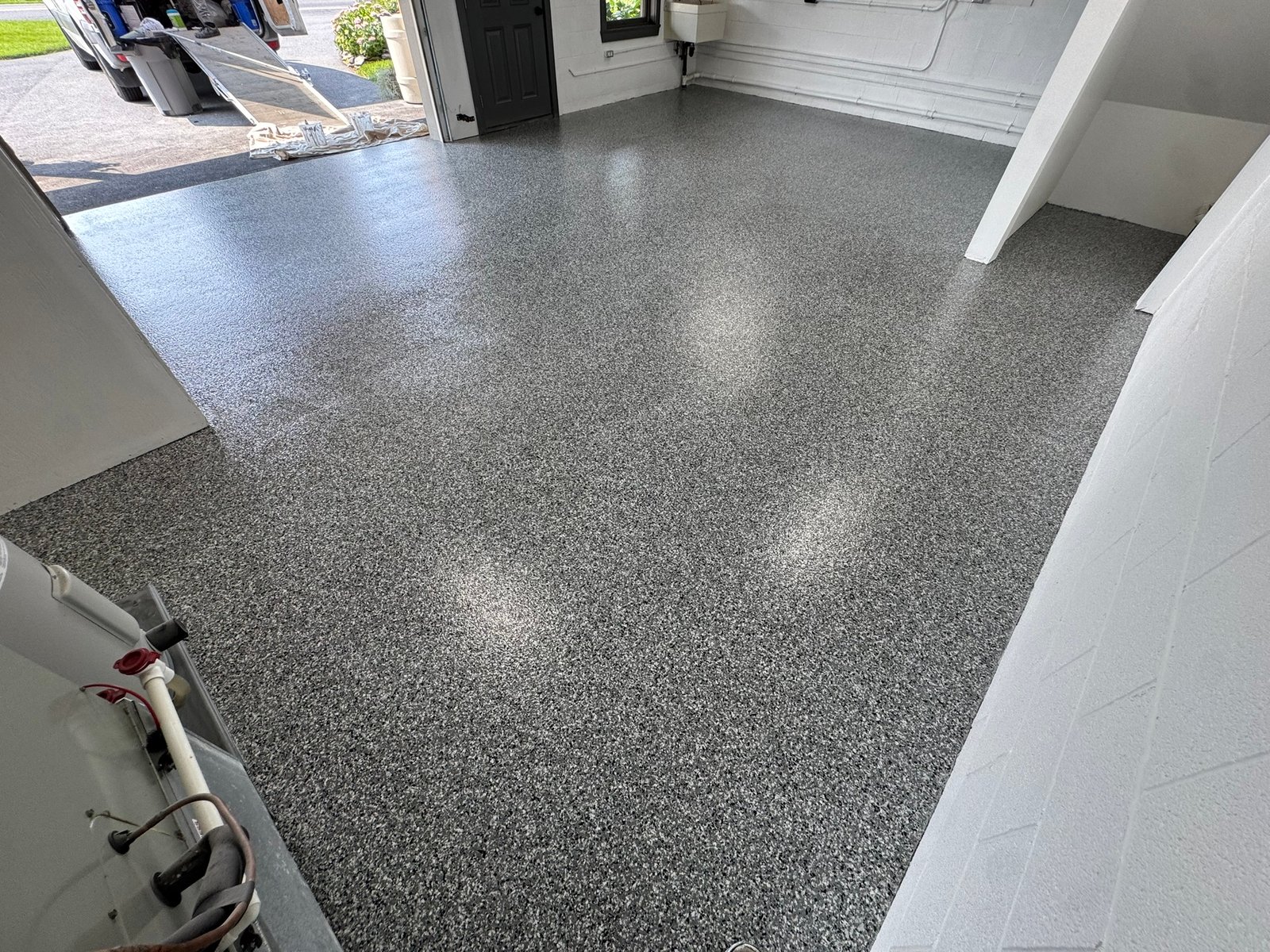
Materials come next: a moisture-mitigating primer when the slab needs it, a pigmented base coat, a full broadcast of color flakes, and a UV-stable polyaspartic topcoat that seals everything in. Each layer uses a specific amount of product per square foot, and running short mid-job because an estimate was based on a rough guess instead of actual measurements is one of the more common reasons a project stalls partway through.
Square footage is the most obvious variable, but it is not purely linear. A larger garage sometimes costs less per square foot than a small one, because fixed costs like travel, grinder setup, and equipment breakdown get spread across more area.
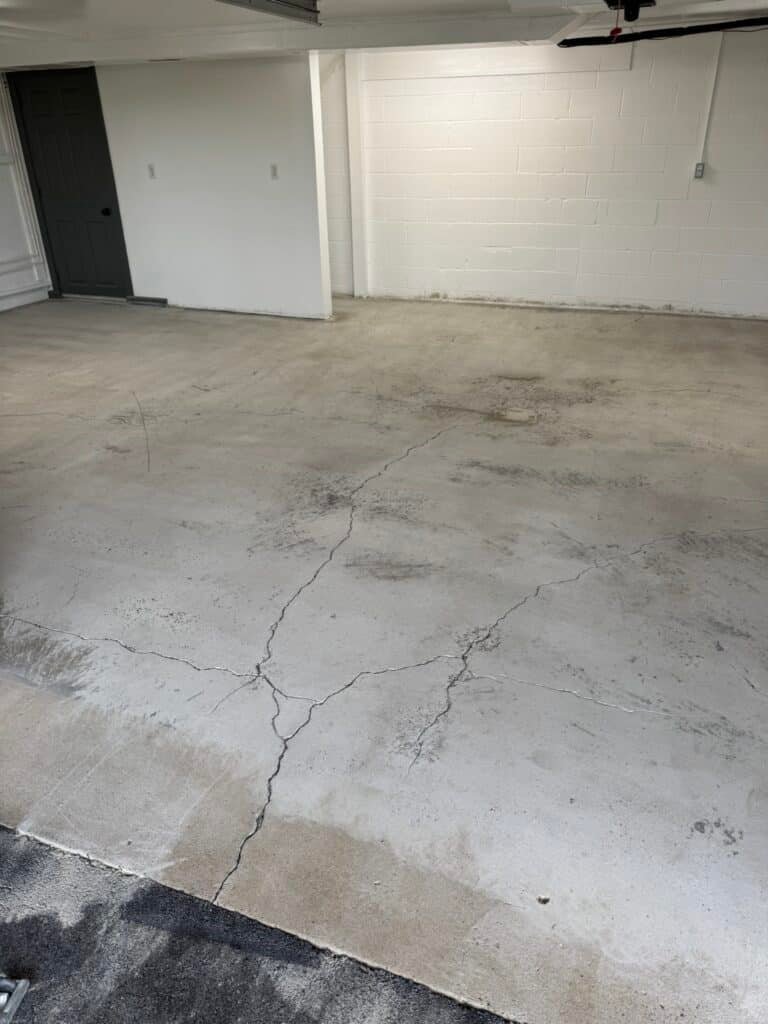
Finally, slab condition matters more than most homeowners expect going in. A clean, crack-free, moisture-tested slab is the cheapest scenario. A slab with old oil stains, hairline cracks, or a history of moisture problems needs extra prep work billed separately, which is exactly why a contractor should walk your actual garage before quoting a number.
People searching for a concrete floor cost per square foot figure usually want one clean number, and the honest answer is that it moves depending on a handful of real factors. The biggest swing factor is the coating system itself. A single thin coat of hardware store epoxy is the cheapest option per square foot, and it is also the option most likely to show wear within a year or two. A professional multi-layer polyaspartic system costs more per square foot up front, but it is built from materials that cure harder, resist hot tires and road salt, and come with an actual multi-year warranty.
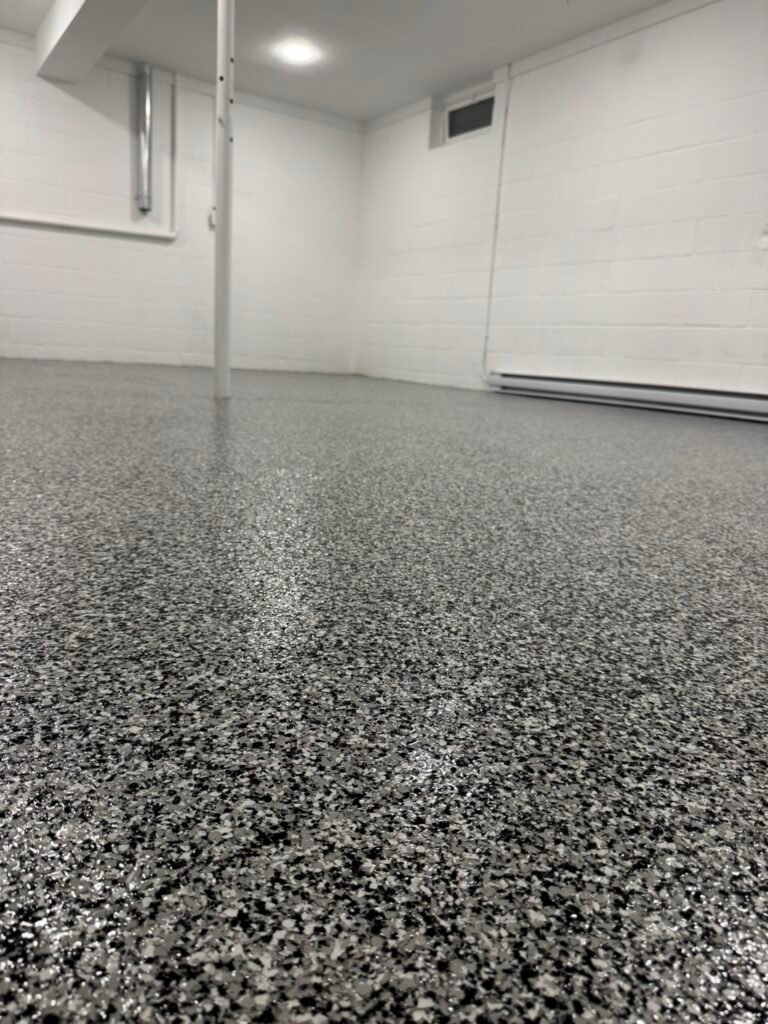
Flake density and custom color blends also move the number. A standard single-color flake blend is priced differently than a dense, multi-color broadcast designed to hide tire marks and everyday wear in a daily-driver garage. If you want to see the actual flake blends available before you even request a quote, our design and color options page shows the full lineup.
Garage size plays into price per square foot too, along with how accessible the garage actually is. A detached garage with a gravel driveway and no close parking for equipment can add setup time that a straightforward attached two-car garage does not need.
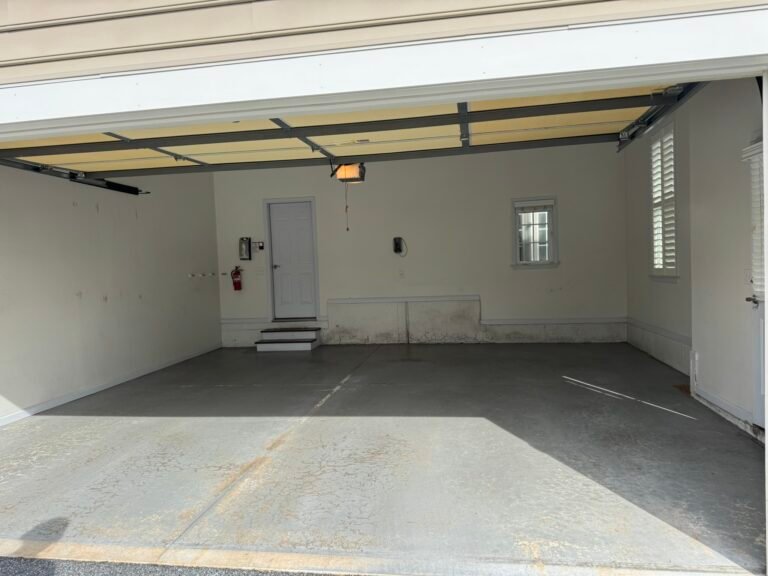
To make this concrete instead of abstract, here is how pricing typically breaks down for a standard two-car garage in the 400 to 600 square foot range, with a slab in reasonable condition and no major cracks or active moisture problems.
Diamond grinding and surface prep take up the first several hours of labor on install day. The primer and base coat go down next, followed by the full flake broadcast, which is where the color and texture of the finished floor actually get decided. The UV-stable polyaspartic topcoat is the final layer, and it is what makes the floor resistant to hot tires, de-icing salt, and everyday scuffing.
A floor in that size range with a clean slab, a standard flake blend, and no crack repair needed sits at the lower end of what a quote will show you. Add crack repair, a moisture-mitigating primer, or a denser custom flake blend, and the number moves up accordingly. This is also where an in-person quote earns its value over a phone estimate: nobody can tell you which of these factors apply to your specific garage without actually looking at the slab.
Some homeowners searching for garage floor pricing are not actually comparing coating companies against each other. They are comparing coating against tearing out the old concrete and pouring a new slab, which is a much bigger and more expensive project. A garage floor replacement cost includes demolition, hauling away the old concrete, forming, pouring and curing new concrete, which takes weeks rather than a day, and then coating the new slab on top of that.
In the vast majority of cases, a damaged or ugly garage slab does not need to be replaced at all. Cracks can be repaired, stains can be ground away, and even a slab that looks rough under decades of oil stains and old paint usually grinds down to solid, coatable concrete. We cover this decision in more detail, including the specific situations where replacement actually is the right call, in our full breakdown of garage floor replacement versus coating.
A real epoxy garage floor quote should never be a single number given over the phone without anyone looking at your garage. At minimum, a legitimate quote involves someone walking your actual slab, checking for cracks and staining, and in some cases running a moisture test on the concrete before any number gets written down.
A written quote should also spell out exactly what is included: how many coats, what kind of topcoat, whether crack repair is part of the price or billed separately if cracks turn up during prep, how long the installation will take, and what the warranty actually covers in writing, not just as a verbal promise. If a quote is missing any of these details, ask for them before you sign anything.
It is also worth asking directly whether the crew doing the grinding and coating is the same company’s own employees or a subcontractor brought in for the day. Both can produce good work, but you want to know who is actually accountable if something goes wrong six months down the road.
Before you call anyone, it is worth spending five minutes doing the same basic background check you would do for any contractor working in your home. Independent review and business-verification platforms are a quick way to see whether a company’s name, address, and phone number stay consistent everywhere they are listed, and whether past customers have left honest feedback. We keep our own profile updated on ProvenExpert alongside our Google Business Profile, specifically so homeowners have more than one independent place to check before they ever pick up the phone.
None of this replaces an in-person walkthrough and a real written quote, but it is a fast way to rule out companies that are not what they claim to be before you spend time scheduling an estimate. If you want to start that walkthrough, request a free estimate and we will come look at your actual garage.
It depends on square footage, slab condition, and the coating system you choose, which is exactly why we walk every garage in person before quoting a number instead of giving a flat rate over the phone. A clean slab with a standard flake blend sits at the lower end of a typical quote, while crack repair, moisture mitigation, or a custom flake density add to the total.
Per square foot, yes, a professional polyaspartic system usually costs more than a single coat of hardware store epoxy. The tradeoff is cure time measured in hours instead of days, real UV stability since epoxy yellows in sunlight and polyaspartic does not, and a much longer realistic lifespan, which is why most professional installers have moved toward polyaspartic for exactly this reason.
No. We walk your garage, check the slab, and provide a written quote at no cost, with no obligation to book after the walkthrough.
Slab condition is usually the biggest factor, since cracks, old stains, and moisture problems all add prep work beyond standard grinding. After that, flake density and whether you want a standard or custom color blend make the next biggest difference.
We can give you a rough range from photos, but a final number always requires an in-person walkthrough, since things like moisture levels and hairline cracks are not always visible in pictures.