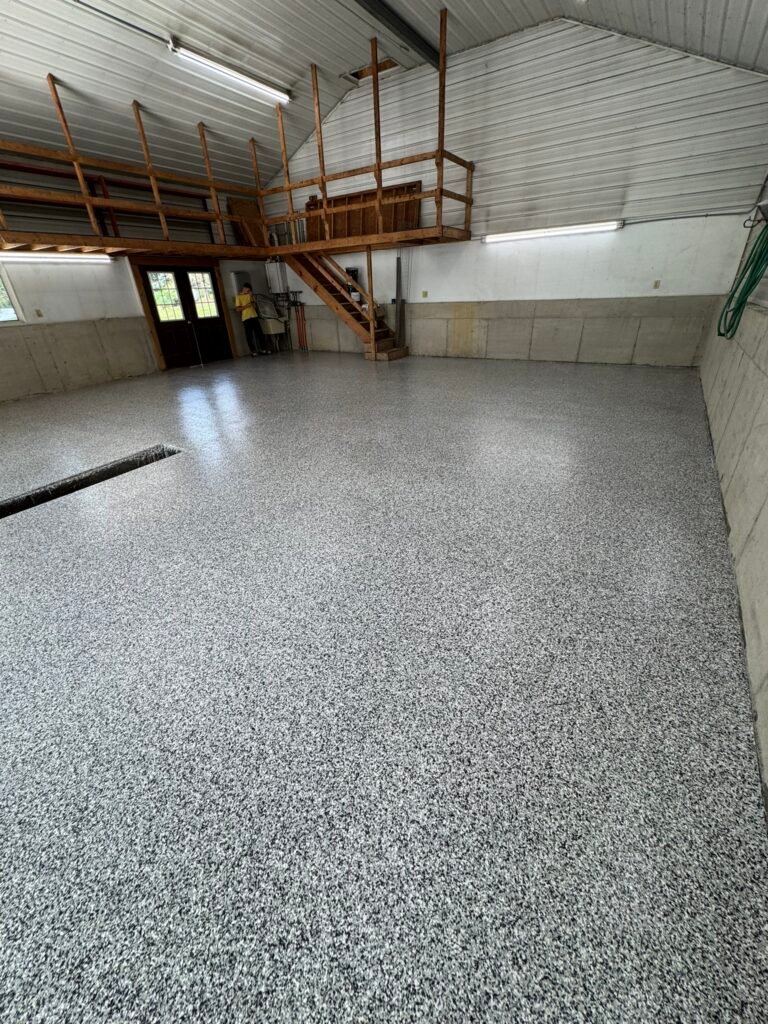
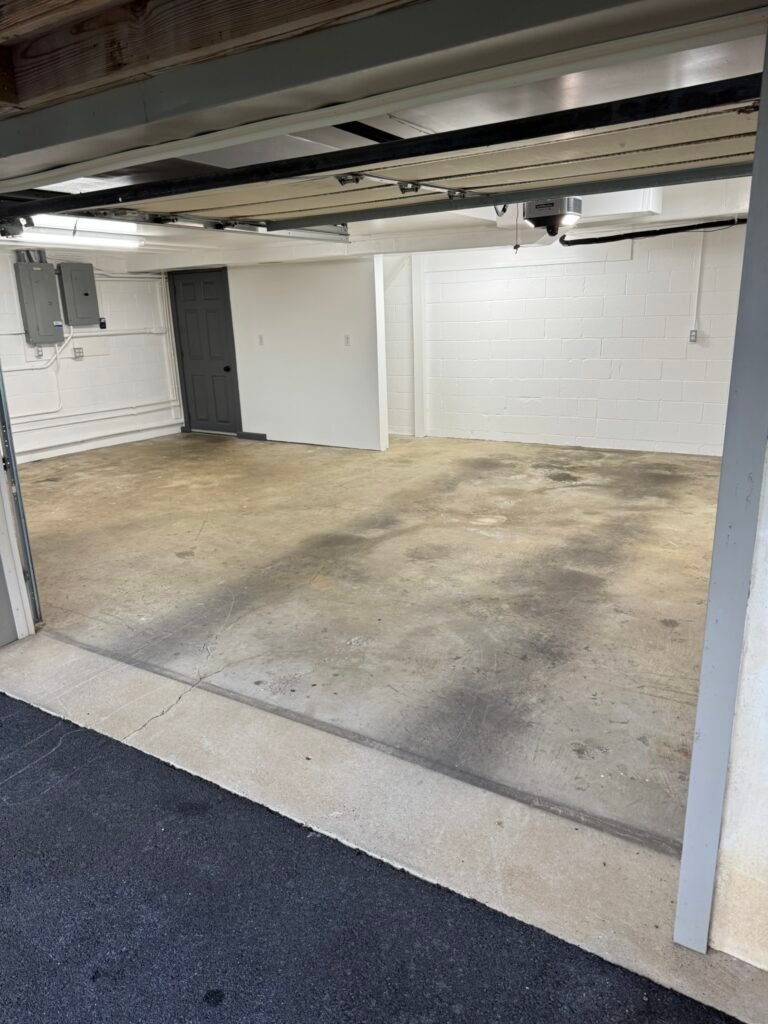
Pennsylvania’s Floor Coating Experts. Durable. Slip-Resistant. Installed in One Day [Get Free Quote]

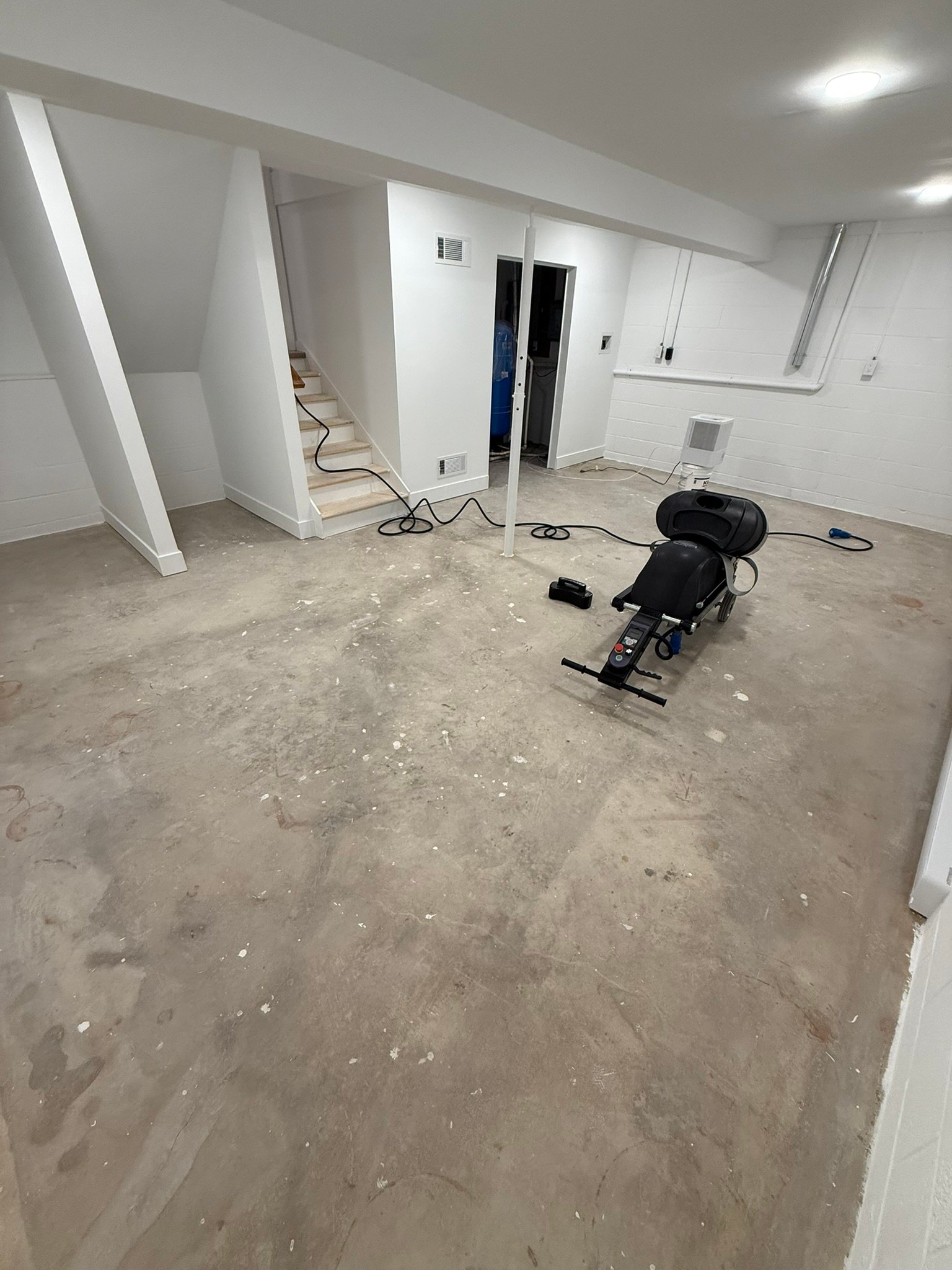
A bare concrete basement floor is functional but cold, gray, and uninviting, which is why most homeowners eventually look into some kind of concrete basement floor covering. The problem is that basements are a genuinely tough environment for flooring: moisture, temperature swings, and concrete dust rule out several options that work fine everywhere else in the house. This guide compares the realistic options side by side, based on how they actually perform in a basement specifically, not a living room.
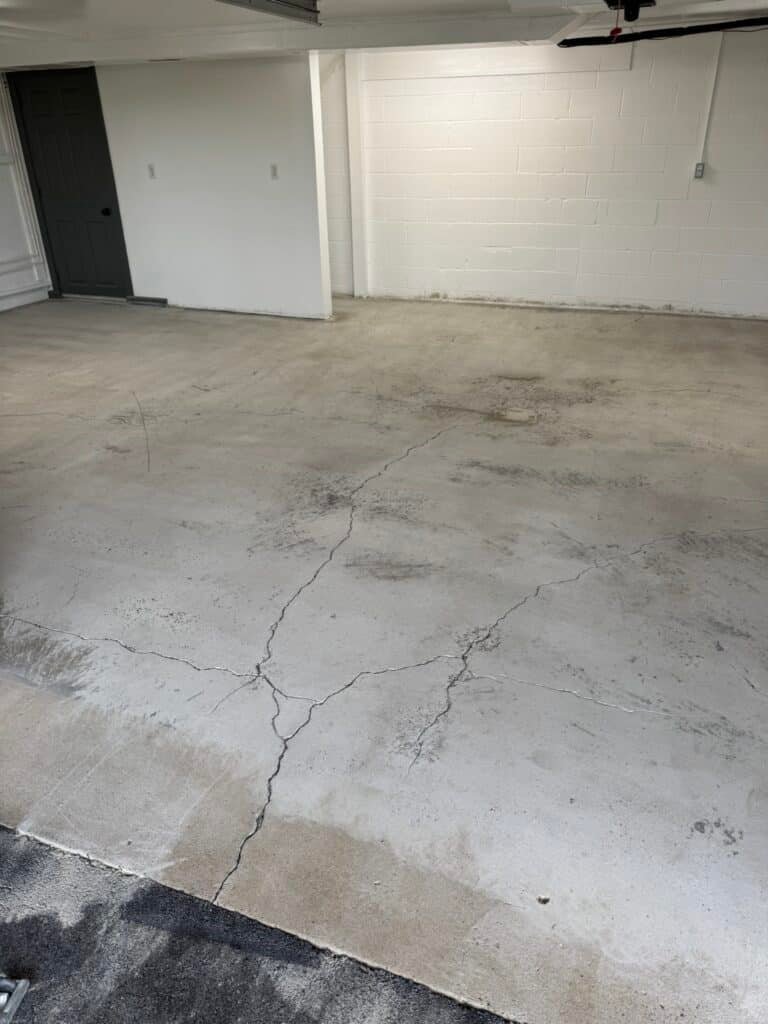
It is worth addressing the cheapest option first: leaving the slab bare, maybe with a basic sealer rolled on. A sealer does reduce dust and adds a small amount of moisture resistance, but it does not solve the cold, gray, unfinished look most homeowners are trying to get away from, and a basic sealer wears thin in high-traffic areas within a year or two, needing reapplication. It is a reasonable short-term option if you are not ready to commit to a full basement finish, but it is not a long-term flooring solution on its own.
Carpet is the most inviting option underfoot, which is exactly why it is tempting for a basement being converted into a family room or playroom. The problem is moisture. Basements naturally sit below grade and deal with humidity and occasional dampness that most above-grade rooms never see. Carpet and the padding underneath it hold onto moisture instead of letting it evaporate, which creates ideal conditions for mold and mildew, along with a musty smell that tends to show up within a season or two even in a basement that never floods outright.
Carpet tile, which can be lifted and replaced section by section, reduces some of this risk compared to wall-to-wall carpet and padding, since a damp section can be pulled up and dried or replaced without redoing the whole room. It is a reasonable compromise if carpet is genuinely important to you, but it still does not address the underlying moisture coming up through the slab the way a proper coating does.
Vinyl plank and laminate flooring handle moisture noticeably better than carpet, especially vinyl, which is largely water-resistant on its own. The vulnerability shows up underneath, at the subfloor or underlayment layer, where trapped moisture vapor coming up through the concrete slab can still cause warping, lifting at the seams, or a soft spongy feel over time, even when the visible flooring itself looks fine. These products were designed primarily for above-grade installation, and using them in a basement means working around a moisture challenge they were not originally built to handle.
Laminate specifically is more vulnerable than vinyl, since its core layer is typically wood-based and swells when it absorbs moisture, unlike vinyl’s fully synthetic composition. If you are deciding between the two specifically for a basement, vinyl is the more basement-appropriate choice of the two, though neither fully solves the underlying vapor issue the way a true vapor-permeable coating does.
Tile holds up to moisture better than almost any other option on this list, since the tile itself is essentially waterproof. The tradeoffs are installation complexity, labor cost, and comfort: a tile floor is genuinely cold underfoot in a basement, and the installation itself (leveling, setting, grouting, sealing grout lines) takes considerably longer than most other basement flooring options, which adds labor cost on top of the material cost.
Grout lines are worth a specific mention, since they are the weak point in an otherwise waterproof floor. Grout is porous and can absorb moisture and stain over time unless it is sealed and periodically resealed, which is ongoing maintenance most of the other options on this list do not require. Tile is still a solid choice for a basement bathroom or laundry area where its waterproof qualities matter most, even if it is not the most practical choice for a larger family room or playroom.
A single coat of hardware store epoxy is the cheapest step up from bare concrete and does improve the look of a basement floor in the short term. The limitations show up over time: standard epoxy can trap moisture vapor underneath it rather than letting it escape, which leads to the same bubbling and peeling problems common in garages, just in a damper environment that makes the problem worse and faster. Epoxy also tends to feel hard and cold, similar to tile, without tile’s waterproofing advantage.
A professional polyaspartic flake system is the option specifically engineered around the basement moisture problem that trips up carpet, vinyl, and standard epoxy. The key property is vapor permeability: a properly installed polyaspartic coating allows microscopic water vapor to pass through it while still blocking liquid moisture from penetrating, which prevents the trapped-moisture bubbling and mold conditions that plague other flooring types in a basement specifically. We cover this mechanism in more detail in why polyaspartic floors are perfect for basements.
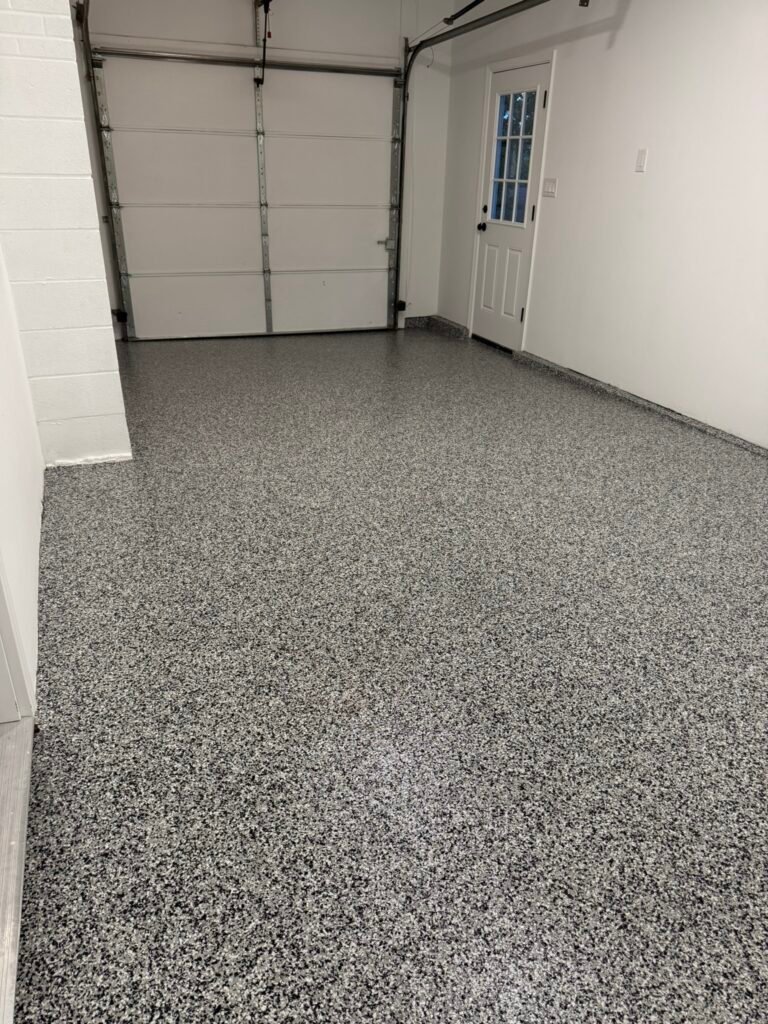
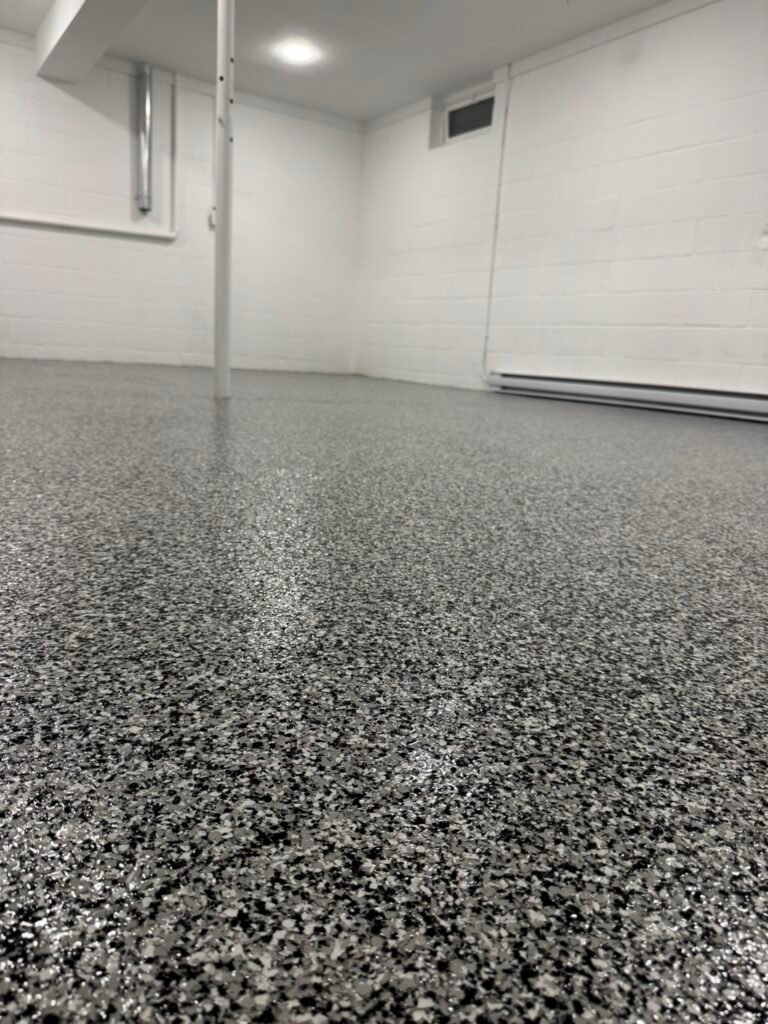
It also solves the cold, gray concrete problem without the installation complexity of tile. A full flake broadcast creates a smooth, reflective, warmer-looking surface than bare concrete, installed in a single day rather than the multi-day process tile or carpet with proper subfloor prep requires. For a basement specifically, that combination, real moisture resistance plus fast single-day installation, is hard for any of the other options on this list to match at once.
There is also no grout to seal, no padding to trap moisture, and no planks that can individually warp or lift, since the coating forms one continuous, seamless surface bonded directly to the slab. That seamless quality is a genuine practical advantage in a basement specifically, where any small gap or seam in another flooring type is exactly where moisture problems tend to start first.
If your basement has a confirmed, fully resolved moisture problem (not just normal humidity) and you want a soft, carpeted feel regardless of the risk, carpet with a proper vapor barrier underneath is possible, though it requires more upfront moisture mitigation work than any other option here. If budget is the main driver and the basement rarely sees dampness, vinyl plank is a reasonable middle ground. If you want genuine durability and do not mind a cold floor and a longer installation, tile holds up extremely well. For most Pennsylvania basements, which deal with real seasonal humidity and occasional dampness even without a history of flooding, a polyaspartic flake coating tends to be the option that actually solves the moisture problem instead of working around it or ignoring it.
If you want to see what a finished polyaspartic basement floor actually looks like before deciding, our basement floor coating page has photos and more detail on the installation process, or you can request a free estimate for your specific basement.
You can also see independent verification of our business details on EnrollBusiness, alongside our Google Business Profile, if you want a second source to confirm who you would be hiring before you book a walkthrough.
For basements specifically, yes, mainly because of vapor permeability. Standard epoxy can trap moisture underneath it, while a proper polyaspartic system is designed to let vapor escape while still blocking liquid water, which matters more in a basement than almost anywhere else in a house.
Yes, a polyaspartic floor can have rugs or carpet tiles placed over it without any issue, giving you the option to add a softer feel in specific areas without committing the whole basement to wall-to-wall carpet.
We recommend it for most basements, since moisture vapor is not always visible to the naked eye. A quick test tells us whether a moisture-mitigating primer is needed before the base coat goes down.
Most basements are completed in a single day, including grinding, primer, flake broadcast, and the topcoat, with the space usable again within about 24 hours.
Not every basement, but it carries more long-term risk than polyaspartic in a basement with any real moisture activity, since trapped vapor underneath the planks can cause warping or lifting that is not always obvious until it has already happened.
A basic sealer is a reasonable short-term, low-cost option, but it wears down in high-traffic areas within a year or two and does not match the durability or finished look of a full flake system. It is better thought of as a stopgap than a long-term flooring solution.