Pennsylvania’s Floor Coating Experts. Durable. Slip-Resistant. Installed in One Day [Get Free Quote]

A residential garage and a commercial warehouse floor sound like the same project, since both involve coating a concrete slab, but the actual job looks different once you factor in square footage, daily traffic, and what the space is actually used for. This guide covers what industrial epoxy flooring contractors need to account for on a commercial job that a typical residential quote does not, and what to ask before hiring anyone for a shop, warehouse, or pole barn.
A two-car garage might be 400 to 600 square feet. A commercial pole barn or warehouse floor can run into the thousands of square feet, which changes more than just the total price. Larger jobs usually get broken into sections so the business can keep partial operations running during installation, which requires planning around loading docks, equipment movement, and sometimes working around a production schedule rather than an empty residential garage.
Equipment needs scale up too. Larger diamond grinders and more crew hands are standard for a commercial job, since finishing a ten thousand square foot floor with residential-sized equipment would take an impractical amount of time.
A garage deals with vehicle tires and the occasional dropped tool. A commercial shop floor might deal with forklift traffic, pallet jacks, chemical spills, constant foot traffic, or heavy equipment being dragged across the surface daily. Each of those puts different stress on a coating system, and the right system for a quiet residential garage is not automatically the right system for a working shop floor.
Polyaspartic systems scale well to commercial use because of their flexibility and chemical resistance, but the specific formulation, flake density, and number of coats often need adjusting based on what equipment and chemicals the space actually deals with day to day. This is a conversation a real industrial epoxy flooring contractor should have with you before quoting a price, not an afterthought.
A residential garage occasionally deals with a little motor oil or antifreeze. A working shop or industrial space can deal with much more regular exposure to solvents, cleaning chemicals, hydraulic fluid, or other substances specific to whatever the business actually does. Not every coating handles chemical exposure the same way, and this is a real conversation a commercial quote should include rather than skip past. Polyaspartic systems generally hold up well to a broad range of common chemicals, but the specific exposure your space deals with daily is worth mentioning during the walkthrough so the right topcoat formulation gets specified rather than assumed.
This also affects maintenance expectations after installation. A shop floor dealing with daily chemical exposure needs a slightly different cleaning routine than a quiet garage, and a contractor who does commercial work regularly should be able to tell you what that routine looks like before you sign anything.
Temperature swings inside an industrial space matter too, especially in buildings without full climate control. A metal pole barn can swing from near freezing to quite warm over the course of a single day depending on season and ventilation, and the coating system installed needs to be formulated to handle that range of expansion and contraction without cracking, which is a different consideration than a climate-controlled residential garage attached to a heated home.
For a residential garage, losing access for a day is a minor inconvenience. For a working business, every day a section of floor is unusable is a day that can affect operations, staffing, or revenue. This is exactly why phased scheduling matters so much more on a commercial job than a residential one, and why a contractor experienced in commercial work plans the sequence of sections around your actual operating hours rather than simply working front to back across the whole space.
It is reasonable to ask for a written schedule broken down by section, with realistic dates for when each area will be back in full use, rather than a single vague completion date for the entire project. That level of detail is a good sign you are dealing with a contractor who has actually managed commercial installations before.
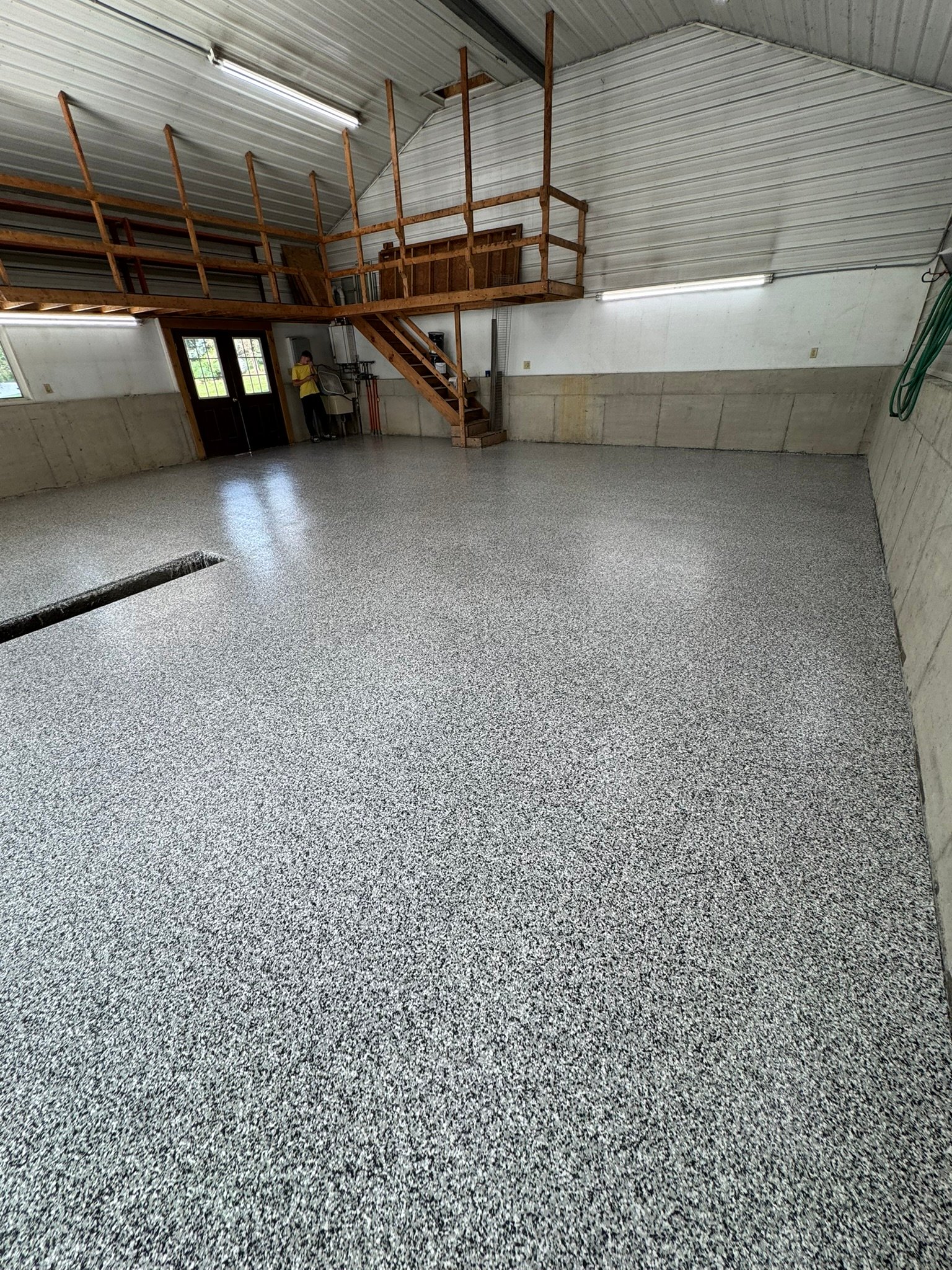
Pole barns and metal pre-engineered buildings common across rural Lancaster County bring their own set of details that a straightforward residential job does not have. Drain channels built into the slab for washdown or runoff need to be worked around carefully during grinding so they stay functional afterward. Large overhead doors mean more exposure to outside temperature swings right at the entry points, which can affect cure time near those areas on a cold install day. Mezzanine storage lofts, common in pole barns used for equipment or inventory storage, mean coordinating the work around support columns and stairs rather than one open, empty rectangle.
None of this is a reason to avoid coating a pole barn floor. It is simply a reason to hire someone who has actually done it before and knows to look for these details during the walkthrough, rather than quoting the job as if it were an oversized garage.
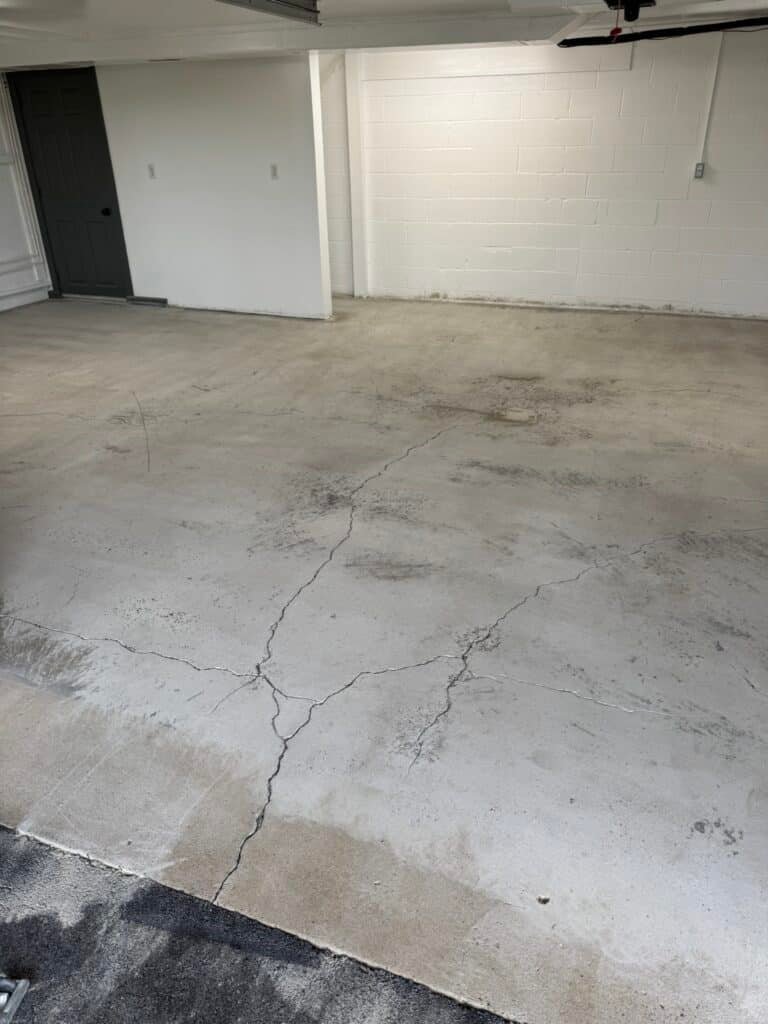
One of our commercial projects, a pole barn floor in Reading, Pennsylvania, is a useful real-world example of all of this in practice. The space had a mezzanine storage loft, drain channels, and the kind of cracking and wear you would expect from a working building rather than a showroom. We cover the full project, including the grinding and coating process at that scale and around those specific features, in our Reading commercial project writeup. It is a good reference point for what a working commercial floor coating project actually involves, beyond the marketing photos of a spotless finished warehouse.
Unlike a residential garage that sits empty during the workday, a commercial space usually needs to keep functioning in some capacity while the floor gets done. That might mean sectioning off part of a warehouse and coating it in phases, scheduling around a loading dock’s busiest hours, or working weekends to avoid disrupting a normal work week entirely. A contractor who has not done commercial work before may not think to ask about your actual operating schedule before quoting a timeline, which can turn into a real problem once installation day arrives and the business cannot actually pause operations the way a residential homeowner can pause using their garage.
Our own commercial and industrial work is covered in more detail on our commercial polyaspartic floor coating page, which outlines the service area and general approach for Lancaster County businesses.
If you are comparing contractors for a commercial job, it is also reasonable to check their standing on an independent business directory, the same way you would for a residential job. We keep our own listing current on Trepup, alongside our Google Business Profile.
Not necessarily more per square foot, and sometimes less, since larger jobs spread fixed costs like setup and travel across more area. The total project cost is higher simply because the square footage is so much larger.
Often yes, depending on the layout. Sectioning the work is a normal part of planning a commercial installation and is worth discussing during the quote so the schedule works around your actual operations.
Yes, when the system and flake density are chosen with that traffic in mind. This is exactly why a commercial quote should include a conversation about what kind of equipment and traffic the space actually deals with, rather than treating it the same as a residential garage.
It depends heavily on total square footage and whether the job is done in phases, but a large commercial space naturally takes longer than a single-day residential garage project, sometimes spread across several days or longer for very large facilities.
Yes, commercial and industrial spaces across Lancaster County are a regular part of our work, including pole barns, shops, and warehouse floors.
In many cases yes, by working around large fixed equipment in sections rather than requiring the entire space to be cleared at once. This is worth discussing during the walkthrough so it gets planned into the schedule rather than discovered on install day.