Pennsylvania’s Floor Coating Experts. Durable. Slip-Resistant. Installed in One Day [Get Free Quote]

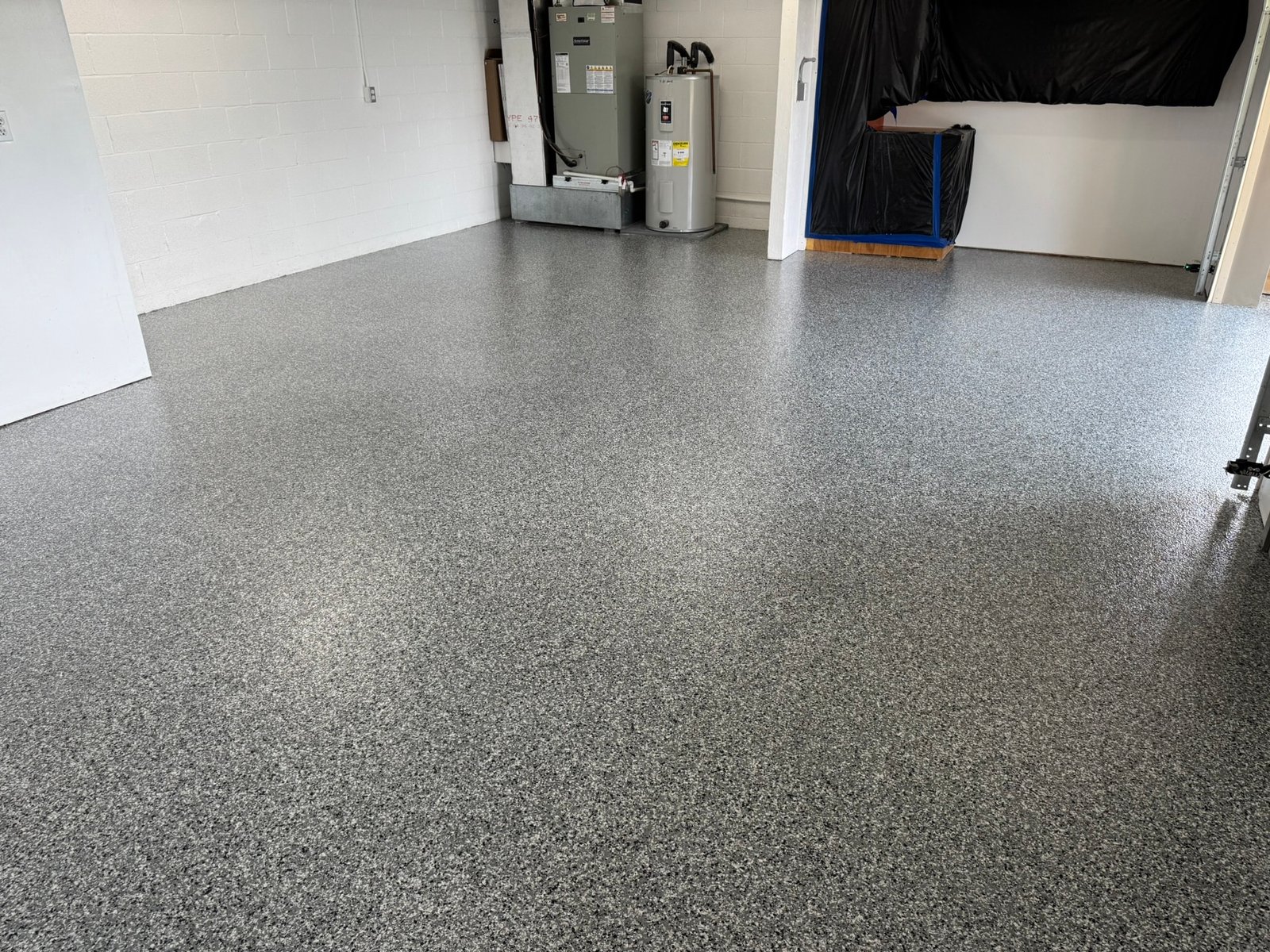
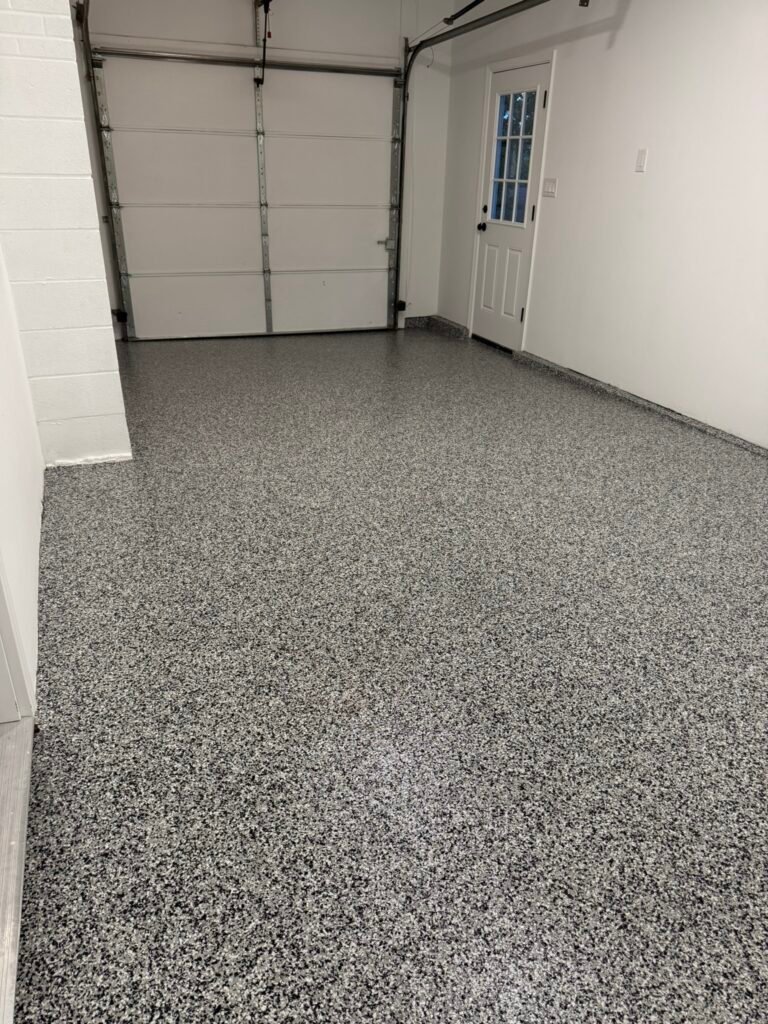
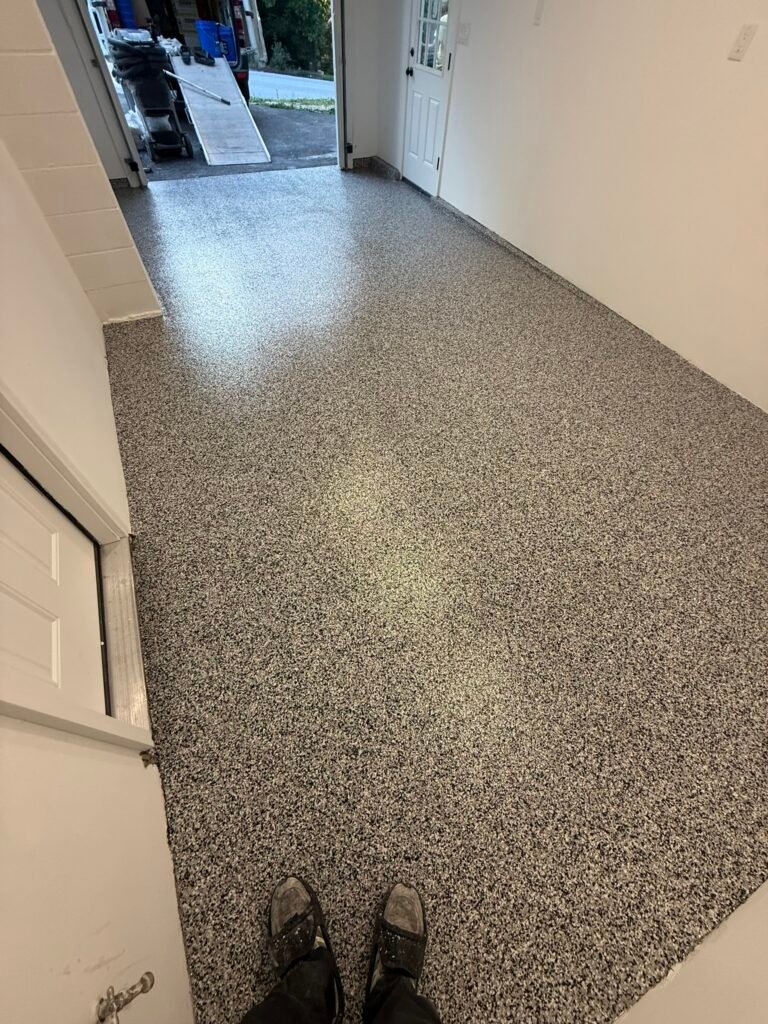
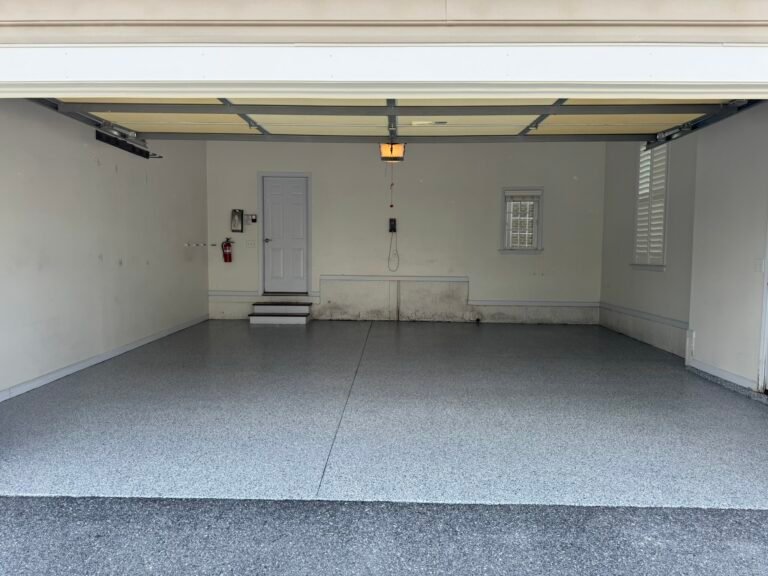
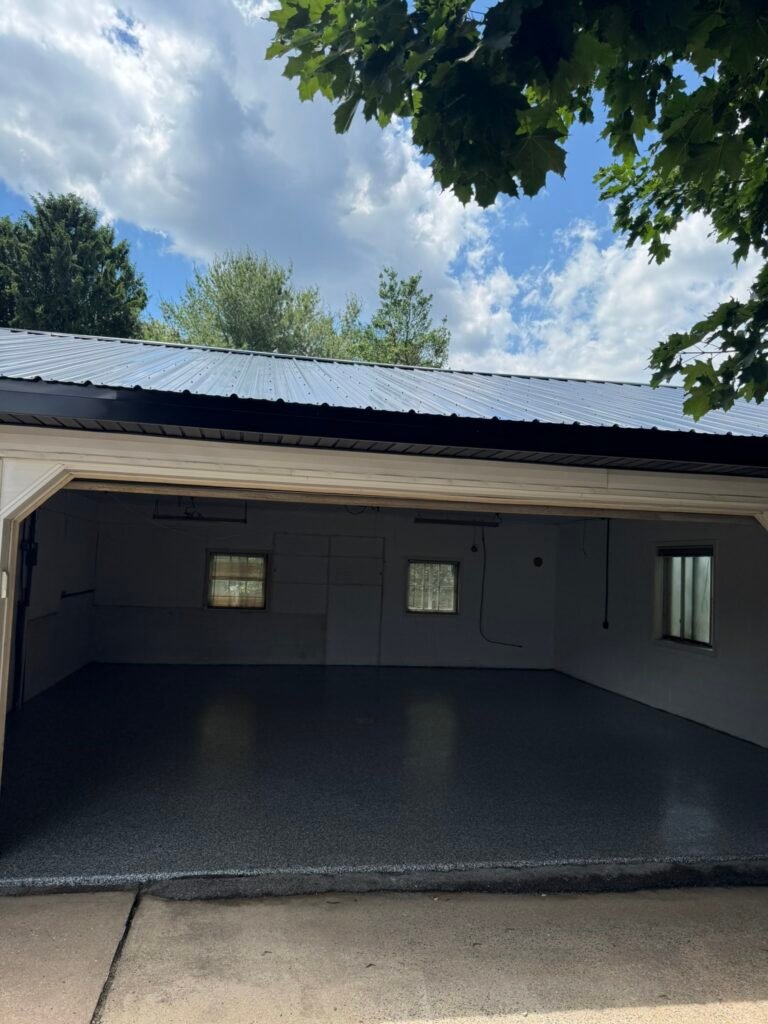
A stained, cracked garage floor in Mount Joy, PA is repaired and coated with a dark gray, black and white polyaspartic flake system, starting with the surface prep.
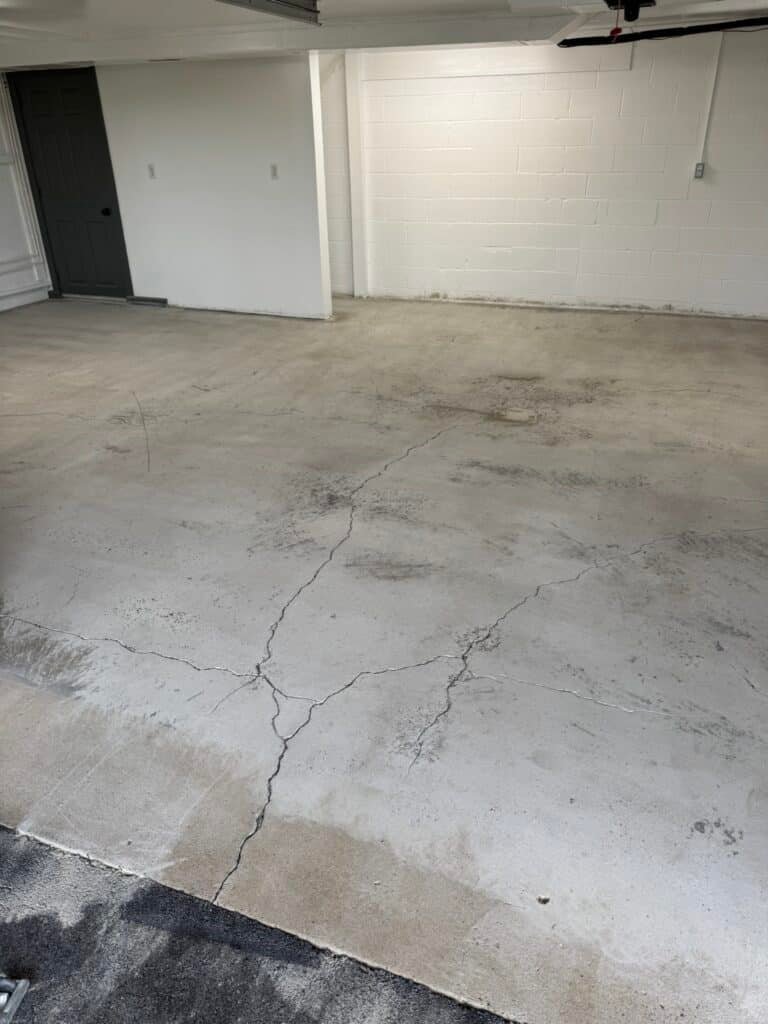
Most of the garages we coat just need cleaning up: stains, dust, and a floor that was never finished. This one in Mount Joy was different. In addition to years of staining, the slab had visible cracking running across it, the kind of damage that a coating cannot just hide, it has to actually be repaired first.
Coating directly over active cracks is one of the most common reasons a floor coating fails early, whether it is a DIY kit or a lower cost professional job that skipped the repair step to save time.
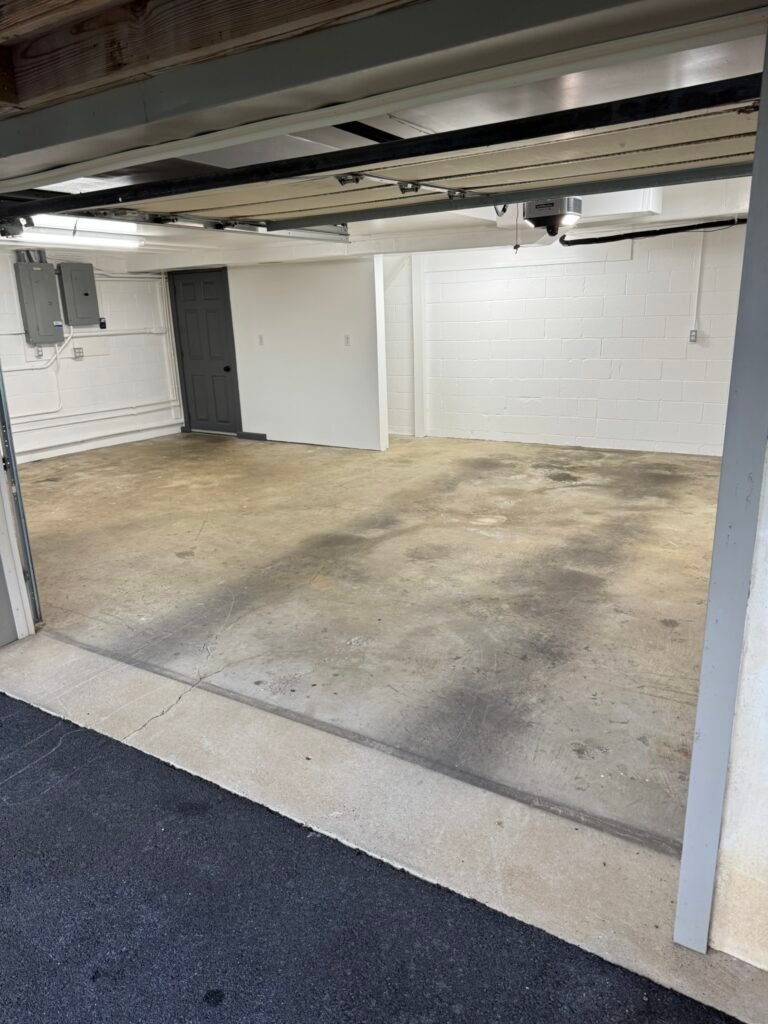
Every garage floor coating job starts the same way, no matter what color flake the homeowner picks. We grind the concrete with diamond tooling before anything else touches the slab. This is not the same as sanding a deck or scuffing up a floor with a mop and some vinegar. Diamond grinding actually opens up the pores of the concrete so the primer has something to grip onto. Skip this step, or do it halfway, and the coating will look fine for a few months and then start lifting at the edges, usually right where a tire rolls over it every day.
Once the slab is ground and vacuumed clean, we check it for moisture and go over it for any cracks or low spots that need attention before coating. Concrete that looks dry can still be holding moisture underneath, and coating over that moisture is one of the most common reasons a DIY epoxy kit fails within the first year.
After that we roll on a polyaspartic base coat. This is a different chemistry than the epoxy kits sold at home improvement stores. Epoxy takes a long time to cure and can go soft in heat or yellow in sunlight over the years. Polyaspartic cures much faster and holds its color, which is part of why it has become the standard for garage floors rather than a novelty.
While the base coat is still tacky, we broadcast the flake by hand across the entire floor, all the way to full coverage, not just scattered here and there. Full broadcast does two things: it gives the floor a slightly textured, non-slip surface, and it hides small imperfections in the concrete and future scuffs a lot better than a flat, solid color would. Once the flake has set, we scrape off any high spots and vacuum the loose material, then apply a clear polyaspartic topcoat over the whole thing. That topcoat is what actually takes the abuse: hot tires, road salt, oil, gasoline, and whatever gets dragged across the floor on a bad day.
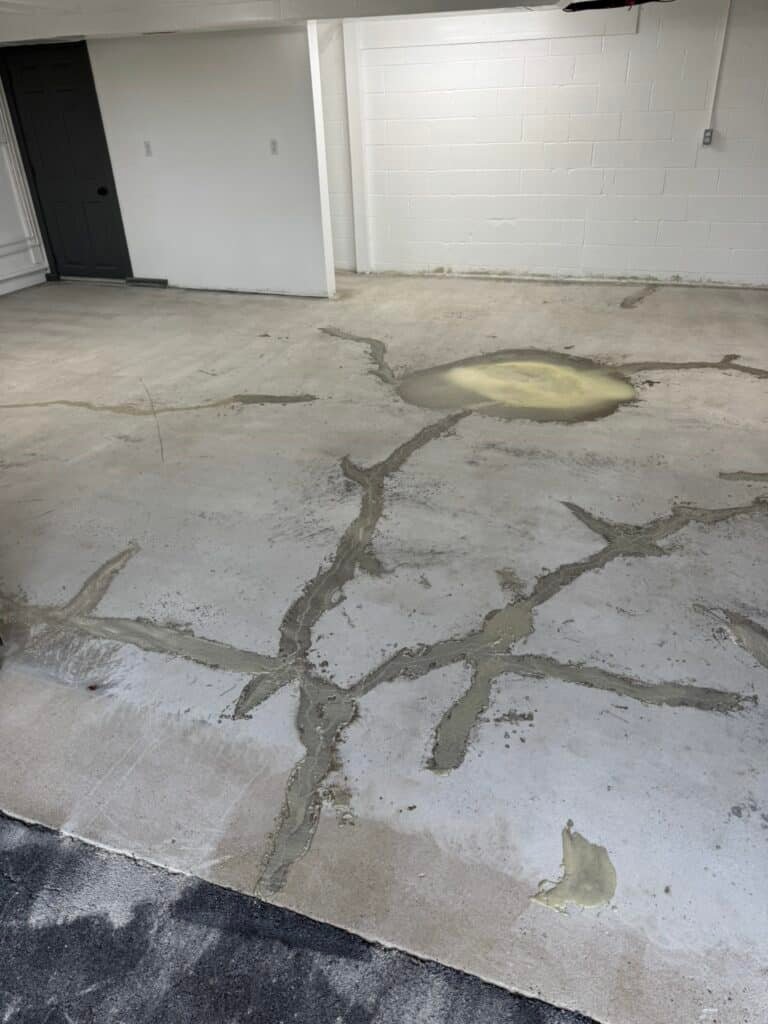
Before any of that happened here, every visible crack was routed out, meaning widened slightly along the crack line, and filled with a flexible polyaspartic filler designed to move with the concrete instead of cracking again in the same spot. That repair had to fully cure before we moved on to grinding and priming the rest of the floor.
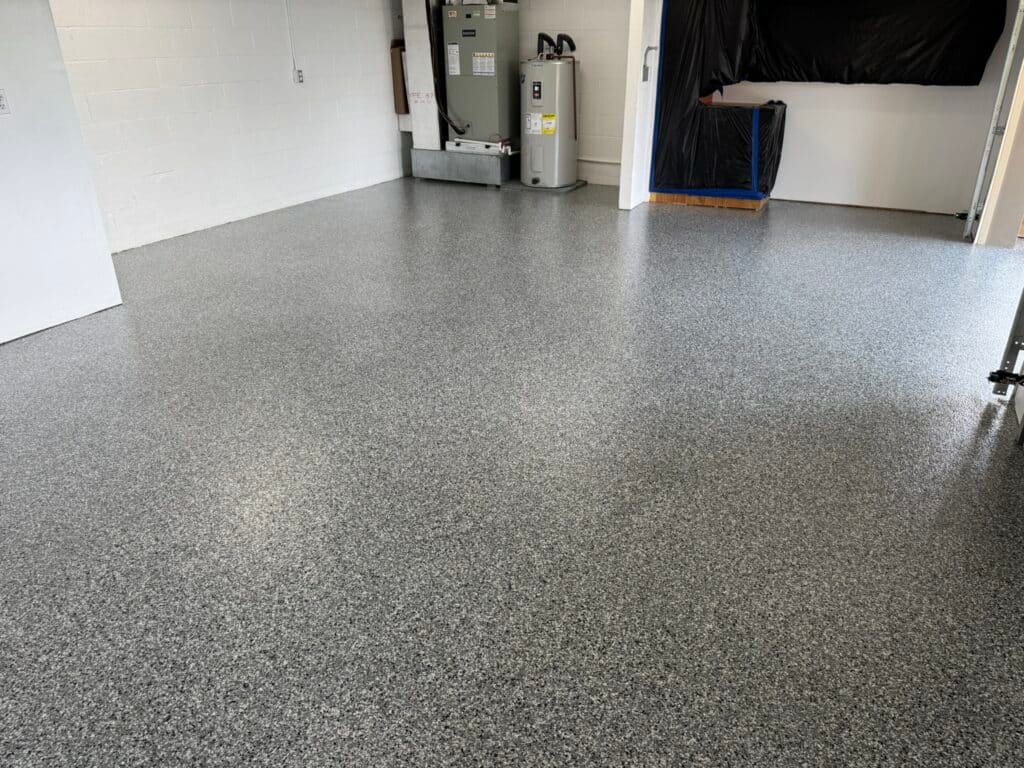
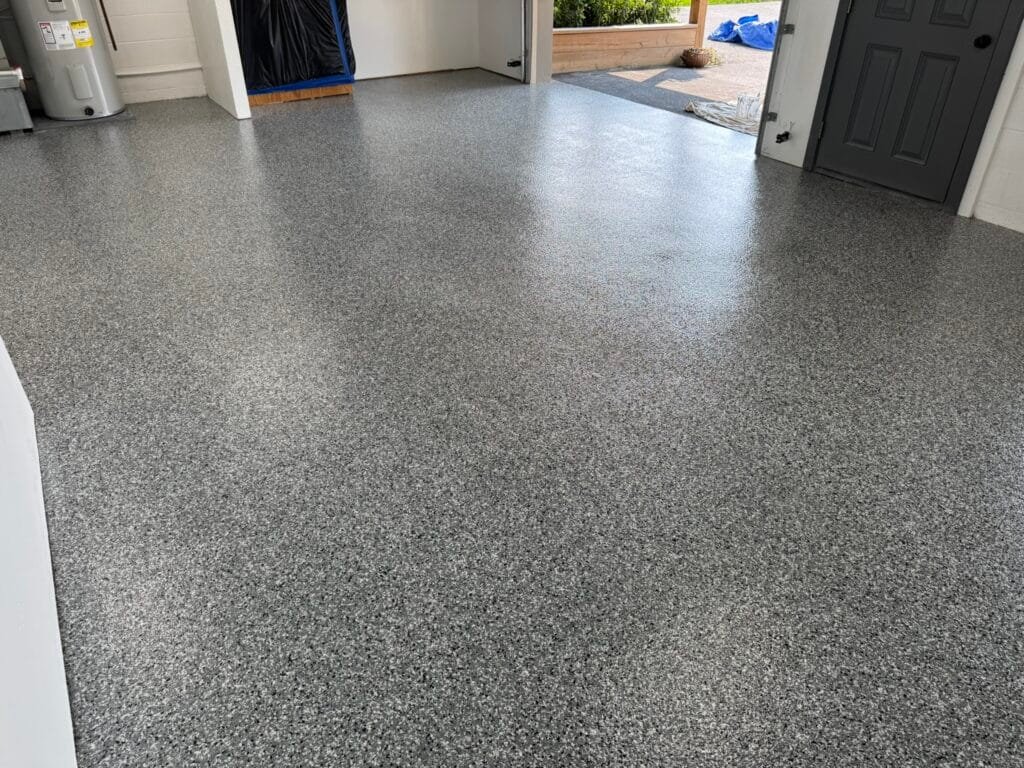
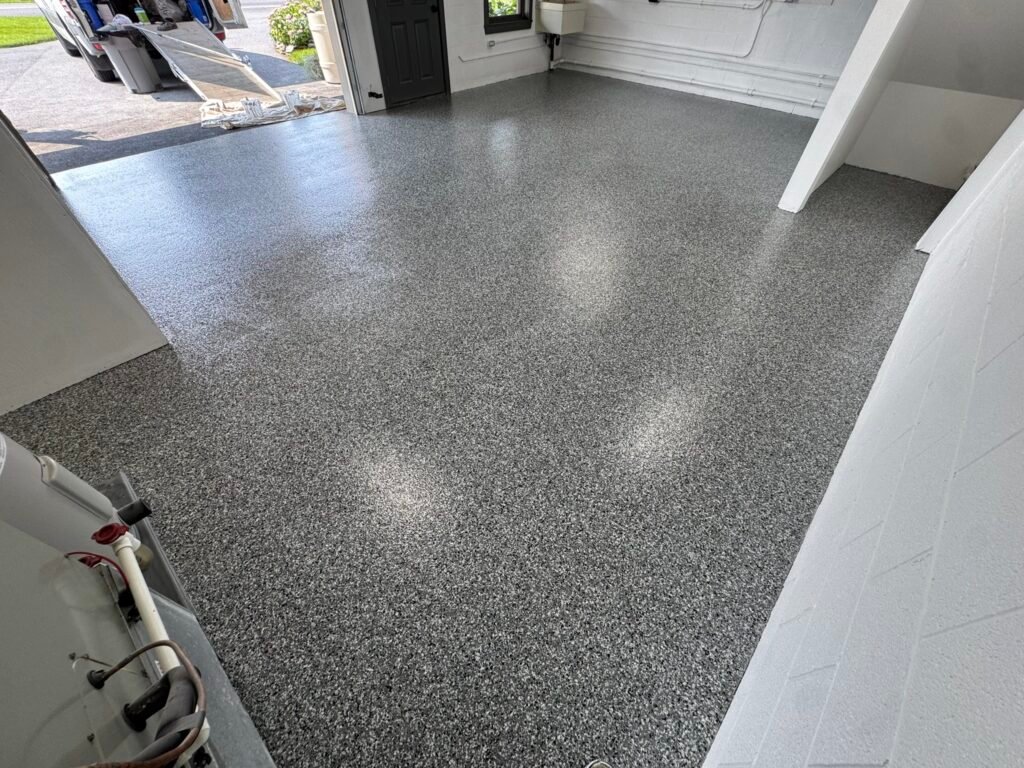
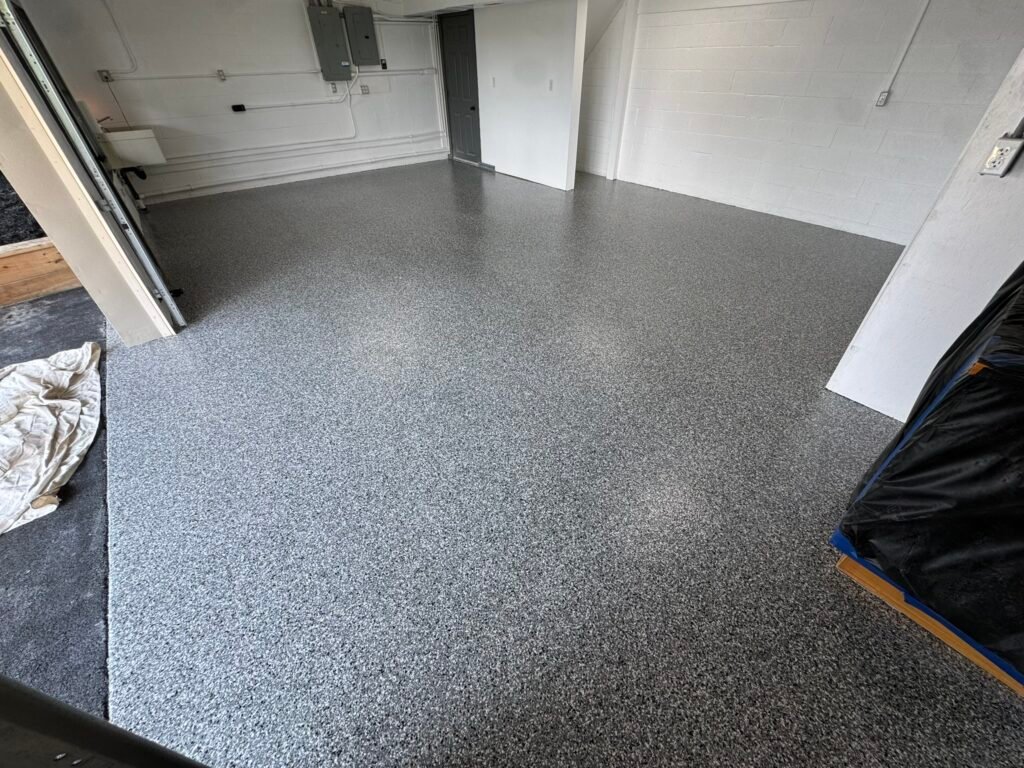
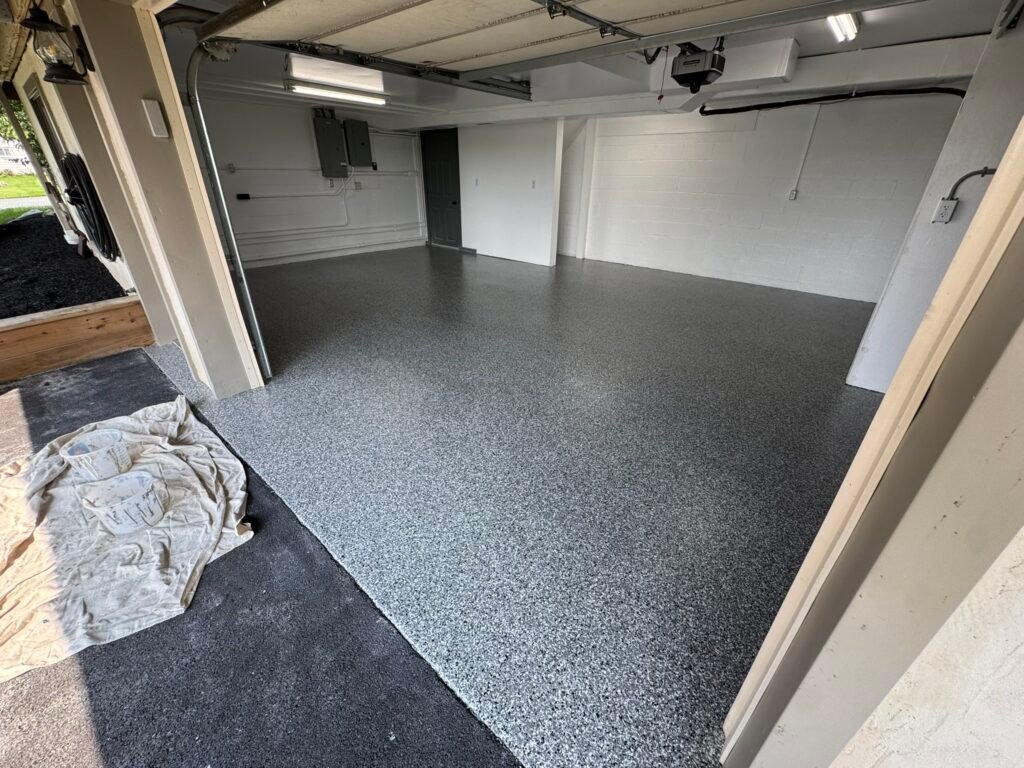
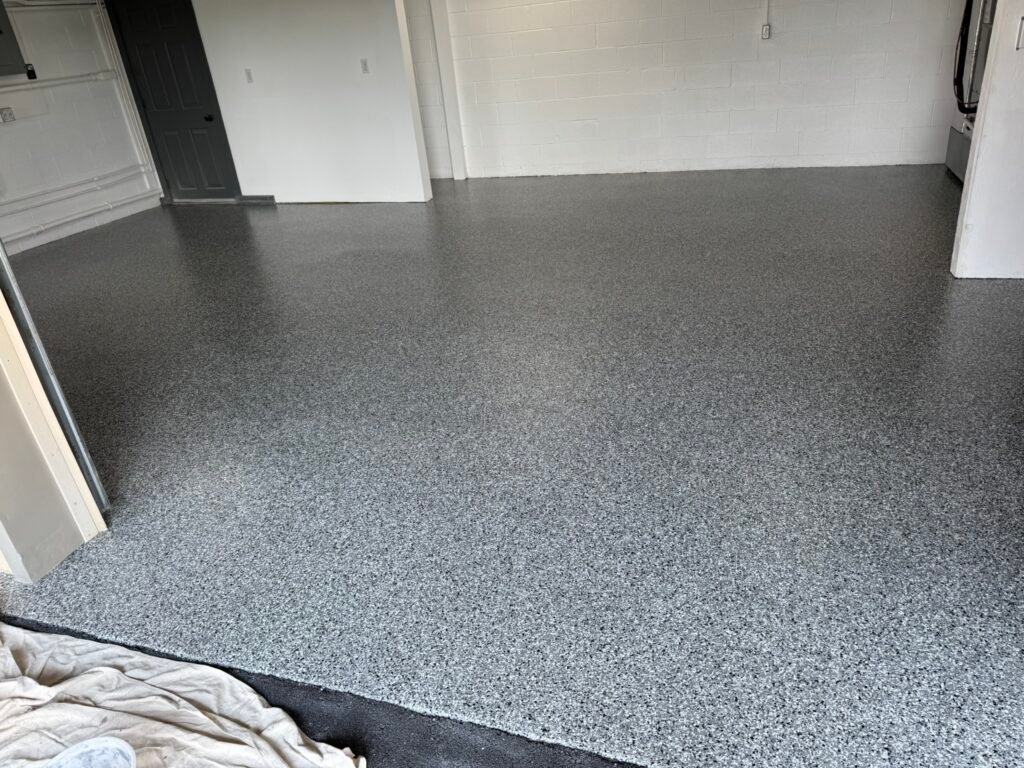
We follow the ICRI surface prep standards for matching surface prep to the coating system, and on a floor like this one, that includes treating the concrete itself as part of the job, not just the coating on top of it. A crack filled with a rigid material, or not filled at all, will telegraph straight through even a good coating within a year or two. The flexible filler we use is designed specifically to prevent that.
On install day, the garage needs to be completely empty, vehicles, tools, shelving, storage bins, all of it, so the crew can grind and coat every square foot without stopping to work around anything left behind. Grinding does create dust, so we run vacuums attached to the grinding equipment to keep it contained rather than letting it spread through the garage and into the house. Once the topcoat is down, the floor needs to stay clear for the rest of that day. Most homeowners park in the driveway for a day or two while everything fully cures.
The biggest factors that affect price on a garage floor are square footage, the condition of the existing concrete, and the flake blend chosen. A one car garage with a clean, crack free slab is the least expensive version of this job. Cracks that need to be routed and filled, stains that take extra grinding to remove, or a larger multi car garage all add time and material, which is reflected in the price. We do not quote sight unseen over the phone for exactly this reason: two garages that look similar in photos can need very different amounts of prep work once we actually grind the surface and see what is underneath the stains.
Cracking like this is common in older garage slabs throughout Lancaster County, usually from decades of freeze thaw cycles working on a floor that was never sealed. Once a crack forms, that section of concrete keeps moving slightly every winter, which is exactly why the repair needs to be flexible rather than a rigid patch that would just crack again in the same place.
Cleaning this floor day to day is about as simple as it gets: a broom or shop vac for dust, and a mop with warm water and a mild degreaser or dish soap for anything oily. Avoid harsh acid based cleaners and steel wool, which can dull the topcoat over years of use. There is no yearly resealing or waxing required the way there would be with a painted or bare concrete floor.
Homeowners looking at garage floor options usually end up comparing three things: leaving the concrete bare, painting it with a roll on epoxy kit, or going with a professionally installed flake system like this one. Bare concrete is free but keeps staining, dusting, and looking unfinished no matter how often it gets swept. A do it yourself epoxy kit looks decent for the first few months, but most kits skip real diamond grinding, which is the step that actually determines whether a coating bonds for years or peels within one winter. A professionally ground and coated flake floor costs more up front than a kit from a hardware store, but it is built to actually last, which is the whole point of doing this kind of project in the first place.
You cannot make concrete stop moving entirely, since some amount of expansion and contraction is normal. What you can do is fill the crack with a flexible material that moves with the concrete instead of a rigid patch that just cracks again in the same spot, which is the approach we use.
Hairline cracks that are not moving can sometimes be coated over directly. Anything with visible width, or any sign of one side of the crack being higher than the other, needs to be routed and filled first. We check every crack individually rather than treating them all the same way.
No, once the flake broadcast and topcoat go down over a properly repaired crack, it blends into the rest of the floor and is not visible as a repair line.
Usually yes, since crack repair is additional work beyond standard grinding and coating. It is still far less expensive than replacing the slab, and it is the only way to get a coating that actually lasts on a damaged floor.
Not in this case. Most cracking we see in garage slabs is normal concrete movement from years of freeze and thaw cycles, not a structural issue. If we ever see something that looks like a foundation problem rather than typical slab cracking, we will tell you honestly rather than just coating over it.
Yes, the repaired sections are backed the same way the rest of the floor is, since they become part of the same coated surface once the flake and topcoat go down over them.
A coating is only as good as what is underneath it. On a floor with active cracking, that means repairing the concrete itself before a single coat of primer goes down, not just coating over the problem and hoping it does not show through. Skipping that step is exactly why some budget coatings fail within a year or two on floors that had damage nobody addressed first.
FlakePro Coatings installs the same polyaspartic flake system in garages, basements, patios, sunrooms, and commercial buildings all over Lancaster County and the towns around it. If you want to see more of our work or get a quote for your own floor, here are some good places to look next.
Commercial Concrete Coating Contractor in Reading, PA
Basement Floor Coating in Manheim, PA
See our full project gallery.
Read more about our floor coating services.
Request a free estimate and we will get back to you with a real number, not a guess.