Pennsylvania’s Floor Coating Experts. Durable. Slip-Resistant. Installed in One Day [Get Free Quote]

Every floor coating claims to be durable, but few can actually prove it.
Polyaspartic coatings were developed to solve the weaknesses of older materials like epoxy — slow curing, yellowing, and poor flexibility.
Today, this advanced formula is used not only in industrial spaces but also in residential garages, patios, and pool decks across Pennsylvania.
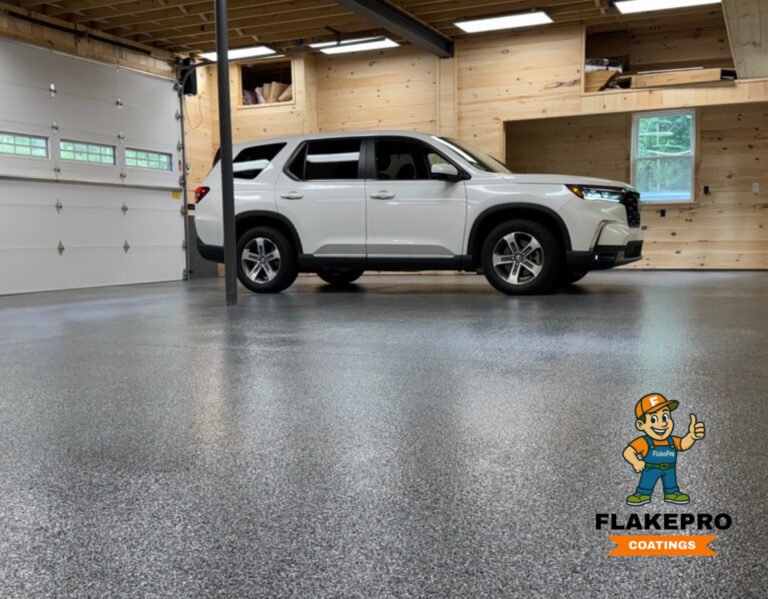
At Flake Pro Coatings, we specialize in polyaspartic flake floor systems that merge chemistry with craftsmanship — floors that look beautiful and perform for decades.
Polyaspartic coatings are based on aliphatic polyurea chemistry, which creates a tight, cross-linked structure at the molecular level.
That’s what gives them superior adhesion and tensile strength compared to epoxy or urethane.
Instead of sitting on top of concrete, polyaspartic resin penetrates its pores, forming both a chemical and mechanical bond.
The result is a floor that resists peeling, chipping, or delamination — even under hot tires, heavy equipment, or impact.
When installed correctly, polyaspartic coatings can last 15–20 years with minimal maintenance.
Traditional epoxy coatings can take several days to harden.
Polyaspartic systems cure quickly — typically within 24 hours.
That means a garage, basement, or showroom can return to full use the next day.
The fast reaction doesn’t compromise quality — it’s part of the design.
The rapid polymerization produces a denser surface with fewer weak points.
One of the biggest advantages of polyaspartic coatings is UV stability.
Epoxy tends to yellow and fade when exposed to sunlight, but polyaspartic materials are aliphatic, meaning they don’t degrade under UV rays.
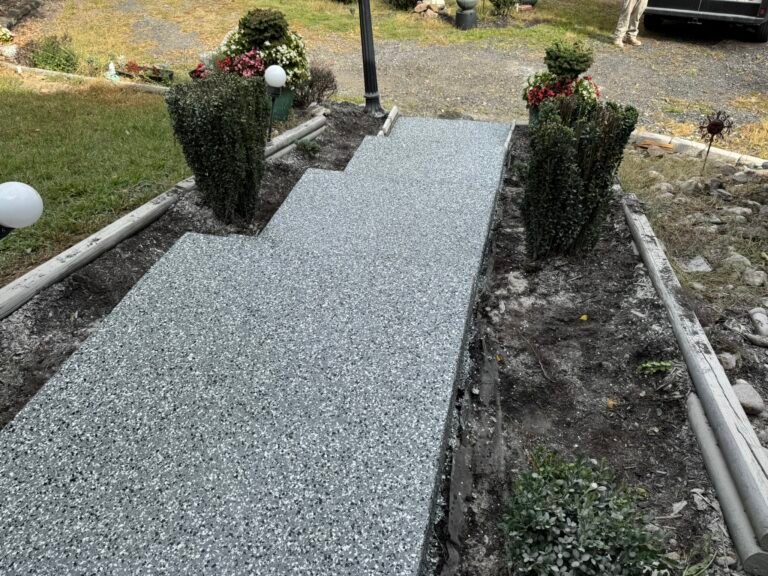
This makes them ideal for patios, pool decks, and garages that get natural light.
Because polyaspartic coatings can be customized with decorative flakes or traction additives, the surface can be made slip-resistant without losing its clean look.
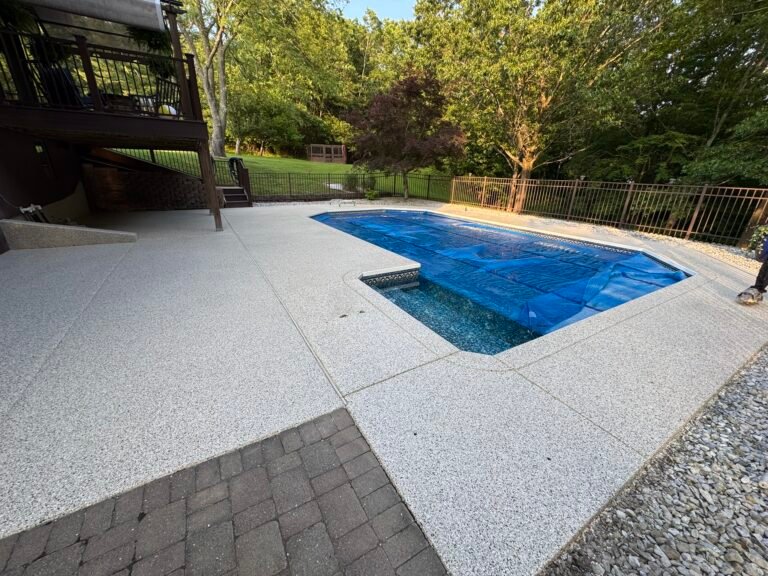
This is critical for pool decks and patios, where water and smooth finishes often create hazards.
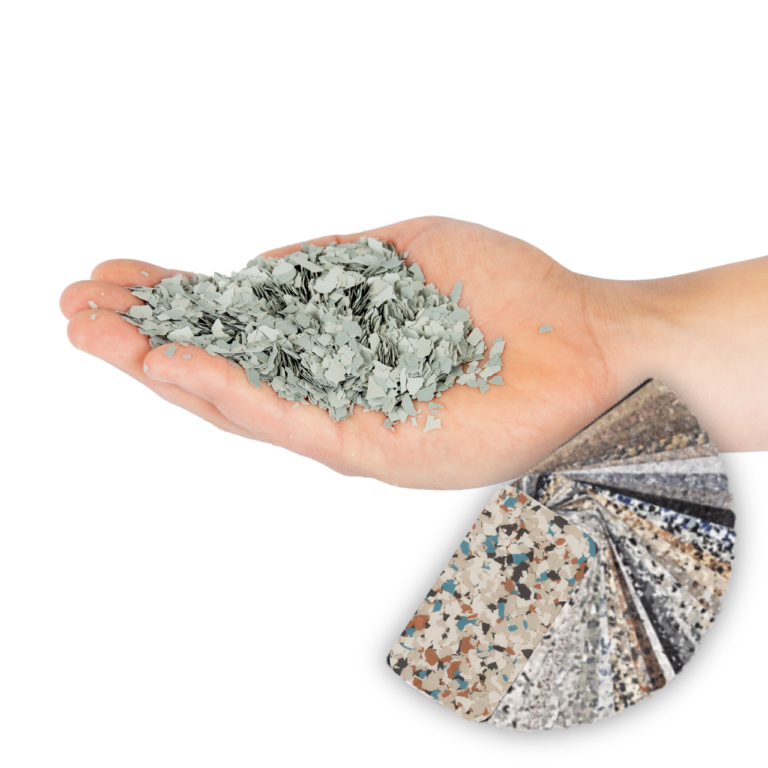
Different flake sizes and textures allow homeowners to balance design and safety — from smooth showroom gloss to grippy outdoor finishes.
Polyaspartic coatings can be applied in both hot and cold temperatures, unlike epoxies that require narrow climate conditions.
That’s why contractors in states like Pennsylvania can install them almost year-round — even in winter.
The chemistry adapts to temperature while maintaining consistent hardness and gloss.
Function meets form.
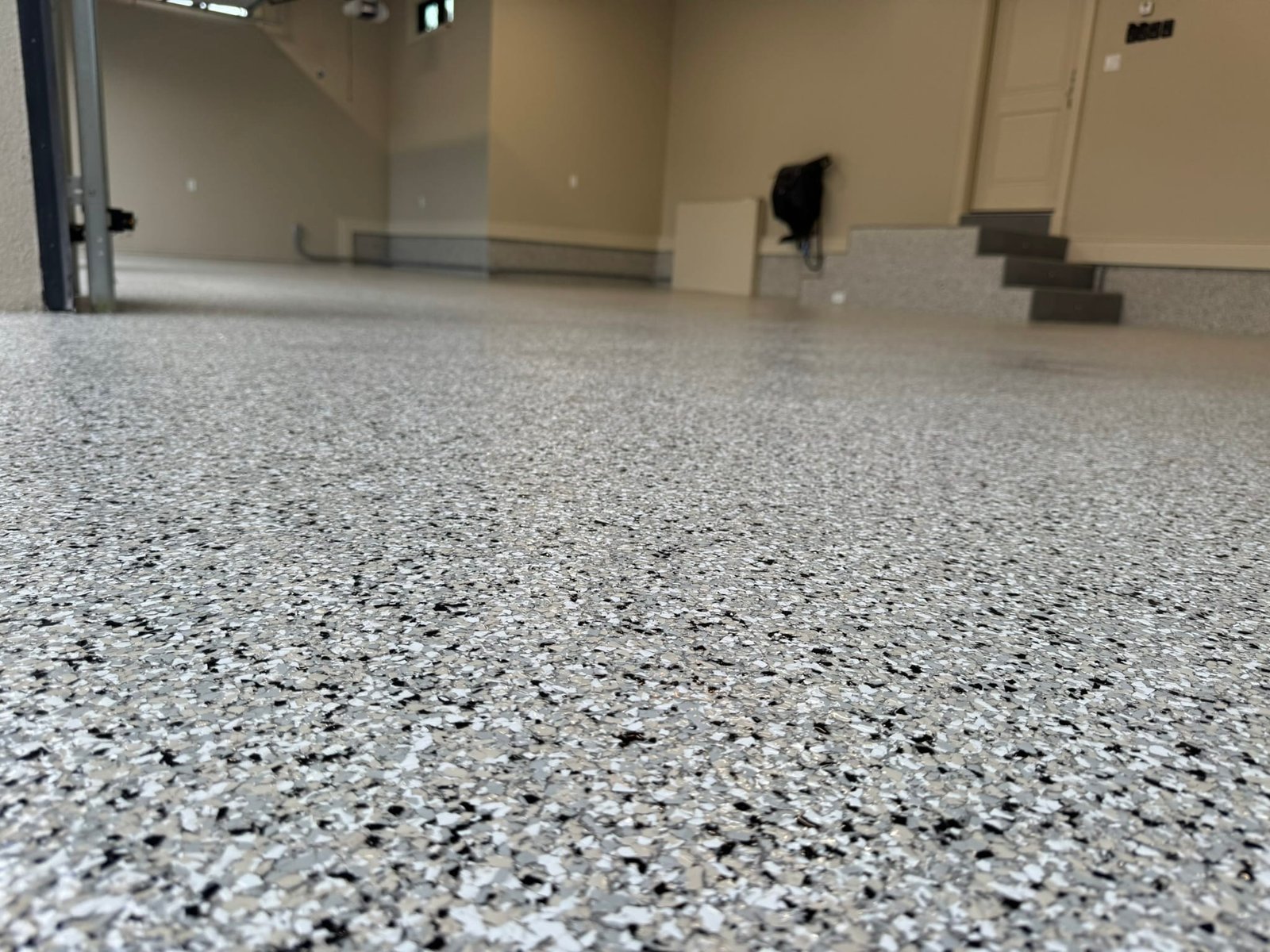
With over 30 color blends, metallic pigments, and multiple flake sizes (⅛″, ¼″), polyaspartic floors can resemble polished stone or custom designer concrete.
Each project becomes unique — tailored to your space and style.
Explore our latest finishes at
👉 Flake Pro Color Gallery.
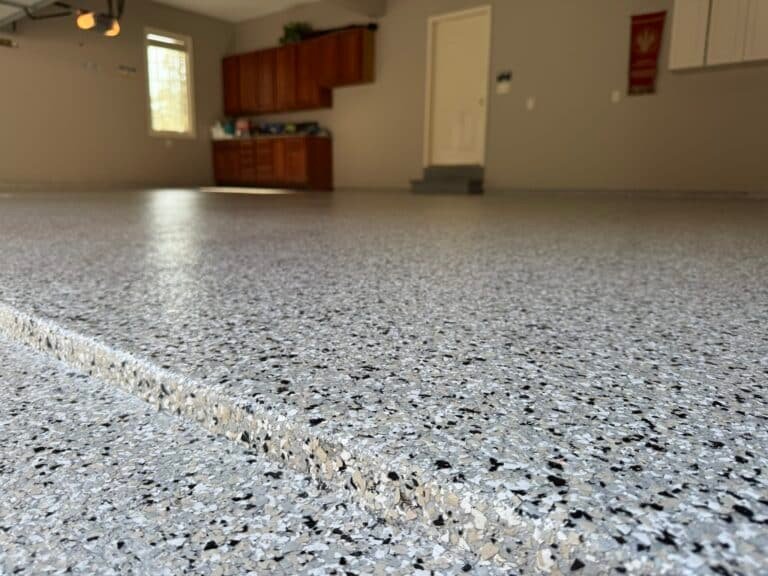
A properly installed polyaspartic coating is seamless, nonporous, and stain-resistant.
Dust and liquids stay on the surface, making cleaning simple — just a mop or mild cleaner.
There’s no waxing, sealing, or reapplication required.
That’s why polyaspartic coatings are popular in both residential garages and commercial showrooms — easy to live with, impossible to wear out.
Polyaspartic coatings aren’t a trend — they’re the result of real materials engineering.
They cure faster, last longer, and stay stronger than traditional coatings, giving homeowners and businesses a true long-term solution.
It’s the reason we call them “Future-Proof Floors.”